
GEOMORFOLOGIA E PLANEJAMENTO AMBIENTAL – CONCEITOS E APLICAÇÕES
DOI:
https://doi.org/10.51359/2238-6211.2018.238227Resumo
Esse artigo tem como objetivo investigar o papel da Geomorfologia e outras ciências, no planejamento ambiental. Dessa forma, diversos artigos, capítulos de livros e teses de doutorado foram pesquisados, para apresentar uma revisão da literatura, como apoio aos conceitos e aplicações relacionados a esse assunto. O planejamento ambiental é fundamental, porque é quase impossível atingir desenvolvimento urbano sustentável, sem levar em conta a paisagem e os recursos naturais. A partir do momento que a Geomorfologia está preocupada com o estudo das formas de relevo, solos, rochas e os processos que originaram as formas de relevo, é fundamental que os planejadores considerem esses aspectos, quando se quer implementar políticas públicas para o crescimento urbano. Além disso, a Geomorfologia tem sido inserida em novos conceitos que tem emergido nas geociências como geodiversidade, geoconservação e geoturismo. Outras áreas onde a Geomorfologia tem papel fundamental, estão relacionadas ao turismo, exploração de recursos minerais, produção de energia hidrelétrica, saneamento básico, Unidades de Conservação, áreas costeiras, bacias hidrográficas, Estudos de Impactos Ambientais (EIAs), avaliação de áreas degradadas, estudos de movimentos de massa e erosão dos solos, e recuperação de áreas degradadas.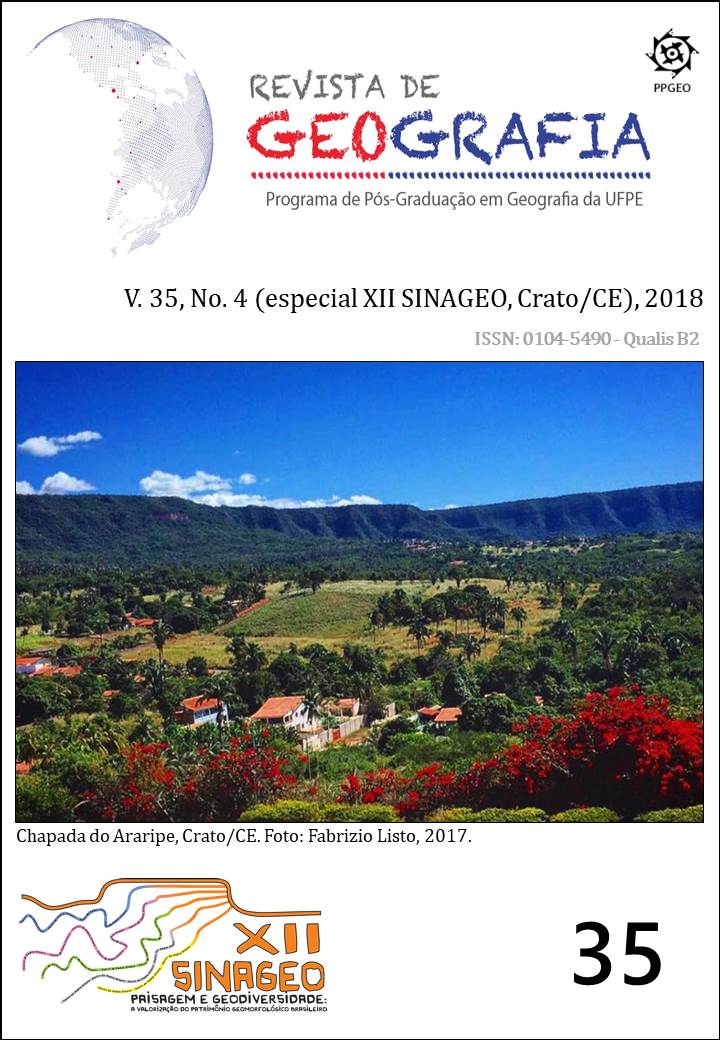
Downloads
Publicado
Como Citar
Edição
Seção
Licença
Copyright (c) 2021 Antonio Jose Teixeira Guerra

Este trabalho está licenciado sob uma licença Creative Commons Attribution 4.0 International License.
Autores que publicam nesta revista concordam com os seguintes termos:
a) Autores mantêm os direitos autorais e concedem à REVISTA DE GEOGRAFIA da Universidade Federal de Pernambuco o direito de primeira publicação, com o trabalho simultaneamente licenciado sob a Licença Creative Commons Atribuição 4.0 Internacional. CC BY -  . Esta licença permite que os reutilizadores distribuam, remixem, adaptem e criem a partir do material em qualquer meio ou formato, desde que a atribuição seja dada ao criador. A licença permite o uso comercial.
b) Autores têm autorização para assumir contratos adicionais separadamente, para distribuição não-exclusiva da versão do trabalho publicada nesta revista (ex.: publicar em repositório institucional ou como capítulo de livro), com reconhecimento de autoria e publicação inicial nesta revista.
c) Autores têm permissão e são estimulados a publicar e distribuir seu trabalho online (ex.: em repositórios institucionais ou na sua página pessoal) a qualquer ponto antes ou durante o processo editorial, já que isso pode gerar alterações produtivas, bem como aumentar o impacto e a citação do trabalho publicado.
d) Os conteúdos da REVISTA DE GEOGRAFIA estão licenciados com uma Licença Creative Commons Atribuição 4.0 Internacional. CC BY - . Esta licença permite que os reutilizadores distribuam, remixem, adaptem e criem a partir do material em qualquer meio ou formato, desde que a atribuição seja dada ao criador. A licença permite o uso comercial.
No caso de material com direitos autorais a ser reproduzido no manuscrito, a atribuição integral deve ser informada no texto; um documento comprobatório de autorização deve ser enviado para a Comissão Editorial como documento suplementar. É da responsabilidade dos autores, não da REVISTA DE GEOGRAFIA ou dos editores ou revisores, informar, no artigo, a autoria de textos, dados, figuras, imagens e/ou mapas publicados anteriormente em outro lugar.
