Idioma
Empirical indicators in bedridden older people in the perspective of basic human needs: integrative literature review
Empirical indicators in bedridden older people in the perspective of basic human needs: integrative literature review
Indicadores empíricos em pessoa idosa acamada na perspectiva das necessidades humanas básicas: revisão integrativa da literatura
ABSTRACT
OBJECTIVE: To identify in the scientific literature the empirical indicators present in bedridden older people in the perspective of basic human needs. METHOD: Integrative literature review following the PICo strategy. Articles were analyzed in the following databases; in Portuguese, English and Spanish; published between 2012 and 2021. We identified 340 studies and, after analysis, 14 were selected. We used PRISMA recommendations to visualize the process of selecting the sample of publications. RESULTS: The predominance of manifestations of basic human needs affected in the older people at the psychobiological level was evident in the literature, with emphasis on oxygenation needs with 36 indicators (22.0%), followed by nutrition with 21 (12.85%) and physical and cutaneomucosal integrity with 14 (8.5%). There were 12 (7.3%) empirical indicators at the psychosocial level and 02 (1.2%) at the psycho-spiritual level. CONCLUSION: The empirical indicators of psychobiological scope prevailed, among them, oxygenation, nutrition, physical and skin integrity, physiological eliminations and motility. Aging brings physiopathological peculiarities and thus poor care leads to chronicity or onset of diseases. Professional improvement, elaboration of public policies and care protocols, continuing education and specific therapeutic plans are necessary.
Keywords: Older people; Bedridden; Home care; Nursing.
RESUMO
OBJETIVO: identificar na literatura científica os indicadores empíricos presentes em idosos acamados, fundamentando-se nas necessidades humanas básicas. MÉTODO: revisão integrativa da literatura. Seguiu-se a estratégia PICo. Analisaram-se artigos nas bases de dados; nos idiomas português, inglês e espanhol; publicados entre 2012 e 2021. Identificaram-se 340 estudos e, após análise, selecionaram-se 14. Para visualização do processo de seleção da amostra das publicações, utilizaram-se as recomendações PRISMA. RESULTADOS: evidencia-se o predomínio das manifestações das necessidades humanas básicas afetadas na pessoa idosa no nível psicobiológico, com destaque para as necessidades de oxigenação com 36 indicadores (22,0%), seguido de nutrição com 21 (12,85%) e integridade física e cutaneomucosa com 14 (8,5%). Os indicadores empíricos no nível psicossocial corresponderam a um quantitativo de 12 (7,3%) e os psicoespirituais 2 (1,2%). CONCLUSÃO: prevaleceram os indicadores empíricos de âmbito psicobiológico, dentre eles oxigenação, nutrição, integridade física e cutânea, eliminações e motilidade. O envelhecimento traz particularidades fisiopatológicas próprias da idade, logo assistência deficiente propicia a cronicidade ou surgimento de agravos. Fazem-se necessários o aperfeiçoamento profissional, a elaboração de políticas públicas e os protocolos assistenciais, na educação continuada e nos planos terapêuticos específicos.
Descritores: Idosos; Acamados; Assistência Domiciliar; Enfermagem.
Saúde da Mulher; Tratamento Farmacológico
.
HOW TO CITE THIS ARTICLE:
INTRODUCTION
Population ageing is a remarkable fact for society. According to the World Health Organization (WHO) in 2025, Brazil will be the sixth largest country in concentration of older people population and by 2050, there will be two billion older people in the world.1
Given the demographic and epidemiological changes, there is an increase in the demand for health services. This perspective is related to the fact that older people have multiple chronic pathologies and require prolonged care, a factor that often generates the transition from hospital care to residence.
Nursing, over the years, has improved with increasingly scientifically based practices, enabling the promotion of individuals' health. Thus, nursing theories were created aiming to approach the complexity and generation of new knowledge capable of guiding the daily practice of nursing professionals.2
Due to demographic and epidemiological transitions, there has been an increase in the demand for health services. This perspective stems from the fact that the older person suffers from multiple chronic pathologies and needs prolonged care. Thus, the budgetary impact and increased demand for health services and medical-technological development promote the expansion of financial spending on health. When analyzing the costs per hospitalization according to the age profile of the population, a higher proportional expenditure is identified among older people in relation to younger patients. It is estimated that 30 to 40% of hospitalized older people, regardless of the cause of hospitalization, develop some type of immobility after hospitalization.3-4
In this sense, it is worth mentioning the Basic Human Needs Theory (BHNT), proposed by Wanda Horta as the first nursing theory created in Brazil in 1970, to meet the demands of the human being. In it, the nursing process is called "the dynamics of systematic and interrelated actions, aiming at comprehensive care to individuals".3
To determine a nursing plan to meet the Basic Human Needs (BHN) affected in patients, it is necessary to have knowledge about the empirical indicators, through which the professional evidences the health needs and plans the nursing care. Thus, the creation of a therapeutic plan guided by theories and scientific basis provides prevention and rehabilitation care, which reflects in the approach of the professional nurse to the patient, in addition to providing care based on clinical evidence.5-6
Thus, nursing professionals, especially nurses, play an important role in the context of home care, such as: interpersonal support, clinical supervision, technical procedures and health education for patients, family members and caregivers.7
Although most nurses do not systematically register the care provided, it is essential to organize care through the implementation of the Nursing Process (NP). In the meantime, the operationalization and registration of the NP contribute to the consolidation of health care for the population, as well as promoting visibility and professional recognition. To this end, it is necessary to use an instrument that facilitates the identification and subsidizes the resolution of patients' priority problems. 8-9
Therefore, the study is justified by the relevance of the implementation of the Nursing Process, in order to instrumentalize a strengthened, safe and resolutive practice. Moreover, the bedridden condition in the older person is an important factor to be evaluated and monitored by the multidisciplinary team and relevant public health problem; therefore, interventions related to prevention and care are effective and can significantly reduce the incidence of complications. We also highlight the differential of studies involving the theme in question.
OBJECTIVE
Identify in the scientific literature the empirical indicators present in bedridden older people, based on basic human needs
METHOD
This is an integrative literature review. The stages taken to develop this review were: determination of the guiding question, establishment of inclusion and exclusion criteria, organization of information, evaluation of included studies and results and synthesis of evidence obtained. The bibliographic research methodology was adopted, that is, the one based on the analysis of the literature already published, in the case of our study, the articles were chosen.10
To conduct it, the PICo strategy was followed, mnemonic that helps to identify the key topics (Population, Interest and Context). From each item of this technique, the Population (bedridden older people), Interest (signs, symptoms and needs/demands of care) and Context (home care) were delimited. Thus, this integrative review started from the following guiding question: What are the empirical indicators (signs, symptoms and need/demands for care) of bedridden older people assisted at home?
After establishing the guiding question, the following databases were used as a survey source: Latin American and Caribbean Health Sciences Literature (Lilacs), Cumulative Index to Nursing and Allied Health Literature (CINAHL), Pubmed, Embase, Scopus, Web of Science, Nursing Database – BDENF/Virtual Health Library respecting the specificities of each base.
The following inclusion criteria were adopted: articles in Portuguese, English and Spanish; published between 2012 and 2021, a time frame chosen because most studies on the theme are more recent; with texts available in full and that were related to the theme. Review articles, letters, editorials, monographs, dissertations, theses, abstracts, and annals of events were excluded.
The descriptors used in the search strategy were selected from the Health Sciences Descriptors (DeCS/MeSH): Older people, Bedridden People, Nursing Process, Home Care Services and Aged Bedridden Persons, Home Care Services, Home Care Services and Nursing Process. The Boolean operators “AND” and “OR” were used in order to combine the terms for performing the search in the bases.
After the identification of the studies, the analytical reading of the articles was performed using a script created by the authors, to describe the variables: authors' training; authors' maximum academic degrees; H index; authors' institution; journal; year of publication; journal impact factor; research location; research design; research objective; and more relevant results.
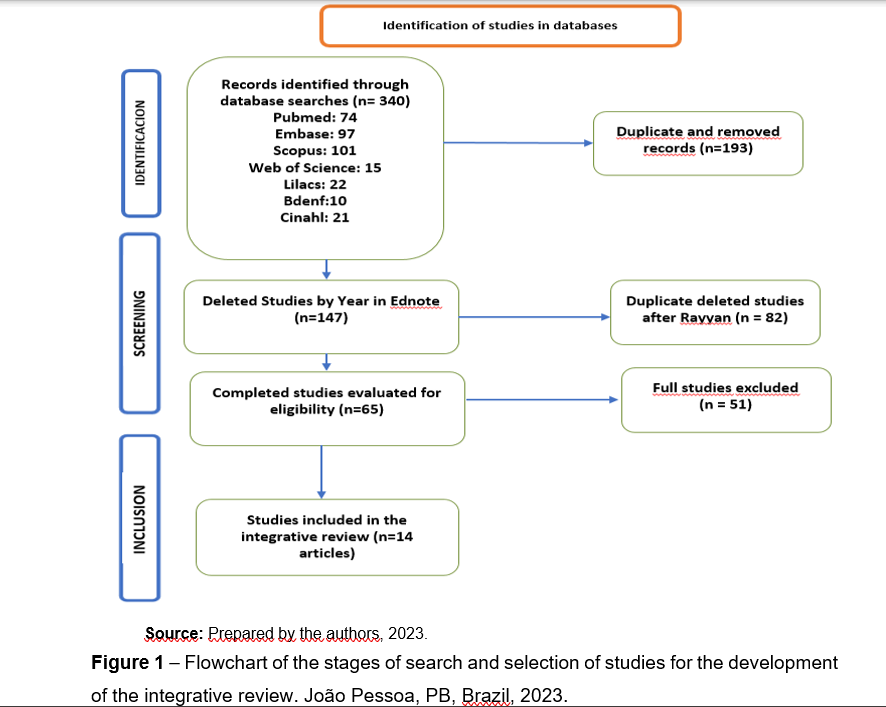
The crossing of the descriptors allowed the registration of 340 studies. The publications found were stored and organized in the Endnote Web bibliography manager, to identify and delete duplicates. Next, the articles were imported into the Rayyan Web software. From the use of search strategies and application of inclusion and exclusion criteria 193 were excluded by repetition, after that, excluded those that were not related to the guiding question of the research or were referring to the population of other age groups (133), remained 14 articles for analysis and synthesis of content, as presented in the PRISMA flowchart.
Therefore, to visualize the process of selecting the sample of publications, the PRISMA diagram was used, as it is an instrument to summarize the methodological path that allows greater evidence and accuracy to show the final sample used in the work.11
The descriptors were crossed with Boolean operators and generated the search strategies that, adapted for each database, are described in Chart 1. In all databases, filters by year and type of publication were used, selecting the years 2012 to 2021 and primary articles, respectively.
Chart 1: Search strategies adapted to each database. João Pessoa, PB, Brazil, 2023.
|
Database |
Search strategies |
Admirable |
|
Medline |
("Bedridden Persons"[MeSH Terms] OR "Bedridden Persons"[All Fields] OR "Bedridden Person"[All Fields] OR "Bedridden Patients"[All Fields] OR "Bedridden Patient"[All Fields]) AND ("Homebound Persons"[MeSH Terms] OR "Homebound Persons"[All Fields] OR "Homebound Person"[All Fields] OR "Home Bound Persons"[All Fields] OR "Shut Ins"[All Fields] OR "Shut-In"[All Fields] OR "Home Nursing"[MeSH Terms] OR "Home Nursing"[All Fields] OR "Home Health Nursing"[MeSH Terms] OR "Home Health Nursing"[All Fields] OR "Home Health Care Nursing"[All Fields] OR "Home Care Services"[MeSH Terms] OR "Home Care Services"[All Fields] OR "Home Care Service"[All Fields] OR "Domiciliary Care"[All Fields] OR "Home Health Care"[All Fields] OR "Home Care"[All Fields]) |
74 |
|
EMBASE |
('bedridden persons'/exp OR 'bedridden persons' OR 'bedridden person' OR 'bedridden patients'/exp OR 'bedridden patients' OR 'bedridden patient'/exp OR 'bedridden patient' OR 'non-mobile person' OR 'non-mobile persons') AND ('homebound persons'/exp OR 'homebound persons' OR 'homebound person' OR 'home bound persons' OR 'shut ins' OR 'shut-in' OR 'home nursing'/exp OR 'home nursing' OR 'home health nursing'/exp OR 'home health nursing' OR 'home health care nursing' OR 'home care services'/exp OR 'home care services' OR 'home care service'/exp OR 'home care service' OR 'domiciliary care'/exp OR 'domiciliary care' OR 'home health care'/exp OR 'home health care' OR 'home care'/exp OR 'home care' OR 'house bound persons' OR 'home bound person' OR 'house bound person') |
97 |
|
Scopus
|
TITLE-ABS-KEY("Bedridden Persons" OR "Bedridden Person" OR "Bedridden Patients" OR "Bedridden Patient" OR "Non-Mobile Person" OR "Non-Mobile Persons") AND TITLE-ABS-KEY("Homebound Persons" OR "Homebound Person" OR "Home Bound Persons" OR "Shut Ins" OR "Shut-In" OR "Home Nursing" OR "Home Health Nursing" OR "Home Health Care Nursing" OR "Home Care Services" OR "Home Care Service" OR "Domiciliary Care" OR "Home Health Care" OR "Home Care" OR "House Bound Persons" OR "Home Bound Person" OR "House Bound Person") |
101 |
|
Web Of Science |
TS=("Bedridden Persons" OR "Bedridden Person" OR "Bedridden Patients" OR "Bedridden Patient" OR "Non-Mobile Person" OR "Non-Mobile Persons") AND TS=("Homebound Persons" OR "Homebound Person" OR "Home Bound Persons" OR "Shut Ins" OR "Shut-In" OR "Home Nursing" OR "Home Health Nursing" OR "Home Health Care Nursing" OR "Home Care Services" OR "Home Care Service" OR "Domiciliary Care" OR "Home Health Care" OR "Home Care" OR "House Bound Persons" OR "Home Bound Person" OR "House Bound Person") |
15 |
|
CINAHL (EBSCO) |
("Bedridden Persons" OR "Bedridden Person" OR "Bedridden Patients" OR "Bedridden Patient" OR "Non-Mobile Person" OR "Non-Mobile Persons") AND ("Homebound Persons" OR "Homebound Person" OR "Home Bound Persons" OR "Shut Ins" OR "Shut-In" OR "Home Nursing" OR "Home Health Nursing" OR "Home Health Care Nursing" OR "Home Care Services" OR "Home Care Service" OR "Domiciliary Care" OR "Home Health Care" OR "Home Care" OR "House Bound Persons" OR "Home Bound Person" OR "House Bound Person") |
21 |
|
LILACS
|
("Bedridden Persons" OR "Bedridden Person" OR "Bedridden Patients" OR "Bedridden Patient" OR "Non-Mobile Person" OR "Non-Mobile Persons" OR "Pessoas Acamadas" OR "Paciente Acamado" OR "Pacientes Acamados" OR "Pessoa Acamada" OR "Pessoa Imobilizada" OR "Pessoas Imobilizadas" OR "Personas Encamadas" OR "Paciente Encamado" OR "Paciente Postrado en Cama" OR "Pacientes Encamados" OR "Persona Encamada" OR "Persona Inmovilizada" OR "Persona Postrada en Cama" OR "Personas Inmovilizadas") AND ("Homebound Persons" OR "Homebound Person" OR "Home Bound Persons" OR "Shut Ins" OR "Shut-In" OR "Home Nursing" OR "Home Health Nursing" OR "Home Health Care Nursing" OR "Home Care Services" OR "Home Care Service" OR "Domiciliary Care" OR "Home Health Care" OR "Home Care" OR "House Bound Persons" OR "Home Bound Person" OR "House Bound Person" OR "Pacientes Domiciliares" OR "Pacientes Retidos em Casa" OR "Pacientes de Resguardo em Casa" OR "Pessoas Confinadas em Domicílio" OR "Pessoas Confinadas no Lar" OR "Pessoas com Incapacidades Temporárias" OR "Pessoas em Tratamento Domiciliar" OR "personas recluidas en su casa" OR "personas confinadas" OR "Personas Imposibilitadas" OR "Personas Confinadas a su Hogar" OR "Personas que no Pueden Salir de Casa" OR "Assistência Domiciliar" OR "Assistência Domiciliária" OR "Cuidados Domiciliares" OR "atención domiciliaria" OR "asistencia domiciliaria" OR "cuidados de salud a domicilio" OR "Atención Domiciliaria de Salud" OR "Enfermagem Domiciliar" OR "Enfermagem Especializada Domiciliar" OR "Cuidados de Enfermería en el Hogar" OR "Enfermería Especializada en el Hogar" OR "Enfermería en el Hogar" OR "enfermería domiciliaria" OR "enfermería a domicilio" OR "Serviços de Assistência Domiciliar" OR "Atenção Domiciliar" OR "Cuidado Domiciliar" OR "Serviços Residenciais Terapêuticos" OR "Serviços de Cuidados Domiciliares" OR "Servicios de Atención de Salud a Domicilio" OR "Cuidado Domiciliario" OR "Cuidado de la Salud en el Hogar" OR "atención sanitaria domiciliaria") AND ( db:("LILACS")) |
22 |
|
BDENF via VHL |
("Bedridden Persons" OR "Bedridden Person" OR "Bedridden Patients" OR "Bedridden Patient" OR "Non-Mobile Person" OR "Non-Mobile Persons" OR "Pessoas Acamadas" OR "Paciente Acamado" OR "Pacientes Acamados" OR "Pessoa Acamada" OR "Pessoa Imobilizada" OR "Pessoas Imobilizadas" OR "Personas Encamadas" OR "Paciente Encamado" OR "Paciente Postrado en Cama" OR "Pacientes Encamados" OR "Persona Encamada" OR "Persona Inmovilizada" OR "Persona Postrada en Cama" OR "Personas Inmovilizadas") AND ("Homebound Persons" OR "Homebound Person" OR "Home Bound Persons" OR "Shut Ins" OR "Shut-In" OR "Home Nursing" OR "Home Health Nursing" OR "Home Health Care Nursing" OR "Home Care Services" OR "Home Care Service" OR "Domiciliary Care" OR "Home Health Care" OR "Home Care" OR "House Bound Persons" OR "Home Bound Person" OR "House Bound Person" OR "Pacientes Domiciliares" OR "Pacientes Retidos em Casa" OR "Pacientes de Resguardo em Casa" OR "Pessoas Confinadas em Domicílio" OR "Pessoas Confinadas no Lar" OR "Pessoas com Incapacidades Temporárias" OR "Pessoas em Tratamento Domiciliar" OR "personas recluidas en su casa" OR "personas confinadas" OR "Personas Imposibilitadas" OR "Personas Confinadas a su Hogar" OR "Personas que no Pueden Salir de Casa" OR "Assistência Domiciliar" OR "Assistência Domiciliária" OR "Cuidados Domiciliares" OR "atención domiciliaria" OR "asistencia domiciliaria" OR "cuidados de salud a domicilio" OR "Atención Domiciliaria de Salud" OR "Enfermagem Domiciliar" OR "Enfermagem Especializada Domiciliar" OR "Cuidados de Enfermería en el Hogar" OR "Enfermería Especializada en el Hogar" OR "Enfermería en el Hogar" OR "enfermería domiciliaria" OR "enfermería a domicilio" OR "Serviços de Assistência Domiciliar" OR "Atenção Domiciliar" OR "Cuidado Domiciliar" OR "Serviços Residenciais Terapêuticos" OR "Serviços de Cuidados Domiciliares" OR "Servicios de Atención de Salud a Domicilio" OR "Cuidado Domiciliario" OR "Cuidado de la Salud en el Hogar" OR "atención sanitaria domiciliaria") AND ( db:("BDENF")) |
10 |
Source: Research data, 2023.
After identifying the studies in the databases, the titles and abstracts were read, excluding those that did not meet the established inclusion criteria. Then it began the full reading of the elected articles. From there, information was collected about the identification of the original article, characteristics and evaluation of the method, health needs, interventions and results found. Data analysis was performed by two independent researchers. The results obtained were compared and the differences resolved by consensus (Figure 1).
Source: Prepared by the authors, 2023.
The selection of articles was carried out in two moments with inclusion and exclusion criteria, both being part of the stages of the integrative literature review. First, 65 studies were selected, after a thorough reading, 51 articles were excluded and 14 scientific articles that answered the questions of the study remained.
RESULTS
The selected articles were analyzed and the findings of interest were extracted through a specific form prepared by the researchers, elucidating the empirical indicators present in bedridden older people, based on Wanda de Aguiar Horta's BHNT (Table 1).
Table 1. Characterization of articles according to number, title, database, journal, Qualis or IF, year of publication and country of origin. João Pessoa, PB, Brazil, 2023.
|
N article |
Title |
Database |
Journal |
year |
Country |
|
A1 |
Braden scale: benefits of its application in the prevention of pressure injuries at home. |
Lilacs |
Brazilian Journal of Geriatrics and Gerontology/B4 |
2021 |
BRAZIL |
|
A2 |
Preventive actions in pressure ulcers carried out by nurses in primary care. |
Cinahl |
Research magazine: Care and fundamental (online)/B2 |
2012 |
BRAZIL |
|
A3 |
Fatores associados à condição de acamado em idosos brasileiros; resultado da pesquisa nacional de saúde, 2013. |
Embase |
Research magazine: Care and fundamental (online)/B2 |
2020 |
BRAZIL |
|
A4 |
Nursing process according to the self-care model in a bedridden cardiac patient. |
Bdefen |
Research magazine: Care and fundamental (online)/B2 |
2014 |
BRAZIL |
|
A5 |
Oral health in bedridden older adults |
Lilacs |
International journal of odontostomatology (print)/B3 |
2012 |
CHILE |
|
A6 |
Mhealth system for the electronic record of the attention of people in postración condition at home |
Lilacs |
Cuba magazine |
2013 |
CHILE |
|
A7 |
A look at the oral health of bedridden patients enrolled in FHS units in the city of Teresópolis/RJ |
Lilacs |
Physis (UERJ. Impresso)/B1 |
2021 |
BRAZIL |
|
A8 |
Clinical characteristics of pneumonia in bedridden patients receiving home care: a 3-year prospective observational study |
Pubmed |
J Infect Chemother |
2015 |
JAPAN |
|
A9 |
Risk of occurrence and prevalence of pressure injury in primary care |
Cinahl |
Gerokomos |
2018 |
BRAZIL |
|
A10 |
Heart failure with preserved and reduced left ventricular ejection fraction on antihypertensive and lipid-lowering treatment to prevent heart attack |
Pubmed |
Circulation magazine |
2018 |
BRAZIL |
|
A11 |
Orthostatic hypotonia as a probably late sequela of SARS-CoV-2 infection in a patient provided with palliative home care: a case report |
Cinahl |
European Journal of Medical Research |
2022 |
BRAZIL |
|
A12 |
Pressure injury risk in patients at home: prevalence and associated factors |
Cinahl |
Feridas magazine |
2020 |
BRAZIL |
|
A13 |
Teledermatology May Play a Role in Reducing Severity of Pressure Ulcers in Both Rural and Urban Settings. |
Pubmed |
Wounds magazine |
2014 |
JAPAN |
|
A14 |
"In Patients Accompanied by the Home Care Unit Emerging infections" |
Cinahl |
Klimik magazine |
2018 |
JAPAN |
Source: Prepared by the authors, 2023.
Of the 14 studies that made up this sample, five articles were published between 2020 and 2022. Three articles in 2018, one in 2015 and five between 2012 and 2014. As for the country of origin, nine were carried out in Brazil, demonstrating the increase in scientific studies in recent years, three in Japan and two in Chile. Regarding the distribution of articles according to the thematic axis, five were linked to the area of nursing and the others to different areas such as Public Health and focus on the clinical perspective.
Regarding the characterization of the method, table 2 shows the details related to the type, approach, sample and data analysis technique, as follows.
Table 2. Characterization of articles according to study type, approach, sample type, data analysis technique and level of evidence. João Pessoa, PB, Brazil, 2023.
|
Article number |
Type of study |
Study approach |
Sample |
Data analysis technique |
Level of evidence |
|
A1 |
Descriptive study |
Quantitative Approach |
108 bedridden older people |
The One Way Anova test and Graphpadprism 8.3 (for the statistical analyses). |
Level 4 |
|
A2 |
Descriptive cross-sectional study |
Quantitative Approach |
32 bedridden older people |
Software Statistical Package for the Social Sciences(SPSS®, version 18.0 |
Level 4 |
|
A3 |
Cross-sectional study |
Quantitative Approach |
60,202 residents |
Logistic regression analysis by the stepwise entry method, based on the likelihood value. |
Level 4 |
|
A4 |
Descriptive Study |
Qualitative approach |
01 bedridden older woman |
Analysis through Dorothea Orem's Theory |
Level 5 |
|
A5 |
Cross-sectional study |
Quantitative Approach |
64 patients |
SPSS statistical software (version 15) |
Level 4 |
|
A6 |
Study with experimental and randomized design |
Quantitative - Qualitative and Longitudinal Approach |
152 bedridden patients |
Focus Groups: Bibliographic Content Analysis. |
Level 4 |
|
A7 |
Descriptive Study |
Qualitative approach |
149 bedridden patients at home |
Data analysis: Pre-analysis; Material Content Categorization; Interpretation of the Meanings of Categorized Data. |
Level 4 |
|
A8 |
Observational Study |
Quantitative Approach |
131 patients |
Software Statistical Package for the Social Sciences(SPSS®, version 18.0 |
Level 4 |
|
A9 |
Cross-sectional study |
Quantitative Approach |
13,016 bedridden patients |
Software Statistical Package for the Social Sciences, version 20.0. |
Level 4 |
|
A10 |
Cross-sectional study |
Quantitative Approach |
1,367 patients |
Z test for continuous covariates and χ 2 analysis for categorical data. |
Level 4 |
|
A11 |
Case study |
Qualitative approach |
01 bedridden older woman |
Literature Analysis |
Level 4 |
|
A12 |
Cross-sectional study |
Quantitative Approach |
131 patients |
Tests of chi-square and Fisher's exact. |
Level 4 |
|
A13 |
Descriptive Study |
Qualitative approach |
321 nurses |
Literature Analysis |
Level 4 |
|
A14 |
Descriptive Study |
Quantitative Approach |
361 patients |
Software Statistical Package for the Social Sciences 23.0 |
Level 4 |
Source: Prepared by the authors, 2023.
Nine articles are of quantitative approach, four are qualitative and one of Quantitative-Qualitative approach. Regarding the design, six are descriptive studies, five cross-sectional and the others are studies of various designs (case study, randomized experimental design and observational study). Summarizing the knowledge produced regarding the level of evidence of the studies analyzed: 13 presented a very low level of evidence and one, a moderate level of evidence. Most of the studies that presented a very low level of evidence are national studies, as they are in the form of experience reports and without further delineation of the method. Observational studies designed with more robust methodologies and methods were found in foreign literature. Thus, there was a lack of national and international studies with other levels of evidence (moderate and high), which are types of well-designed clinical and/or observational trials.
Regarding the quantification of empirical indicators identified, Table 3 presents their distribution, according to the levels of Basic Human Needs (BHN).
Table 3. Characterization and quantification of empirical indicators, based on the levels of Basic Human Needs in bedridden older people. João Pessoa, PB, Brazil, 2023.
|
EMPIRICAL INDICATORS |
N |
% |
|
BHN Psychobiological |
150 |
91.5 |
|
BHN Psychosocial |
12 |
7.3 |
|
BHN Psycho-spiritual |
2 |
1.2 |
|
Total |
164 |
100.0 |
Source: Prepared by the authors, 2023.
It is observed that the fundamental needs of human nature were predominantly related to the psychobiological level, with 150 indicators (91.5%). Secondly, there were the empirical indicators related to psychosocial needs with a total of 12 (7.3%) and, finally, those framed in psycho-spiritual needs, with 2 (1.2%).
When particularizing the indicators, Table 4 shows that the psychobiological needs and their empirical indicators stood out, followed by the characteristics about the psychosocial needs and in smaller numbers, the aspects interconnected to the psycho-spiritual needs were observed.
Table 4. Distribution of empirical indicators, based on the levels of Basic Human Needs in bedridden older people. João Pessoa, PB, Brazil, 2023.
|
EMPIRICAL INDICATORS |
N |
% |
|
PSYCHOBIOLOGICAL BHN |
||
|
Nutrition |
21 |
12.8% |
|
Elimination |
11 |
6.7% |
|
- Physical and cutaneomucosal integrity |
14 |
8.5% |
|
Oxygenation |
36 |
22.0% |
|
- Perception of the sense organs |
7 |
4.3% |
|
Neurological regulation |
14 |
8.5% |
|
- Hydration |
2 |
1.2% |
|
Body care |
10 |
6.1% |
|
Hormone regulation. |
2 |
1.2% |
|
Thermal regulation |
5 |
3.0% |
|
Vascular regulation |
6 |
3.7% |
|
Sleep and rest |
1 |
0.6% |
|
Locomotion |
13 |
7.9% |
|
Motility |
4 |
2.4% |
|
Therapeutics |
2 |
1.2% |
|
• Immune regulation |
1 |
0.6% |
|
- Cell growth |
1 |
0.6% |
|
PSYCHOSOCIAL BHN |
||
|
Love and acceptance |
3 |
1.8% |
|
- Communication |
2 |
1.2% |
|
-Security |
0 |
0.0% |
|
- Self-realization, self-esteem and self-image |
3 |
1.8% |
|
Learning (health education) |
1 |
0.6% |
|
- Freedom and participation |
2 |
1.2% |
|
Sociability |
1 |
0.6% |
|
PSYCHO-SPIRITUAL BHN |
||
|
- Religious or theological, ethics or philosophy of life |
2 |
1.2%
|
|
Total |
164 |
100.0 |
Source: Prepared by the authors, 2023.
The predominance of manifestations of basic human needs affected in the older people at the psychobiological level is evidenced, with emphasis on oxygenation needs with 36 indicators (22.0%), followed by nutrition with 21 (12.85%) and physical and cutaneomucosal integrity with 14 (8.5%) as well as neurological regulation. Empirical indicators at the psychosocial level corresponded to a quantitative of 12 (7.3%) and psycho-spiritual indicators to 02 (1.2%).
DISCUSSION
Human aging is part of the priority health observations, in view of the increase in the older people population and its specific physiological and pathological characteristics. It is estimated that, on a global scale, the number of older people exceeds two billion by 2050, and may be greater than the number of children in the world, representing something like 20% of the world's population. This demographic change also means a change in the focus of public policies and the health panorama, also impacting on socioeconomic aspects, due to the increase in diseases that affect the population over 60 years of age.12-14
These statements demonstrate the need to improve the health care teams for the older people and the importance of adapting the care directed to them, according to their needs. This review was able to elucidate the empirical indicators of bedridden older people and showed that the main and most frequent were those related to the psychobiological spheres (oxygenation, nutrition, elimination and mobility), followed by the psychosocial ones (love and acceptance, self-actualization, self-esteem and self-image).
According to Horta, psychobiological needs refer to force, instincts or unconscious energies that arise without advance planning, from the psychobiological level of the human being, such as the tendency to feed, to meet sexually. In this category, the following are concentrated: oxygenation, hydration, elimination, sleep and rest, nutrition, exercise and physical activities, shelter, body mechanics, motility, sexuality, body care, cutaneomucosal and physical integrity, thermal, hormonal, neurological, hydroelectrolytic, immunological regulation, cell and vascular growth, perception of sense organs; environment; therapy and locomotion.5
With regard to the empirical indicator “oxygenation”, its important frequency observed in the present study (36%) may be related to the inherent process of human aging and the greater number of lung diseases in the older population. Lungs throughout life face chemical, mechanical, biological, immune and xenobiotic stress and advancing age causes progressive impairment of lung function, impairing gas exchange. Horta defines as the need for oxygenation the process of using oxygen in the phenomena of oxygen-reduction of vital activities 5,12
In addition, the physiological changes in the cardiovascular system, structural and functional, also interfere with the oxygenation of the older person. It is common to reduce the ability to change the heart rate adequately in response to stressful situations. The physiological changes inherent to aging, although subtle and hardly producing any disability in the initial phase, over the years cause increasing levels of limitations that affect the basic activities of daily living.13
Some older people may present the need to stay in bed for long periods, either due to chronic diseases or physical weaknesses, which can lead to complications such as pulmonary infection that interfere with quality of life and require greater care from the health team and their caregivers. Nursing care can prevent worsening of the condition and the development of hypostatic pneumonia after prolonged bed rest. In addition, for those who use artificial airway, nursing care in proper maintenance will significantly reduce its use and increase the therapeutic effect of this resource, in addition to decreasing the risks of adverse reactions.15
Still on the psychobiological needs, the need for elimination was also identified. This need encompasses both urinary and intestinal functions. In bedridden or debilitated older people, progressive loss of mass, muscle strength and alteration in cognitive capacity may be common, which may culminate in the emergence of organic dysfunctions, especially the pattern of intestinal and urinary elimination and its alterations, portrayed by urinary and anal incontinence, intestinal constipation and urinary retention.16
Linked to the need for elimination, one can mention the needs of locomotion and motility. With regard to mobility, it represents the ability to move and handle the environment in which it is inserted and in the presence of important changes and/or decrease in this capacity, it will culminate in the inability or difficulty to develop daily functional activities, such as being able to move to the bathroom to perform your bowel or urinary needs.16
The nurses in the care of patients with impaired elimination pattern should pay attention to the associated symptoms, the environment in which they are inserted and the biopsychosocial demands of the older person. Thus, the nursing history should collect data on urinary and intestinal conditions and, as a conduct, guide on bladder irrigation, promote effective urinary elimination, perform health education on the urinary and intestinal system, guide on the importance of intimate hygiene, water intake and adequate water supply.17
Regarding the empirical indicator “nutrition”, this was present in 21% of the studies and refers to the nutritional need of the bedridden older person. Such needs are translated into necessary individual physiological values, which are responsible for maintaining normal physiological functions and preventing symptoms of deficiencies. The quality of life of the older person is also influenced by the incorporation of healthy eating habits, allowing the maintenance of a balanced and nourished body. A study conducted with 162 older people identified that 46.7% were classified as true nutritional risk, by the association of at least two factors directly related to nutritional status.18
It is also the responsibility of the nurses, during the investigation of the patients’ health status, as well as in the planning of their conduct, to evaluate the nutritional status and implications of these factors. Among the possible interventions, regarding nursing performance, the following are listed: determining the types of nutrients necessary to meet nutritional requirements; monitoring trends in weight loss and gain; monitoring dietary calorie intake; conducting a nutritional assessment; monitoring the adequacy of diet prescription to meet daily nutritional needs, taking into account the individual's conditions.19
The indicator "physical and cutaneomucosal integrity" had a frequency of 8.5%, according to the data of this review. The bedridden older person is more likely to develop skin lesions due to chronic immobility.
In a study carried out with the objective of analyzing the factors associated with the risk of developing Pressure Injuries (PI) in the older people, it was evidenced that there was a significant association between the risk of developing pressure injury with bedridden older people (p<0.001) and those with Immobility Syndrome (p<0.001).20 In bedridden patients, it is common for PI to appear as a result of inaction syndrome. Hypoalbuminemia, protein malnutrition and anemia are related to the appearance of PI, in addition to other skin lesions.21
With regard to psychosocial needs, these are presented through instincts at the psychosocial level, such as the tendency to talk, to live socially, and to assert oneself in front of others. It encompasses safety, love, freedom, communication, creativity, learning, recreation, leisure, orientation in time and space, acceptance, self-realization, self-esteem, participation, self-image and attention. The psycho-spiritual needs involve the religious or theological, ethical and philosophy of life spheres. In the psycho-spiritual needs, the individual tries to interpret what he/she experiences that is scientifically inexplicable, involving faith and religion.5,22
Although less frequent, in the data obtained from the analyzed articles, psychosocial and psycho-spiritual indicators were relevant to the balance of human life. Among the indicators identified in these categories are: love and acceptance (1.8%), communication and freedom and participation (1.2% each), self-realization, self-esteem and self-image (1.8%) and religious or theological, ethics or philosophy of life (1.2%). The health professionals must be aware that their care must also have intersubjectivity of care, because the people they care for have stories of lives that are intertwined with emotions, feelings and desires.23
In this sense, it is up to the professionals to include the faith, hope and assumptions that involve the life of the older person or any individual. Although health care almost always emphasizes the physical and technical dimensions, it is expected that at a more advanced level of care it will be addressed together with the emotional and spiritual dimensions of the person cared for, through the use of humanistic theories when assigning due value to the body-mind-spirit set.18,23,24
The BHN theory seeks to meet the demands of the human being integrally. The elaboration of a broad, holistic and sensitive therapeutic plan allows us to offer preventive care, health promotion, which promotes rehabilitation and respects human uniqueness.25-26
It is noteworthy that Wanda Horta defined three beings, regarding nursing: the nurse-being, the client-being and the nursing-being. It is important to understand that the nurse being is human in all its complexity, joys and frustrations. On the other hand, the being-client or patient can be an individual, family or community, who need the care of other human beings. It is indisputable that the nurse-being does not practice nursing without the client-being/patient, in a transaction of care and relationships. The being-nursing, from the two beings described above, comes as an abstract being, manifesting itself as an object to assist the basic human needs. Therefore, the human being, in all its potentiality, has its own characteristics of uniqueness, authenticity and individuality, subject to imbalances that when not met, persist and generate diseases.5
It is perceived as a limitation, the little existence of studies that investigate the empirical indicators (signs, symptoms and need/demands for care) of care in the home environment of the older population. Therefore, this issue needs to be highlighted in ageing policies. Despite the relevance, there are still few studies on the subject, in the national research scenario, requiring more scientific production.
CONCLUSION
Thus, in the analysis of the collected material, in this literature review, it was possible to verify the empirical indicators prevalent in the bedridden older person of psychobiological scope, among them, with a higher percentage, oxygenation, nutrition, physical and skin integrity, eliminations and motility.
It is perceived that addressing the integrality of the human being, including the particularities of the older person, allows an individualized, broad and sensitive care. The theory of basic human needs guides this care and contributes to the professional caregiver being able to elucidate and structure the nuances that make up and qualify this care.
It is emphasized that aging, by itself, brings physiopathological peculiarities of age and that poor care provides chronicity or emergence of diseases. In addition, there are a number of complex challenges and it is important that multidisciplinary and interdisciplinary proactive research and intersectoral planning take place so that appropriate public health, prevention and intervention outcomes can be developed.
Therefore, it is necessary to invest in professional improvement, in the elaboration of public policies and care protocols, in continuing education and in specific therapeutic plans for older people, since this population has been gaining great space in global numbers and in the context of health demands.
CONTRIBUTIONS
All authors contributed equally to the article design, data collection, analysis and discussion, as well as to the writing and critical review of the content, with intellectual contribution, and approval of the final version of the study.
CONFLICTS OF INTERESTS
The authors declare no conflict of interest.
FUNDING
There was no source of financing.
REFERENCES
- Reis RD, et al. Caring for elderly people with Parkinson's disease: feelings experienced by family caregivers. Enferm. Foco. 2020 [cited 2022 Jun 13]; 10 (5). Available from: http://revista.cofen.gov.br/index.php/enfermagem/article/view/2294/683 .
- Silva LES, et al. Nursing interventions related to the nutrition of the frail elderly: an integrative review. In: Theory and Practice of Nursing from basic care to high complexity. Científica: Guarujá, SP, 2021[cited 2022 Jun 13]; 2: 24-41. DOI: 10.37885/210303979.
- Pizzolato AC, et alEmpirical indicators of human needs affected in pre-hospital mobile care: methodological research. Online braz j nurs [internet]. 2018 [cited 2022 Jun 13]; 17(1): 18-28. Available from: http://www.objnursing.uff.br/index.php/nursing/article/view/5640/html_2.
- Leduc MMS, Leduc VR, Suguino MM. Immobility and Immobilization Syndrome. In: Freitas EV, Pi L, orgs. Tratado de geriatria e gerontologia. 4ª ed. Rio de Janeiro: Guanabara Koogan; 2017.
- Horta WA. Nursing process. Publishing company Pedagógica Universitária. EPU. 2005.
- Jacon JC, et al. Identification of nursing diagnoses in nephropathy patients undergoing hemodialysis in the light of the theory of basic human needs. CuidArte. Enferm. 2020 [cited 2022 Jan 20]; 14(1): 48-54. Available from: https://www.e-publicacoes.uerj.br/index.php/revistahupe/article/view/10124.https://pesquisa.bvsalud.org/portal/resource/pt/biblio-1119288.
- Andrade AM, et al. Nurses' role in home care: an integrative literature review. Rev Bras Enferm. [online]. 2017 [cited 2022 Jan 20]; 70(1): 210-219. Available from: <https://doi.org/10.1590/0034-7167-2016-0214>. ISSN 1984-0446.
- Siqueira PLF. Systematization of assistance, theories and nursing process - a literature review. Research, Society and Development. 2020 [cited 2022 Jun 13]; 9 (10): e4419108667. DOI: 10.33448/rsd-v9i10.8667.
- Piccinini V, Costa A, Pissaia L. Implementation of the Systematization of Nursing Care as a means of qualifying care for the elderly.RBCEH. 2018 [cited 2022 Jun 13]; 14 (3). Available from: http://seer.upf.br/index.php/rbceh/article/view/6631.
- Santos LMA. Overview of research on TDIC and training of English language teachers in LA: a bibliographic survey based on Capes dissertations/theses. Brazilian Journal of Applied Linguistics. 2013 [cited 2022 Dez 20], 13 (1): 15-36. DOI: 10.1590/S1984-63982013000100002.
- Mohrer D, Liberatti A, Tetzlaff J, Altman DG. The PRISMA group. Preferred reported items for systematic reviews and meta-analysis. J Clin Epidemiol [internet]. 2009 [cited 2017 out. 25]; 62(10):1006-12. Available from: https://www.sciencedirect.com/science/article/pii/S0895435609001796.
- Schneider JL, et al. The aging lung: Physiology, disease, and immunity. Cell. 2021 [cited 2022 Jun 13]; 184 (8): 1990-2019. Available from: https://pubmed.ncbi.nlm.nih.gov/33811810.
- Partridge L, Deelen J, Slagboom PE. Facing up to the global challenges of ageing. Nature. 2018 [cited 2022 Jun 13]; 561 (7721): 45-56. Available from: https://pubmed.ncbi.nlm.nih.gov/30185958.
- Esquenazi D, Silva SB,Guimarães MA. Pathophysiological aspects of human aging and falls in the elderly. Rev. HUPE. 2014 [cited 2022 Jan 20]; 13(2): 11-20. Available from: https://www.e-publicacoes.uerj.br/index.php/revistahupe/article/view/10124.
- Dzau VJ, et al. Enabling healthful aging for all-the national academy of medicine grand challenge in healthy longevity. N Engl J Med. 2019 [cited 2022 Jan 20]; 381 (18): 1699-1701. DOI: 10.1056/NEJMp1912298.
- Teixeira CV. Intestinal and urinary elimination in elderly people and implications for nursing care: cross-sectional and social representation study. Graduate report. Juiz de Fora Federal University, 2018.
- Oliveira BKF, et al. Diagnoses, interventions and CIPE® nursing outcomes in a patient with pyelonephritis: case report. REAEnf [Internet]. 2020 [cited 2022 Jun 13]; 2: e2900-e2900. Available from: https://www.scielo.br/j/reben/a/DfdKJdRpKqJB4GSYJ3d5CHm.
- Arruda, et al. Nutritional risk in the elderly: comparison of nutritional screening methods in a public hospital. R Assoc bras Nutr. 2019 [cited 2022 Jan 20]; 10(1): 59-65. Available from: https://doaj.org/article/b048ed812cd94632abf6c0471a437b91.
- Silva CJA, et al. Perspectives of Advanced Nursing Practice in the process of gerontological care: an integrative review. Rev eletrônica Enferm. 2021 [cited 2022 Jun 13]; 23. Available from: https://www.revistas.ufg.br/fen/article/view/68003.
- Vanderley ICS, et al. Risk of pressure ulcers in the elderly at home. Rev enferm UFPE on line. 2021 [cited 2022 Jun 13]; 15(2): 1-14. Available from: https://pesquisa.bvsalud.org/portal/resource/pt/biblio-1282535.
- Ortiz SR, Dourado CP, Sanches FFZ. Epidemiological, clinical and nutritional profile of patients with pressure injuries at a public hospital in Campo Grande-MS.Journal Of Health. 2020 [cited 2022 Jun 13]; 2(2): 231-243.
- Marques, D. K. A.; Moreira, G. Â. C.; Nóbrega, MML da. Analysis of the horta's basic human needs theory. Rev Enferm UFPE On Line [periódico na internet]. 2008 [cited 2022 Jun 13]; 2(4): 410-16. Available from: https://periodicos.ufpe.br/revistas/revistaenfermagem/article/view/5362.
- Dalla LL, Silva MCS. Nursing care for the spirituality of frail elderly people: a reflection according to the theory of human care. Ciênc cuid saúde. 2020 [cited 2022 Jan 20]; 20. Available from: https://pesquisa.bvsalud.org/portal/resource/pt/biblio-1339633.
- Mendes KDS, Silveira RCCP, Galvão CM. Integrative review: research method for incorporating evidence in health and nursing. Texto contexto – enferm [Internet]. 2008 [cited 2022 Jun 13]; 17(4): 758-64. DOI:10.1590/S0104-07072008000400018.
- Cheloni IG, Silva JVS, Souza CC. Basic human needs affected in cancer patients: integrative literature review. HU Rev. 2020 [cited 2022 Jan 20]; 46: 1-11. Available from: ttps://doaj.org/article/de6d3e7e454c400e85d90c1aa4bdd308.
- Souza PTL, Ferreira JA, Oliveira ECS, Lima NBA, Cabral JR, Oliveira RCBasic human needs in intensive care. Rev Fun Care Online. 2019 [cited 2022 Jun 13]; 11(4): 1011-1016. DOI:10.9789/2175- 5361.2019.v11i4.1011-1016.
Correspondence
Samila Gonçalves de Moura
E-mail: samilla_1988@hotmail.com
Copyright© 2024 Revista de Enfermagem UFPE on line/REUOL.
Este é um artigo de acesso aberto distribuído sob a Atribuição CC BY 4.0 Creative Commons Attribution-ShareAlike 4.0 International License, a qual permite que outros distribuam, remixem, adaptem e criem a partir do seu trabalho, mesmo para fins comerciais, desde que lhe atribuam o devido crédito pela criação original. É recomendada para maximizar a disseminação e uso dos materiais licenciados.
 Português (Brasil)
  English
  Español (España)