Idioma
Health education and strategies on HIV prevention among adolescents in schools
Breviglieri JL, Majczak JA, Leal GCG, Pereira R, Brandão ML.
INTRODUCTION
According to the Ministry of Health, the Human Immunodeficiency Virus (HIV) is a retrovirus classified in the Lentiviridae subfamily and is a sexually transmitted infection that occurs mainly through unprotected sexual intercourse.1 Acquired Immunodeficiency Syndrome (AIDS) is a disease caused by infection with the Human Immunodeficiency Virus (HIV), which attacks the immune system responsible for defending our bodies against new diseases. This virus attacks CD4+ T lymphocytes, becoming capable of altering this cell's DNA and making copies of itself, multiplying several times in succession. With this high demand, the virus breaks up the lymphocytes and looks for new ones to continue the infection.1
By analyzing the general vulnerability of the population, we can see that sexual transmission is among the most well-known forms of infection among adults from 1980 to the present day, according to the SINAN information system for notifiable diseases.2,3
Global statistics from UNAIDS (Joint United Nations Program on HIV/AIDS) indicate that there were 37.7 million people worldwide living with HIV in 2020, 36 million of whom were adults and 1.7 million were children (0-14 years). Also in that year, 680 thousand people died from diseases related to Acquired Immunodeficiency Syndrome (AIDS), and around 79.3 million people have been infected by the Human Immunodeficiency Virus (HIV) since the beginning of the epidemic.4
In addition to the statistics shown above, data from the Ministry of Health indicate that in Brazil, among young people aged 15 to 24, notifications of Acquired Immunodeficiency Syndrome (AIDS) have risen by 41% in males and 30.2% in females over the last 11 years. However, in recent years, Human Immunodeficiency Virus (HIV) infections have increased more among young people than adults, thus reinforcing the need for health professionals, especially nurses, to be able to expand their knowledge and provide their patients with useful information.5
Adolescence is defined as a critical period in which young people are in a constant search for their own identity, a period of transition between childhood and adulthood.6,7 All these aspects end up influencing the greater vulnerability to early pregnancy, the use of licit or illicit drugs, and Sexually Transmitted Infections (STIs), such as the Human Immunodeficiency Virus (HIV).7
Young people then end up becoming the population that most worries health professionals because they are difficult to educate on the subject of sexuality and because they think they are invulnerable. In this context, it is very important that nurses working in the Family Health Strategy (FHS) and in the School Health Program (SHP) recognize their roles in strengthening educational actions and guidance on the prevention of Sexually Transmitted Infections (STIs) among adolescents.6
Education in schools is a determining factor in promoting and protecting the health of children and adolescents, and it is necessary to work on these interventions during the school period due to the physical and psychological growth of young people.8 Health education is a process that works on the person's thinking in an individual way, i.e., in their own health-disease process, or in a collective way.8
Moreover, there is a shortage of professional educators in adolescent health. According to Decree-Law No. 12.852 of August 5, 2013, young people are considered to be those aged between 15 (fifteen) and 29 (twenty-nine) years old,9 who could be educated within schools with the help of a team of multi-professionals to answer questions and provide appropriate guidance to them and their guardians, thus promoting efficient and safe access to care.
The chosen topic is justified by the observation that health professionals, nurses in particular, do not have good strategies for guiding adolescents on sexual education and health care for the prevention of HIV/AIDS, which is growing so much among them. As well as being considered difficult to reach in health units, adolescents suffer from taboos, prejudice, difficulties in society and in the family environment, besides facing individual difficulties of a psychological, mental and sexual nature, marked by adolescence itself.10
In addition to these factors, there are the numbers of unwanted early pregnancies and Sexually Transmitted Infections (STIs) such as the Human Immunodeficiency Virus (HIV), which are only increasing among young adolescents. It is therefore necessary for professionals to pay more attention to this public, establishing better health education strategies, guiding and making them understand the processes marked by adolescence so that they become healthy adults who are well educated about safety in their current and future sex lives.11
OBJECTIVE
To analyze the HIV/AIDS prevention strategies that nurses use with adolescents in schools.
METHOD
This is an integrative literature review with a qualitative approach, seeking to identify a more comprehensive understanding of a given topic.12 The purpose of this research method is to gather and synthesize research results on a topic in an organized and systematic way, contributing to a deeper understanding of the topic being investigated and supporting future research. The integrative review requires formulating a problem, searching the literature, critically evaluating a set of data, analyzing the data, and presenting all these results.13,14
In order to carry out the stages of the text methodology, the following analyses were carried out: identification of the problem (the purpose of the review was clearly defined); literature search (with the aid of keywords, databases, and the application of defining criteria for the selection of articles); evaluation and analysis of the obtained data.
In the first stage, the guiding question was constructed by using the PICOT strategy,15 presenting the population: adolescents in schools; intervention: nursing action in schools to prevent HIV/AIDS; comparison group: compared to nursing actions on HIV/AIDS prevention with adult groups outside school; outcome: to promote better quality of life, health and attention for the adolescent public in relation to STI care, specifically HIV/AIDS; type of study: qualitative integrative literature review study.
The search for studies took place between March and November 2022. The inclusion criteria for the articles were: full-text articles related to the theme; in Portuguese language; publication period in the last 5 years; attached to the Virtual Health Library (VHL) and Coordination for the Improvement of Higher Education Personnel (CAPES - Coordenação de Aperfeiçoamento de Pessoal de Nível Superior) databases.
The exclusion criteria for the articles were: duplicate articles; articles not available electronically; integrative literature review articles; and articles that did not meet the inclusion criteria mentioned above.
To carry out the search in the aforementioned databases, combinations of keywords considered as descriptors in the DeCS (Health Science Descriptors) were used, namely: enfermagem (nursing); adolescente (adolescent); HIV; infecções sexualmente transmissíveis (sexually transmitted diseases); ensino fundamental e médio (primary and secondary education); various combinations with the boolean AND.
The studies identified were grouped together and duplicates removed. Titles and abstracts were read in order to include the studies in the review or not, applying the eligibility criteria.
After reading the full text of the selected studies, the inclusion criteria were applied, a process carried out by two independent reviewers. Full-text studies that did not meet the inclusion criteria were excluded.
The results of the identification, selection and inclusion process were fully described and presented in a PRISMA flowchart.16
RESULTS
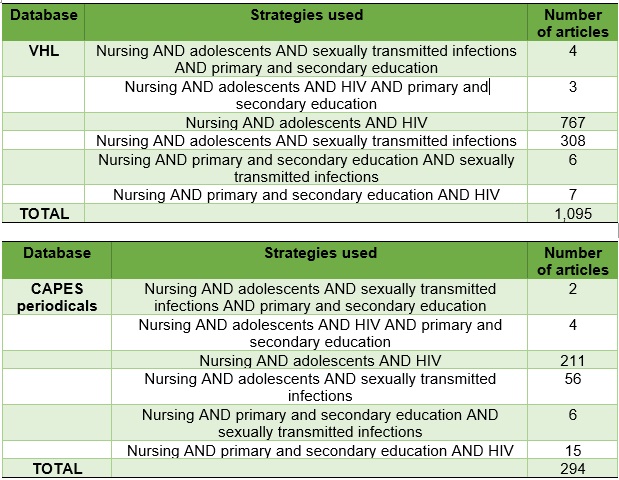
In these searches, with a total sum including all the strategies used, 1,095 scientific articles were initially identified in the VHL database and 294 scientific articles in CAPES (Chart 1).
Chart 1. Search strategies for selecting studies. Curitiba, Paraná (PR), Brazil, 2024.
Out of the 1,389 studies, 96 duplicates were removed, resulting in 1,293. After reading the titles and abstracts, 1,205 were excluded for not meeting the eligibility criteria, totaling 88 studies. Thus, out of the 88 studies read in full, 74 were excluded for not meeting the inclusion criteria.
Fourteen publications were included in this review, most of which were descriptive studies with a qualitative approach, demonstrated according to the PRISMA flowchart16 shown in Figure 1.
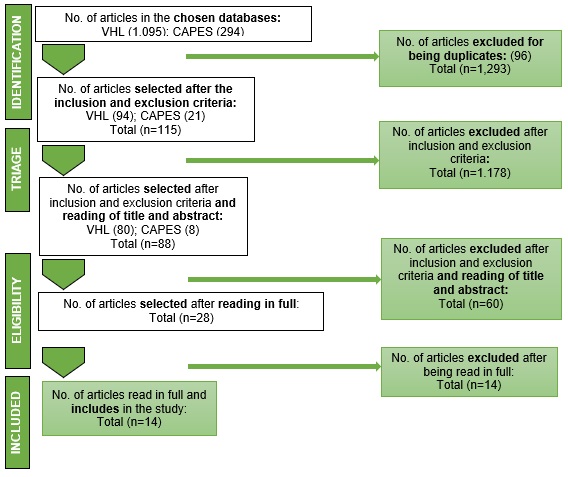
Figure 1. Flowchart for training, selection and inclusion of studies, based on the PRISMA recommendation. Curitiba, Paraná (PR), Brazil, 2024.
The mapping of the 14 studies included in this review on the strategies and the role of nurses in HIV/AIDS prevention with adolescents at school showed that 11 (78.37%) studies were from the Virtual Health Library (VHL) and 3 (21.42%) were from the Coordination for the Improvement of Higher Education Personnel (CAPES).
Among the linked journals, 1 (7.14%) was from the research journal “Cuidado é Fundamental Online”, 1 (7.14%) was from the “Portal de Revistas Cientificas Online”, while the remaining 12 (85.78%) were from health journals, 6 (50%) being from the nursing journal “UFPE on line/Reuol”, 1 (8.33%) from the “Online Brazilian Journal of Nursing (OBJN)”, 1 (8.33%) from the “Escola Anna Nery” journal, 1 (8.33%) from the “Revista de Enfermagem da UFRJ”, and 3 (25%) from the “Revista Brasileira de Enfermagem Reben”.
By analyzing the years of each article, it can be seen that 4 (28.57%) are from 2020, 5 (35.72%) are from 2017, 2 (14.28%) are from 2019, 1 (7.14%) is from 2018, 1 (7.14%) is from 2021, and 1 (7.14%) is from 2022.
With regard to the region of these 14 studies, 13 (92.86%) are national, i.e, from Brazilian regions, and 1 (7.14%) is international. Among the 13 national studies, 1 (7.69%) is from Pará, 1 (7.69%) from Maranhão, 4 (30.77%) from Ceará, 2 (15.38%) from Rio de Janeiro, 1 (7.69%) from Amazonas, 1 (7.69%) from Pernambuco (from the city of Recife), while 2 (15.38%) had no specific location. The only article from abroad was from Portugal.
Among the total of 71 authors present in the 14 articles in this study, 64 (90.14%) were nurses, 1 (1.41%) was a pharmacist, and 6 (8.45%) were described as nursing academics.
Among the types of study established, 6 (22.22%) had descriptive methods, 8 (29.62%) had qualitative methods, 2 (7.40%) used the quantitative method, 1 (3.70%) was an observational study, 2 (7.40%) were experience reports, 3 (11.11%) were action research, 3 (11.11%) were exploratory studies, and 2 (7.40%) used the cross-sectional study method.
Based on the analysis of the content of these articles, 4 thematic categories that can answer the guiding question of this study were found, namely: 1) carrying out comprehensive care strategies for adolescents with HIV/AIDS; 2) promoting continuing education for health professionals with a focus on adolescent care; 3) promoting educational actions to prevent STIs and HIV in schools; 4) including sex education as a strategy in the training of teachers in schools.
The first category (carrying out comprehensive care strategies for adolescents with HIV/AIDS) shows that over the years there has been a significant increase in HIV/AIDS diagnoses, especially among adolescents.4,5 This helps to understand the seriousness and importance of applying more qualified guidance to this public, taking care of them in a comprehensive way through the strategy of carrying out active searches inside or outside schools, emphasizing the continuous intake of young adolescents already affected by HIV; for those who have already started an active sexual life, helping them to prevent unwanted pregnancies.17-19
Promoting continuing education among health professionals with a focus on adolescent care shows that a routine strategy with these professionals needs to be carried out,6,19 since it is very rare to see an adolescent entering a basic health unit, and the lack of qualified professionals in this area is huge. For this reason, it is important to know how to approach these adolescents so that they feel safe, allowing to teach them about effective self-care for STIs, as well as emotional and mental factors and those related to their social environment. In addition, a good strategy to approach this adolescent is to expand government campaigns on HIV/AIDS, emphasizing the importance of sharing the topic in schools with the help of the Internet, since most young people are connected to it.8,19-25
The next category - promoting educational activities to prevent STIs and HIV in schools - is, according to the authors, one of the most complicated to carry out, since many of them show that, due to family and religious taboos, trying to educate adolescents on this subject can give the impression that health professionals would be influencing young people to start having sex at an early age.8,18,26-27 Despite the various divergences, it would be a very efficient strategy to include nurses acting in their everyday environment, in the school, training them and making them create critical, educational and logical reasoning on the subject of sexuality, since it is in this environment where the first contacts and bonds with other people who are also considered vulnerable arise.8,17-18,28-29 Some approaches by the School Health Program (SHP) nursing team already exist; however, sexual orientation issues are always blocked by the school management or by higher orders, which hinders the nurses' strategy of promoting appropriate educational actions.23,30
Finally, the last category is described as including sex education as a strategy in the training of teachers in schools. This topic is relevant because adolescents in schools learn about contraception and the prevention of STI/HIV/AIDS. In this way, many young people can ask their teachers for help when they have sexual health problems, as they see the latter as a source of safe information. When teachers do not know how to deal with the situation or cannot help, they end up hindering the student's development of self-care, leaving them more vulnerable. For this reason, this study suggests a good strategy to bring health and school together, including a health professional inside the academic environment to help the teacher with the correct guidance for the adolescent.18
DISCUSSION
Out of the 4 categories identified in the thematic analysis of the selected literature, 3 are directly related to Costa et al.'s26 statements, according to which adolescents are the public that most concerns health professionals, further confirming the importance of nurses needing to improve their skills in approaching these young people and promoting more relevant education about sexuality in schools.26 Adolescents are also considered a scarce public in health units and difficult to reach, making them more vulnerable than other communities.31
Nursing is known as one of the main health professions that is directly and indirectly involved with all types of people in society, whether they are babies, children, adolescents, adult men and women, pregnant women or the elderly. The nurse's main role in this context is health education, as this is where they establish appropriate guidelines, care and prevention strategies, as well as care promotion. Today there are various ways for nurses to work, whether in basic health units such as the Family Health Strategy (FHS), in hospitals, clinics, or in the home care environment.31
Using the existing School Health Program24-25 would make it easier for these professionals to maintain more direct contact with adolescents, with the issue of promoting continuing education on the correct use of condoms and the prevention of sexually transmitted infections being constantly addressed and not left aside. This would be an excellent strategy for maintaining greater control of the diseases that are on the increase among adolescents.8
With the use of the “PARTIUTESTE” (GOTEST) campaign for HIV treatment, another strategy would be to focus more on the adolescent public, who are barely aware of the existence of such programs. With this open availability, it would be easier for them to access basic health units and seek help properly.22-25
Another strategy for reaching young people is that professionals could work inside schools, since the indices by the Ministry of Health itself show that young people between the ages of 15 and 24 have seen a significant increase in HIV infection in their lives, thus raising the alarm for nurses to expand their knowledge and generate more useful and effective information for this type of care.32
In addition, education is an evolution that demands time and dedication and must be uninterrupted, requiring effective planning from an early age. Care becomes a fundamental factor for exercising in schools, which is a favorable space for the construction of health education actions.32
The fact that adolescents feel embarrassed, find it difficult to express themselves, or are even uninformed about the possibility of going to a primary care unit to receive guidance means that nurses have the option of going to them in their educational environment. The school environment is where knowledge, intellectual growth, creative skills, reasoning and character are formed, as well as being a space where the first contacts and bonds between people begin, such as friendships, dating and possibly the first exposure to sexual life.33
As also pointed out by Monteiro et al.,33 educational practices in health are still strong allies for educating young people about a range of subjects, including HIV/AIDS. These educational actions are a good strategy when conducted through workshops and methodologies with more playful and active activities, focusing on clarifying the subject and the ways in which diseases are transmitted and prevented. Likewise, technology becomes a strong candidate for success in disseminating knowledge, since it is a tool which is widely used by the vast majority of young people.20
School activities for adolescents can provide an appropriate context in which nurses can increase their visibility as sources of information and friendly services for young people to address their questions.34
However, because of the understanding of a red alert, health professionals encounter several barriers to their work inside and outside schools. Examples include the prohibition of the subject of sexuality in schools, external factors involving government policy, costs, family and religious taboos, professional devaluation, work overload, and the helplessness of professionals in relation to this subject, as well as intrinsic factors involving the adolescents themselves with their low confidence, and patient-professional communication.35
Difficulties related to discrimination and stigmatization by the disease can also be major barriers for professionals to be able to act, resulting in a fragility in the individual's health concision at the time of care.35
On the positive side, adolescents recognize that school nurses are a good source of information about health, sexually transmitted infections and unwanted pregnancies. However, providing prevention (condoms) and teaching the technical skills needed to reduce high-risk sexual behavior may require a change in social and political perceptions.30
When addressing this issue, it should not be forgotten that adolescents always end up referring to teachers as the most important source of information. Only 8.2% of the girls and boys interviewed in one study identified a nurse or doctor as the most important source of information on STIs and HIV/AIDS prevention.30,36
The aforementioned data are supported by the statements,36 where it was reported that respondents who saw nurses as people they could turn to with a question about sexual health promotion issues were eight times more likely to feel confident in their ability to use condoms correctly than respondents who only turned to teachers and guardians. Based on this, training teachers by a health worker on preventive care, contraceptive methods, and the risks of contracting HIV/AIDS and other STIs becomes essential.36
By comparing data from an experience report study with adolescents on the subject of sexuality inside schools in four different schools, the author concludes that working on aspects related to HIV/AIDS, focusing on young students, should be ongoing due to the high risk of vulnerability and lack of information among this group. Thus, health education proves to be an essential tool for sharing scientific knowledge and having an impact on the daily lives of this population.37
In another statement from the same study, the author says that the educational actions carried out on the subject of sexuality should take place in the school environment, as it is believed that this environment can make the individual more vulnerable due to the change in behavior during this transition phase.37
The author makes it clear that, in all four schools, students participated actively in all the activities carried out, including questions on the subject of sexuality and STIs (sexually transmitted infections), a Culture Circle on the correct use of male condoms to prevent STIs and unwanted pregnancies, and the presentation of the Ministry of Health official videos on the correct use of male condoms. All the classes had doubts and questions about HIV/AIDS, especially about its symptoms. In this context, the importance of a health professional working within the school environment to clarify all these doubts in a constant and correct manner is clear. A deficit in knowledge about HIV can be observed. By developing the actions carried out by the group, it is clear that sexual health education within schools is a fundamental strategic method for sharing knowledge, as it provides opportunities for High School students from public schools to expand and share their scientific knowledge in the area of health.37,38
Finally, one of the limitations of this study was to find a greater number of publications that specifically cited strategies that would allow nurses to act to prevent HIV/AIDS among adolescents in schools. Another limitation with regard to this same theme was finding up-to-date publications from the last five years, including studies in Portuguese, as the majority of studies are in a foreign language, most often in English. However, the studies included in this integrative review emphasized that, despite the challenges, the educational actions and strategies mentioned on the role of nurses in the sexual health of adolescents have a significant impact on reducing HIV/AIDS in the young population, considered vulnerable to this situation.
CONCLUSION
This study showed that the best strategy for disseminating appropriate knowledge among young people is to have sexual health education in the school environment applied by a nurse who is part of that environment. School is the easiest place for health professionals to get directly involved with young people; in addition, it is where they enter the puberty phase and usually have their first affective relationships, making it a favorable place for the exchange of knowledge and safe self-care experiences.
According to the findings, educational interventions have a positive impact if implemented among young people in a school environment. In addition to the use of existing educational campaigns, there is the aid of technology, using the adaptation of these campaigns to the language of young people as the main strategy in this regard, allowing for greater dialog and ongoing communication between them. The exchange of knowledge and healthy experiences contributes to various changes in attitude and behavior towards HIV and AIDS.
In this context, the strategies mentioned above help professionals to be seen as a safe source of information for answering questions, dealing with taboos and prejudice that most people cannot do at home, thus reducing the emergence of new cases of HIV/AIDS in adolescents and their negative impacts both now and in the near future.
It is of utmost importance that, in addition to this paper, more studies be carried out to develop scientific knowledge on the importance of the role of nurses in protecting adolescents from HIV/AIDS in schools, with an emphasis on the risks the latter run of contracting the virus by not protecting themselves properly when they have sex with their partners. Nursing care and its strategies with adolescents are considered the main means of guidance, reinforcement of actions and open communication with this target group, promoting the sharing of knowledge and adequate self-care. Through the frequency of new studies, societal prejudice can also be broken down with the help of new public policies in which higher bodies begin to support the practice of nurses being more inserted in the academic environment.
Among the practical implications of this study, it is clear that if nurses were able to work inside schools and if educational campaigns on this subject were more targeted at adolescents, without the barriers that schools themselves create when talking about this subject, the number of adolescents with HIV would certainly decrease, as young people would have a safe space and source to talk about their sexual health, ask questions about the subject and receive adequate guidance on how to prevent STIs without suffering the prejudice that exists among family members and in society. In addition, the teenager would receive all the support and appropriate professional referral for treatment if they had already been infected with AIDS.
Another practical implication is that if government campaigns aided by the Internet (videos, photos, advertisements, official publications, and even campaigns with influencers followed by teenagers) were allowed to be implemented and shared in schools with a focus on teenagers between the ages of 14 and 19, addressing the issue of HIV/AIDS, the number of STIs would decrease significantly, since all young people would be aware of their vulnerabilities and the consequences should they want to engage in unprotected sexual acts.
Moreover, should the topic be more widely publicized in a respectful and conscious manner, various taboos would be broken, such as those that rule that health professionals who teach sex education in schools would be influencing adolescents to engage in sexual activity at an early age. There would be no such taboo, since it would be clear that the professionals would simply be emphasizing care and prevention on the subject so that in the future these young people would become adults who are responsible and aware of their actions.
In conclusion, this study succeeded in meeting the research objective and aims to show the general population the relevance that educational actions and strategies established by health professionals, specifically nurses, can offer to adolescents by allowing the former to act mainly within the school environment, thus reducing the impact of HIV/AIDS. As well as encouraging the use of appropriate contraceptive methods when thinking about having a relationship, nurses can raise an understanding of the importance of knowledge and the dangers that can occur when acting on impulse in their desires and curiosities on the subject.
CONTRIBUTIONS
All authors contributed to the writing of this article, data collection, data analysis and/or interpretation, and critical revision of the manuscript. All authors agree with and have approved the final version of this manuscript.
CONFLICTS OF INTEREST
There are no conflicts of interest.
ACKNOWLEDGMENTS
I would like to thank God firstly and foremost for giving me the strength, willingness and persistence to have made it this far. I thank my mother and my sweetheart for giving me all the support in the world. Finally, I am grateful to my tutor, Prof. Jéssica Aparecida Majczak, for her patience and affection, and to Unibrasil for the opportunity.
REFERENCES
- Ministério da Saúde. Departamento de HIV/Aids, Tuberculose, Hepatites Virais e infecções Sexualmente Transmissíveis. Available from: https://www.gov.br/aids/pt-br/assuntos/hiv-aids/o-que-e
- Ministério da saúde. DATASUS, 2019. Casos de aids - desde 1980 (SINAN). Available from: https://datasus.saude.gov.br/?s=aids
- Sistema de informação de agravos de notificação. Doenças e agravos, 09 de Jan. 2020 [citado em 26 Mar. 2022]. Available from: http://portalsinan.saude.gov.br/doencas-e-agravos
- Global HIV&AIDS statistics UNAIDS [Internt]. Brasil (BR) UNAIDS, 2022. [Citado em 21 de Mar.2022]. Available from: https://unaids.org.br/estatisticas/
- Aquino V. 135 mil Brasileiros vivem com HIV e não sabem. Grupo IBES. 30 de Dez. 2019. [citado em 21 de Mar.2022]. Available from: https://www.gov.br/saude/pt-br/assuntos/noticias/2019/novembro/135-mil-brasileiros-vivem-com-hiv-e-nao-sabem
- Conceição PO, Costa TL. Práticas de enfermeiros para a prevenção do hiv/aids na adolescência: análise representacional. Revista de Enfermagem UFPE on line [Internet]. 2017;11(12):4805-4816. Available from: https://periodicos.ufpe.br/revistas/revista enfermagem/article/view/25147
- Franco MS, Barreto MTS, Carvalho JW de, Silva PP da, Moreira WC, Cavalcante MC, et al. Educação em saúde sexual e reprodutiva do adolescente escolar. Rev enferm UFPE on line. 2020; 14:e244493 DOI: https://doi.org/10.5205/1981-8963.2020.244493
- Brasil ME, Cardoso FB, Silva LM. Conhecimento de escolares sobre infecções sexualmente transmissíveis e métodos contraceptivos. Revista de Enfermagem UFPE on line [Internet]. 2019;12;13(0). Available from: https://periodicos.ufpe.br /revistas/revistaenfermagem/article/view/242261
- Decreto nº 12.852, de 5 de Agosto de 2013. Institui o Estatuto da Juventude e dispõe sobre os direitos dos jovens, os princípios e diretrizes das políticas públicas de juventude e o Sistema Nacional de Juventude - SINAJUVE. [Internet]. Diário Oficial da União. 2013 ago. 5. Available from: https://www.jusbrasil.com.br/diarios/DOU/2013/08/06
- Chaves ACSV, Farias SH, Farias GM, Chaves TAPV, Rosa AS, Ohara SVS. Representações sociais sobre sexualidade entre adolescentes no contexto amazônico. Online brazilian jornal of nursing OBJN [Internet]. 2020;19 (3). Available from: https://www.objnursing.uff.br/index.php/nursing/article/view/6367
- Lima MS, Raniere JC, Paes CJO, Gonçalves LHT, Cunha CLF, Ferreira GEON, Botelho EP. Associação entre conhecimento sobre HIV e fatores de risco em jovens amazônidas. Revista Brasileira de Enfermagem [online]. 2020;73(5):e20190453. DOI: https://doi.org/10.1590/0034-7167-2019-0453
- Botelho LLR, Cunha CC de A, Macedo M. O método da revisão integrativa nos estudos organizacionais. GeS [Internet]. 2º de dezembro de 2011 [citado 20 de Junho de 2022];5(11):121-36. Available from: https://ges.face.ufmg.br/index.php/gestaoesociedade/ article/view/1220
- Souza LMM, Vieira CMAM, Severino SSP, Antunes AV. Metodologia de Revisão Integrativa da Literatura em Enfermagem. Revista Investigação Enfermagem. 2. 17-26. Available from: http://hdl.handle.net/20.500.12253/1311
- Mendes KDS, Silveira RCCP, Galvão CM. Revisão Integrativa: Método de pesquisa para a incorporação de evidências na saúde e na enfermagem. Texto & Contexto - Enfermagem [online]. 2008;17(4);758-764. DOI: https://doi.org/10.1590/S0104-07072008000400018
- Calo NC, Ferreira JC, Patino CM. Revisões sistemáticas: uma breve visão geral. JBP, Jornal Brasileiro de Pneumologia [online]. 2020;46. DOI: https://dx.doi.org/10.36416/1806-3756/e20200475
- Galvão TF, Andrade TS, David H. Principais itens para relatar Revisões sistemáticas e Meta-análises: A recomendação PRISMA. Epidemiologia e Serviços de Saúde [online]. 2015;24(2):335-342. DOI: https://doi.org/10.5123/S1679-49742015000200017
- Baldoino LS; Silva SMN; Ribeiro AMN, Ribeiro EKC. Educação em saúde para adolescentes no contexto escolar: um relato de experiência. Revista de Enfermagem UFPE on line [Internet]. 2018;12(4):1161-1167. Available from: https://periodicos.ufpe.br/revistas/revistaenfermagem/article/view/230656
- Santos MP, Alencar AB, Lima SVMA, Silva GM, Carvalho CML, Farre AGMC, et al. Pré-carnaval educativo sobre infecções sexualmente transmissíveis com adolescentes escolares. Revista de Enfermagem UFPE on line [Internet]. 2017;11(12): 5116-5121. Available from: https://periodicos.ufpe.br/revistas/revistaenfermagem/article/view/23503
- Santos SC, Almeida DB, Oliveira WAS, Alexandre ACS, Lyra FMP, Barbosa VFP. A prevenção do vírus da imunodeficiência humana pela equipe de atenção primária voltada aos adolescentes. Revista de Enfermagem UFPE on line [Internet]. 2017;11(8): 3050-3056. Available from: https://periodicos.ufpe.br/revistas/revistaenfermagem/article/view/110208
- Crespo MCA, Silva IR; Costa LS, Araújo IFL. Modernidade líquida: desafios para educação em saúde no contexto das vulnerabilidades para infecções sexualmente transmissíveis. Revista de enfermagem uerj, [Internet]. 2019;27:e43316, dez. 2019. DOI https://doi.org/10.12957/reuerj.2019.43316
- Beserra EP, Sousa LB, Cardoso VP. Percepção de adolescentes acerca da atividade de vida “exprimir sexualidade”. R. pesq. cuid. fundam. online [Internet]. 11 de abril de 2017;9(2):340-6. Available from: http://seer.unirio.br/cuidadofundamental/article/view/4472
- Ministério da saúde. Apresentação-HIV/Aids previna teste, trate. Available from: https://www.gov.br/saude/pt-br/centrais-de-conteudo/apresentacoes/2019/29-11-2019-boletim-20e-20campanha-hiv-20aids-final-pdf/view
- Ministério da saúde. Apresentação-Projeto Close Certo. Available from: https://www.gov.br/saude/pt-br/centrais-de-conteudo/apresentacoes/2016/apresentacao-projeto-close-certo-2016-pdf/view
- Ministério da Educação. 2011. Passo a passo adesão semana saúde na escola. Available from: https://bvsms.saude.gov.br/bvs/publicacoes/passo_a_passo _programa_ saude_escola.pdf
- Ministério da Educação. 2018. Programa Saúde nas escolas. Available from: http://portal.mec.gov.br/programa-saude-da-escola/194-secretarias-112877938/secad-educacao-continuada-223369541/14578-programa-saude-nas-escolas
- Costa ACPJ, Lins AG, Araújo MFM, Araújo TM, Gubert FA, Vieira NFC. Vulnerabilidade de adolescentes escolares às DST/HIV, em Imperatriz – Maranhão. Revista Gaúcha de Enfermagem [online]. 2013;34(3):179-186. DOI: https://doi.org/10.1590/S1983-14472013000300023
- Silva SMDT, Ferreira MMSV, Bastos MMA, Monteiro MAJ, Couto GR. Diagnóstico do conhecimento dos adolescentes sobre sexualidade. Acta paul. enferm. [Internet]. 2020;33: eAPE20190210. DOI: http://dx.doi.org/10.37689/acta-ape/2020ao0210
- Cortez EA, Silva LM. Pesquisa-ação: promovendo educação em saúde com adolescentes sobre infecção sexualmente transmissível. Revista de Enfermagem UFPE on line [Internet]. 2017;11(9): 642-3649. Available from: https://periodicos.ufpe.br/revistas/ revistaenfermagem/article/view/234495
- Rodrigues VCC, Lopes GF, Silveira GEL, Souza IB, Sena MM, Lopes TSS, et al. Fatores associados ao conhecimento e atitude de adolescentes quanto ao uso de preservativo masculino. Revista Brasileira de Enfermagem [online]. 2021;74(4):e20190452. DOI: https://doi.org/10.1590/0034-7167-2019-0452
- Smith,S, Platt JM, Clifford D, Preston M, Satterwhite C, Kelly PJ, Rasmawamy M. A State-Level Examination of School Nurses' Perceptions of Condom Availability Accompanied by Sex Education. J Sch Nurs. 2020;36(5):386-393. DOI: https://doi.org/1177/1059840518824728
- Pereira FV, Costa JB. Infeção Genital por Chlamydia Trachomatis nos Adolescentes Portugueses. Revista da Sociedade Portuguesa de SPDV [Internet]. 27 de setembro de 2020;78(3):237-43. Available from: https://revista.spdv.com.pt/index.php/spdv/article/view/1226
- Oliveira RS, Moraes SH, Portugal ME, Silva FB. Atuação do enfermeiro nas escolas: Desafios e perspectivas. Revista gestão & saúde. [internet]. Brasil RGS.2018;18(2):10-22. Available from: https://www.herrero.com.br/files/revista/fileb861209a53556557cd850a7 4126688a8.pdf
- Monteiro RSM, Feijão AR, Barreto VP, Silva BCO, Neco KKS, Aquino ARG. Ações educativas sobre prevenção de HIV/AIDS entre adolescentes em escolas. Enfermería Actual de Costa Rica [Internet]. 2019;(37): 206-222. DOI: http://dx.doi.org/10.15517/revenf. v0ino.37.36749
- Dickson E, Parshall, M, Brinds CD. Isolated Voices: Perspectives of Teachers, School Nurses, and Administrators Regarding Implementation of Sexual Health Education Policy. J Sch Health. 2020;90(2):88-98. DOI: https://doi.org/1111/josh.12853
- Silva DPE, Oliveira DC de, Marques SC, Hipólito RL, Costa TL da, Machado YY. Representações sociais da qualidade de vida de jovens que vivem com HIV. Rev Bras Enferm [Internet]. 2021;74(2):e20200149. DOI: https://doi.org/10.1590/0034-7167-2020-0149
- Barchi F, Ntshebe, O, Helen A, Ramaphane, P. Contraceptive literacy among school-going adolescents in Botswana. Int Nurs Rev. 2022;69(1):86-95. DOI: https://doi.org/1111/inr.12713
- Abrão FMS, Góis ARS, Filho JCS, Azevedo JEC. Educaçãp em Saúde para prevenção de DST´S e HIV em escolas: Relato de experiência. Revista de Enfermagem UFPE on line [Internet]. 2015 Ago;9(8):8923-7. Available from: https://periodicos .ufpe.br/revistas/revistaenfermagem/article/view/10679/11728
- Garcia EC, Costa IR, Oliveira RC, Silva CRL, Góis ARS, Abrão FMS. Representações sociais de adolescentes sobre a transmissão do HIV/AIDS nas relações sexuais: vulnerabilidades e riscos. Escola Anna Nery [online]. 2022;26:e20210083. DOI: https://doi.org/10.1590/2177-9465-EAN-2021-0083
Corresponding Author:
Jéssica Louren Breviglieri
E-mail: jessicalouren@ymail.com
Copyright© 2024 Journal of Nursing UFPE on line/JNUOL
This is an open access article distributed under Attribution CC BY 4.0 Creative Commons Attribution-ShareAlike 4.0 International License, which allows others to distribute, remix, adapt and build upon the material, even for commercial purposes, as long as due credit is given for the original creation. This is recommended to maximize the dissemination and use of licensed materials.
 Português (Brasil)
  English
  Español (España)