Vacas, bezerros, cordas e criadores: como pensar a técnica de tirar leite pelos movimentos corporais?
DOI:
https://doi.org/10.51359/2526-3781.2022.253729Keywords:
cows, calves, ropes and breedersAbstract
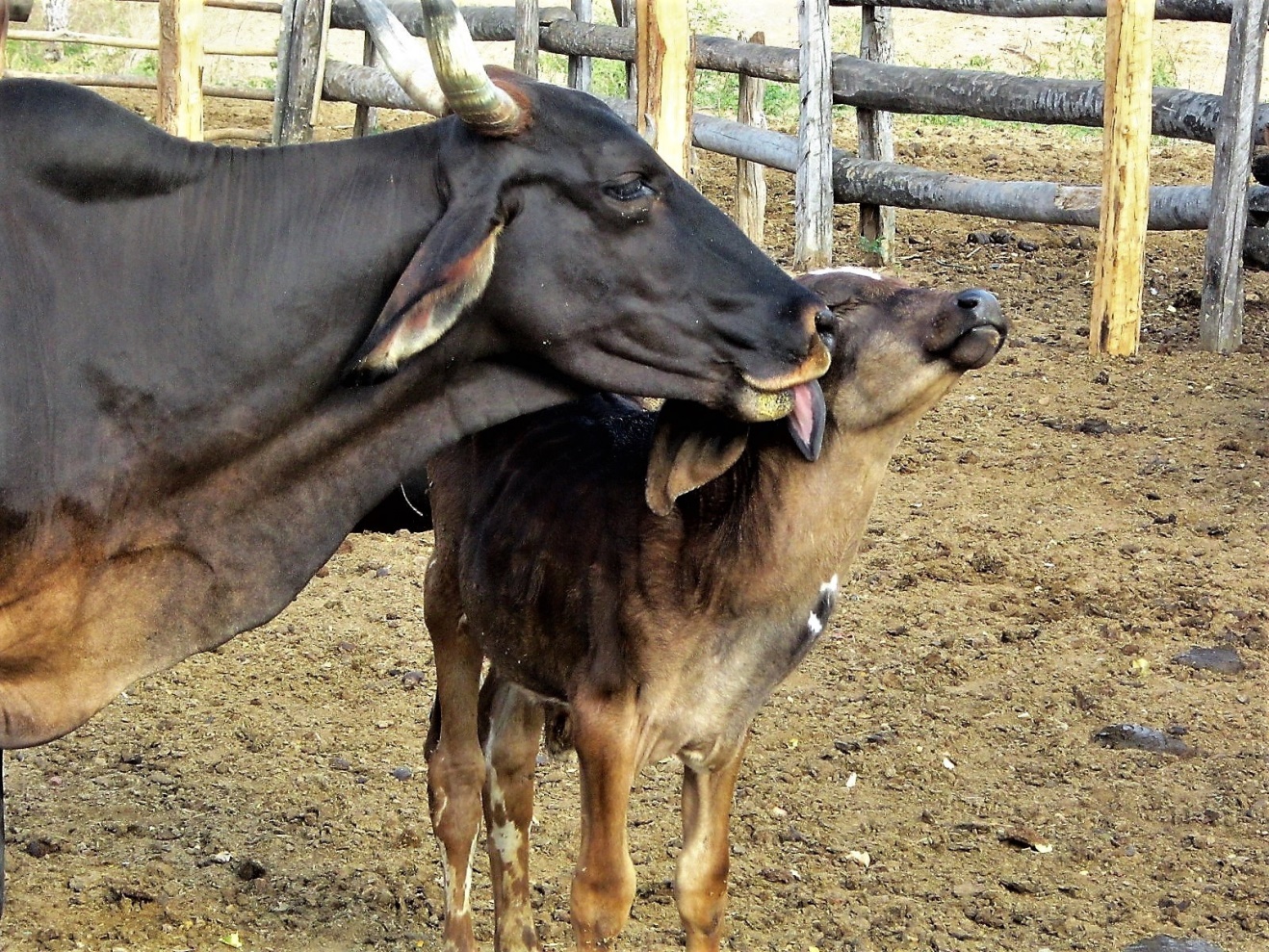
In two beautiful pieces Porcher & Schmitt (2010) and Deturche (2020) describe mechanized milking dairy cows practice through human and animal actions (farmers and cows), mediated by the parlor and the equipment used for milk extraction. The authors lead us to realize that the actions, the wishes of the cows, and the relationship of trust with the farmer are crucial to the development of milking. Based on a narrative of manual milking, “a manual milk-drawing technique” among dairy cow farmers, I present a similar proposal, but in as a photographic essay. It is based on the ethnographic data from the field research in Palha Amarela and Santa Cruz farms, both located at the municipality of Piancó (Paraíba/Brazil). The photographs are considered as a methodological resource contributing to highlight the actions (and emotions) of animals in domestication relations.
Photos enables the opportunity to observe through gestures and body movements (human and animal) the communication process established by the body's ability to "affect and be affected" (Despret 2004).
Following François Sigaut's (2002) anthropological conceptualization of technique: "what people do” the essay argues that any kind of manipulation with cattle involves their actions and emotions, and so technique is realized by what farmers and animals do and feel (NASCIMENTO, 2021). That said, technique of milking (“tirar leite”, or sometimes “ordenha manual”) should be considered through the body movements of the animals (and the farmers) by meeting, restraining, and manipulating the cow teats, revealing affective aspects of the subjects involved (cow-calf-creator).
In conclusion, the affection acts as an emotional bond between animals, as observed in (physical and emotional) reactions when cow and calf meet due to the deep desire she has to suckle and the calf has to be suckled. A feeling that causes the milk to flow and makes the farmer’s action difficult due to the calf's body movements in search of its mother teats. The arreio (holding the calf to the front right of the cow) makes the cow continue releasing milk by physical contact with the calf, without no fighting for the teats with the farmers. However, as the bodies are united, his body movement is felt by the cow, and consequently by the farmer, due to his body position while practicing the extraction of milk.
On the other hand, the peia (restraint of the cow's hind legs), has the objective of reducing the risk of sudden movements of the cow (kicking, or “coice”), producing a safety measure. When the cow insists on getting loose from the ropes, incurring in the risk of falling and in a higher degree of stress for the animal, the breeder will make technical choices, demonstrating their trust and intimacy with each animal, abandoning, or changing the use of the ropes.
Published
Issue
Section
License
Copyright (c) 2022 AntHropológicas Visual

This work is licensed under a Creative Commons Attribution-NonCommercial 4.0 International License.
Direitos Autorais para trabalhos audiovisuais publicados na AntHropológicas Visual sã licenciados para uma licenca Creative Commons 4.0 BY-NC.
