Idioma
Preventive measures for mechanical ventilation-associated pneumonia in the elderly: an integrative review
Preventive measures for mechanical ventilation-associated pneumonia in the elderly: an integrative review
Medidas preventivas de pneumonia associada à ventilação mecânica em idosos: revisão integrativa
ABSTRACT
Objective: to identify the scientific evidence on nursing care aimed at preventing Mechanical Ventilation-Associated Pneumonia in the elderly. Methodology: this is an integrative literature review, with a search of databases (PUBMED/MEDLINE, CINAHL) and the virtual library (SciELO), using the PICO search strategy. Publications from the last 10 years were considered, resulting in 172 studies. After applying the inclusion and exclusion criteria and careful reading, 10 manuscripts remained for the final sample. Results: There was a predominance of studies published in Brazil, with a heterogeneous time frame in terms of year of publication. All of the studies addressed the prevention of ventilator-associated pneumonia as a major challenge in intensive care units, with the following common precautions being found in most of the studies: oral hygiene, tracheal suctioning, cuff pressure monitoring, elevation of the bedhead and care of ventilator circuits, as well as important findings with regard to the elderly, such as nutritional care, adequate assessment of the level of consciousness and early tracheostomy. Final considerations: specific care aimed at the health care of the elderly undergoing invasive mechanical ventilation was identified, demonstrating actions to be implemented in the protocols for preventing Mechanical Ventilation-Associated Pneumonia.
Descriptors: Nurses Improving Care for Health System Elders,
Intensive Care Units, Pneumonia, Ventilator-Associated, Aged, Prevention
RESUMO
Objetivo: identificar as evidências científicas sobre os cuidados de Enfermagem voltados à prevenção da Pneumonia Associada à Ventilação Mecânica em idosos. Metodologia: trata-se de uma revisão integrativa da literatura, com busca nas bases de dados (PUBMED/MEDLINE, CINAHL) e biblioteca virtual (SciELO), com a utilização da estratégia de busca PICO. Consideraram-se publicações dos últimos 10 anos, resultando em 172 estudos, após a aplicação dos critérios de inclusão, exclusão, e leitura criteriosa, sobraram 10 manuscritos para a amostra final. Resultados: houve predominância de estudos publicados no Brasil, quanto ao ano de publicação, constatou-se uma heterogeneidade temporal. Todas as investigações abordaram a prevenção da pneumonia associada à ventilação mecânica como um grande desafio das unidades de terapia intensiva, sendo os cuidados em comum encontrados na maioria dos estudos: higiene bucal, aspiração traqueal, monitorização de pressão de cuff, elevação da cabeceira do leito e cuidados com circuitos do ventilador, além de achados importantes no que se refere à pessoa idosa, como: cuidados nutricionais, avaliação adequada do nível de consciência e traqueostomia precoce. Considerações finais: identificaram-se os cuidados específicos voltados à assistência à saúde da pessoa idosa submetido à ventilação mecânica invasiva, demonstrando ações a serem implementadas aos protocolos de prevenção de Pneumonia Associada à Ventilação Mecânica.
Descritores: Cuidado de Enfermagem ao Idoso Hospitalizado; Unidades de Terapia Intensiva; Pneumonia Associada à Ventilação Mecânica; Idoso; Prevenção.
INTRODUCTION
The increase in life expectancy and the decrease in the birth rate have contributed to the demographic transition in Brazil and around the world, which has led to an epidemiological transition. As a result, there has been a significant increase in the number of elderly people in the country, and at the same time, the high rates of infectious diseases have been replaced by Chronic Non-Communicable Diseases (CNCD).1
In this context, the senior citizens may have one or more comorbidities and the process of aggravation of any of them makes them more prone to a greater number of hospital admissions and an increase in the length of institutional stay, favoring the development of Healthcare-Related Infections (HAIs), which contributes to a decline in health, leading to admissions to Intensive Care Unit (ICU) beds.2
HAIs are currently considered to be adverse events caused by the health care provided to users at some point during their hospitalization. In the field of intensive care, Mechanical Ventilation-Associated Pneumonia (VAP) stands out the most, accounting for around 25% of acquired infections, which is classified as a lung infection that occurs after 48 hours of ventilatory support through invasive mechanical ventilation or up to 72 hours after extubation.3-4
Some studies have shown that each day of Invasive Mechanical Ventilation (IMV) increases the incidence of VAP development by 3% in the first five days of intubation, and due to the high morbidity and mortality rate this condition can cause critically ill patients, it is considered a major therapeutic challenge for the multi-professional team at a global level.3-4
It originates from micro- or macro-aspirations, the latter being rarer but leading to serious hemodynamic complications. The main sources of contamination are secretions from the upper airways, exogenous inoculation of contaminated material, and reflux from the gastrointestinal tract. Clinical, radiological, and laboratory findings are used for diagnosis.5
It is important to be aware of VAP signs and symptoms in elderly patients in order to make an early diagnosis and start appropriate treatment. This can help avoid complications and reduce hospitalization time. Aging is considered a non-modifiable risk factor for the onset of VAP, aggravated by its physiological changes that can affect the presentation and response to infections. Increased vulnerability and a mostly atypical presentation mean that there is a delay in clarifying the diagnosis and, as a result, severe complications can set in irreversibly, leading to longer hospital stays.5
It is essential to emphasize that the immune reaction of elderly individuals to different pathogens and treatments can be diverse and less effective. This is often associated with the presence of comorbidities, weakened immunity, cases of malnutrition, the use of multiple medications (polypharmacy), functional difficulties, and several other factors.6
Based on these definitions, the following guiding question was established: what care prevents Mechanical Ventilation-Associated Pneumonia in the elderly?
OBJECTIVE
Identify the scientific evidence on nursing care that prevents ventilator-associated pneumonia in the elderly
METHOD
This type of study corresponds to an integrative literature review. In this context, a comprehensive analysis of the existing literature on a specific topic is conducted, allowing for a critical evaluation and synthesis of the results found concerning the topic in question. This approach helps to make effective decisions, which can contribute to modifying and improving clinical practice.7-8
To obtain the relevant studies, the following databases were consulted: Medical Literature Analysis and Retrieval System Online (PUBMED/MEDLINE), Cumulative Index to Nursing and Allied Health Literature (CINAHL), and the Virtual Library Scientific Electronic Library Online (Scielo). The research took place in January and February 2022.
As for the selection of studies, the following were included: articles that addressed the topic, that were available in full in the selected databases, published in the last 10 years, in Portuguese, English, and Spanish, and that met the study's guiding question. The exclusion criteria were: non-scientific publications, letters, editorials, review articles, course completion papers, dissertations, and theses.
The descriptors used to search for the articles were selected from terms available in the controlled vocabulary - Health Sciences Descriptors (DeCS) and Medical Subject Headings (MeSH), in order to allow simultaneous cross-referencing, the Boolean operators OR and AND were used in each database. The following descriptors were used: Nurses Improving Care for Health System Elders; Critical Care; Pneumonia, ventilator-associated.
As for the search strategy, the PICO method was used, which consists of thematic blocks intending to answer a given problem, considering the scientific evidence. This model considers four items: P - population/patient/problem; I - intervention or exposure that will be considered; C - comparison of the intervention or exposure when necessary; O - clinical outcomes or results.9 Taking into account the items listed, the following thematic blocks were established for this study for the elaboration of the question, as shown in Table 1.
|
CONSTRUCT |
RESULT |
|
P - POPULATION/PROBLEM |
VAP in the elderly |
|
I – INTERVENTION |
Nursing Care |
|
C – COMPARISON |
There was no comparison in this study |
|
O – OUTCOME |
Prevention of VAP |
Chart 1 - PICO Strategy. João Pessoa (PB), Brazil (2022).
According to the criteria established and based on the combination of descriptors, a total of 172 articles on preventive measures for VAP were found. After applying the filters with the exclusion criteria and removing the repeated articles, 38 articles were chosen. A priori, a careful reading of the title was carried out, followed by the abstract of these publications, in order to identify studies similar to the guiding question of this research, and finally, the selected publications were read in full. After refining the data, 10 articles were selected to make up the final sample. The entire study selection process followed the PRISMA flow diagram, as shown in the figure below:
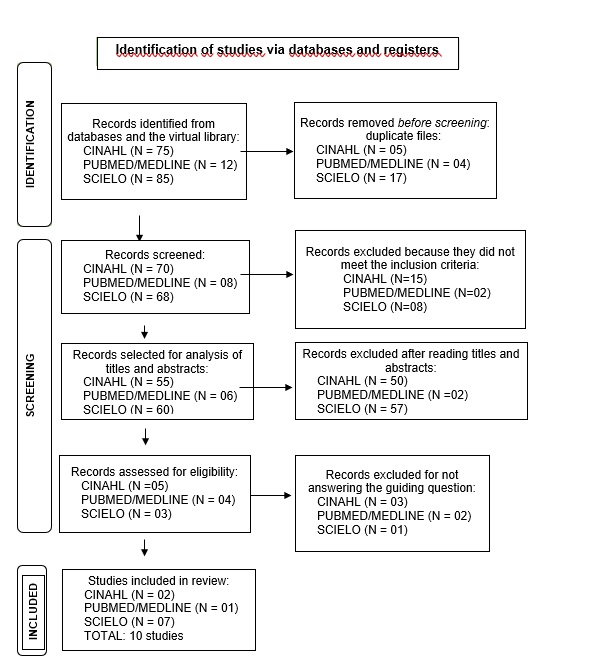
Figure 1- PRISMA flow diagram of the search and selection of articles on preventive measures for Mechanical Ventilation-Associated Pneumonia in the elderly. João Pessoa (PB), Brazil (2022).
RESULTS
After removing duplicates, the search identified 1,897 studies. At the end of the selection process, ten studies were included. The PRISMA-ScR18 flowchart shows the process of selection and final inclusion of the studies, and at the end shows the total number of biographical searches carried out (Figure 1).
The sample studied (n=10) included four publications in English and six in Portuguese. Concerning the study settings, six of the investigations took place in Brazil, three on the Asian continent (Japan, China, and Korea), and only one of the studies was carried out on the European continent (Portugal). Of the national studies, three were in Brazil's South, two in the Southeast, and one in the Midwest.
As for the year of publication, there was heterogeneous timing, with two annual publications in the years 2018, 2014, and 2012, and one publication in the years 2022, 2021, 2020, and 2019. Regarding the level of evidence of the studies found, one was classified as 1A, which indicates that the available evidence is based on high-quality, well-conducted studies, five were classified as 2B, referring to evidence from better-quality observational studies, and four as 2C, referring to evidence from low-quality observational studies, which may be more prone to bias and methodological limitations, which reduces their reliability.7
After carefully reading all the studies, the author drew up a summary table containing the following information: name of the journal, location of the study, year of publication, authors, title, level of evidence, type of study, and main results, as shown in Table 2.
TABLE 2 - Papers included in the study according to journal, authors, place and year of publication, title, level of evidence, and main results. João Pessoa (PB), Brazil (2022).
|
Journal/ location and year of publication |
Authors |
Title |
LE |
Type of study |
Main results |
|
BMC Geriatrics
Korea (2018) |
Lee, Kim, Choi, Lee; Chang, Ryu. |
Clinical outcomes and prognostic factors in patients transferred directly to the Intensive Care Unit from long-term institutional beds: a retrospective clinical study. |
2-B |
Retrospective clinical study. |
Rapid administration of appropriate antibiotics and adequate nutritional support. |
|
BMC Pulmonary Medicine
Japan (2018) |
Hamaguchi, Suzuki, Sasaki, Abe, Wakabayashi, Sando, et al. |
Six underlying health conditions that strongly influence mortality based on pneumonia severity in an aging population in Japan: a prospective cohort study. |
2-B |
Multicenter prospective cohort study. |
Assessment of previously impaired level of consciousness; Assessment of the need for a Nasoenteral and Nasogastric Tube (NET and NGT) diet; Investigation into the presence of chronic neurological diseases and other comorbidities.
|
|
BMC Infectious Diseases
China (2022) |
Teng, Wang, Nie, Zhang, Liu. |
Analysis of risk factors for early-onset ventilator-associated pneumonia in a neurosurgical intensive care unit. |
2-B |
Observational, retrospective cohort study. |
Raising the head of the bed, maintaining cuff pressure, attempting spontaneous awakening , and starting enteral nutrition as soon as possible, and controlling hypothermia and hyperglycemia.
|
|
Revista de Enfermagem Referência
Brazil (2020). |
Soares, Aldrigue, Gaspar, Franco, Pochapski, Campagnoli, et al. |
Effect of chlorhexidine on microorganisms in the saliva of patients in an Intensive Care Unit. |
2-B |
Cohort study. |
Control of oral biofilm through oral hygiene with 0.12% chlorhexidine. 2x day |
|
Jornal Brasileiro de Pneumologia
Brazil (2021). |
Pinto, Silva, Santiago-Junior, Peres |
Efficiency of different oral hygiene protocols associated with the use of chlorhexidine in the prevention of Mechanical Ventilation-Associated Pneumonia. |
1-A |
Systematic review and meta-analysis. |
Elevation of the head of the bed, administration of prophylactic antibiotics, limitation of the duration of MV, interruption of sedation, and oral hygiene.
|
|
Acta Paulista de Enfermagem
Brazil (2019). |
Alecrim, Taminato, Belasco, Barbosa, Kusahara, Fram. |
Good practices in the prevention of ventilation-associated pneumonia. |
2-B |
Prospective cohort study. |
Daily interruption of sedation, care of ventilation circuits, and routine replacement of this device is not recommended. Elevation of the head of the bed from 30° to 45°, oral hygiene with chlorhexidine, adequate maintenance of cuff pressure, strict monitoring of cuff pressure before and after suctioning the airways, and oral hygiene.
|
|
Brazilian Journal of Otorhinolaryngology
Portugal (2014). |
Correia, Sousa, Pinto, Barros. |
Impact of early elective tracheostomy in critically ill patients. |
2-C |
Retrospective observational study. |
Early tracheostomy (performed until the seventh day of mechanical ventilation) reduced VAP. |
|
Texto e Contexto Enfermagem
Brazil (2014). |
Silva, Salles, Nascimento, Bertoncello, Cavalcant. |
Evaluation of a bundle for the prevention of ventilation-associated pneumonia in intensive care units. |
2-C |
Quantitative, descriptive, cross-sectional study. |
Head of the bed elevated 30-45°; endotracheal suction when necessary; cuff pressure between 20-30 cmH2 O; and oral hygiene with 0.12% chlorhexidine.
|
|
Texto e Contexto Enfermagem
Brazil (2014). |
Silva, Nascimento, Salles. |
Mechanical Ventilation-Associated Pneumonia prevention bundle: a collective construction. |
2-C |
Convergent/Assistance qualitative study |
Oral and hand hygiene, prevention of broncho-aspiration; Care with secretion aspiration and ventilation circuit; Daily assessment of the possibility of extubation, avoidance of unnecessary sedation, and continuing education for the team.
|
|
Acta Paulista de Enfermagem
Brazil (2012). |
Gonçalves, Brasil, Ribeiro, Tipple. |
Nursing actions in the prophylaxis of Mechanical Ventilation-Associated Pneumonia. |
2-C |
Cross-sectional, observational study. |
Aseptic care when setting up the ventilator and with nebulizers, in addition to the strong recommendation of subglottic aspiration and interruption of the diet before aspiration, oral hygiene, and when decubitus of less than 30º is necessary. |
The evidence found in various studies showed that the most commonly found precautions are: oral hygiene with 0.12% chlorhexidine, tracheal suctioning, when necessary, cuff pressure monitoring before and after suctioning the airways, elevation of the head of the bed to between 30 and 45º and care of the ventilator circuits(3,10-13).
DISCUSSION
It is important to point out that the sample studied presents precautions that can prevent VAP and that should be implemented in health services in order to reduce the morbidity and mortality caused by it.
Analysis of the publications reveals that they are aimed at the general public. However, it is undeniable that the majority of ICU admissions are made up of elderly individuals, which can be attributed to the various factors associated with the changing epidemiological profile. Therefore, it is imperative that specific measures are taken, paying attention to specific audiences, in order to improve the effectiveness of prevention protocols. This, in turn, will contribute significantly to the safety and quality of the care provided.
More than half of ICU admissions are of elderly people aged 65 or over, and respiratory infections and their complications are responsible for the highest mortality in this population.10,14-18 This corroborates the findings of this research, where five of the studies used had a majority of elderly participants in their samples.
In this sense, it is necessary to understand the natural physiological specificities of aging, so that care can be designed according to this age group, taking into account the changes intrinsic to the elderly, as well as other age-related risk factors that contribute to a longer duration of mechanical ventilation and, consequently, a greater risk of developing VAP.18-19
The respiratory system is highly complex, made up of various structures ranging from the nose, mouth, pharynx, larynx, trachea, bronchi, and lungs. These structures work in coordination to enable the lungs to carry out the gas exchange that is essential for breathing. In addition, there are other structures that play an auxiliary role in the system, including the ribs, the sternum, the spine, and the muscles that make up the rib cage.19
In the aging process, it is natural for these structures to undergo changes both in terms of their structure and their function, due to advancing age. One of the main changes related to the respiratory system in elderly people is a decrease in lung elasticity. This results in changes in respiratory control, a reduction in muscle strength, and lower thoracic compliance. These changes can make the process of withdrawing ventilatory support (ventilator weaning) more challenging and increase the likelihood of elderly people requiring prolonged mechanical support.20
This prolonged dependence on mechanical support can lead to an increase in the length of hospital stay and also increase the risk of acquiring HAIs, especially VAP. It is therefore crucial that health professionals are aware of these age-related changes in the respiratory system and adopt preventative measures and specific strategies to adequately care for the elderly population, in order to improve the quality of care and reduce complications.20
A multicenter prospective cohort study carried out in Japan with more than a thousand elderly people reported that the presence of chronic neurological diseases, coupled with a previously impaired level of consciousness, is considered an important risk factor for the worsening of pneumonia, in addition to the presence of other comorbidities, such as heart, kidney and liver failure, COPD, neoplasms, diabetes mellitus, and dementia. Thus, it is believed that the increase in mortality is due to the patient's previous health condition, which corroborates the position of the National Health Surveillance Agency (ANVISA), which highlights comorbidities as risk factors for the development of VAP.16,4
Given this scenario, it is crucial to emphasize the importance of conducting a thorough investigation of the patient's previous history during the nursing process. This plays a fundamental role in the outcome of the hospitalization, as it prevents the exacerbation of comorbidities and worsening of the health condition.16
The presence of a previously compromised level of consciousness, as well as the existence of dementia, makes the daily assessment of the level of consciousness by health professionals a challenging task. This, in turn, can impact the ability to progress with the patient's extubation process. In this context, the possibility of greater dependence on mechanical ventilation can arise, sometimes making early tracheostomy a viable option.18
Therefore, obtaining a complete patient history and carefully assessing the patient's condition is crucial to determining the best therapeutic approach, minimizing complications, and ensuring adequate care, especially in cases of patients with impaired levels of consciousness and dementia.
According to ANVISA, there is no evidence that early tracheostomy reduces VAP, which is in line with this study's findings, since a retrospective observational cohort study carried out in Portugal over five years showed that early tracheostomy in critically ill patients resulted in statistically significant reductions in the length of mechanical ventilation, ICU stays and the incidence of VAP. It should be noted that the study was carried out with 119 participants, with a mean age of 66 years, and concluded that early tracheostomy reduced VAP rates in the elderly.4,18
The practice of daily awakening emerged as a frequently mentioned intervention in the selected studies, standing out as effective care in VAP.3,10,11,21 This approach involves interrupting the patient's sedation in order to assess their response to verbal commands and identify the presence of agitation at the time of awakening, and is conducted by the nurse systematically and occurs routinely, using appropriate scales, such as the Richmond Agitation and Sedation Scale (RASS). By applying these scales, the healthcare team monitors the patient's level of sedation and adjusts the administration of medication according to each patient's individual response, until it is determined, together with the multi-professional team, that the patient has reached the necessary criteria for extubation, i.e. the removal of the ventilation tube.22
It is imperative to point out that a reduction in VAP is closely linked to a shorter time of use and lower doses of sedatives. However, in the context of the elderly, in addition to the conventional scales applied, it is necessary to seek information about impaired level of consciousness and a history of previous dementia, as previously discussed.3,10-12,16
A retrospective clinical study carried out in Korea showed that the rapid administration of the appropriate antibiotic provided a better prognosis in elderly people affected by this infection. It also highlighted the need to pay attention to adverse events, which are more common in the elderly and may be related to impaired protein homeostasis, polypharmacy, and increased or decreased bioavailability.15 However, ANVISA opposes the use of prophylactic antibiotics for prevention.4
Nutritional deficiency is also considered a factor that increases mortality in critically ill patients. In the context of the elderly, nutritional intake can be impaired by protein deficiency, low serum albumin, and the increased catabolism inherent in critically ill patients, justifying the malnutrition often found in ICUs, which predisposes them to vulnerability to infections.10 It is therefore essential to start the enteral diet as soon as possible; however, precautions should be taken to prevent broncho-aspiration, which can cause VAP.15
A recent research finding carried out in China, through an observational, retrospective cohort study, noted the importance of controlling hypothermia and hyperglycemia in preventing VAP since hypothermia impairs the functions of the immune system and inhibits the secretion of pro-inflammatory cytokines, preventing leukocyte migration and phagocytosis, causing insulin resistance and consequent hyperglycemia, caused by hypothermia, thus increasing the risk of infections and increasing the incidence of VAP.10 It is essential to note that measures to control hypothermia and hyperglycemia are not currently part of VAP prevention protocols, so this is an extremely important finding for implementation in the care of patients undergoing MV.
As for the limitations of this study, it was restricted to the difficulty of finding research that addressed preventive measures for this condition, aimed exclusively at the elderly, taking into account this population's particularities, which in turn is the age group responsible for occupying the majority of intensive care beds, whether public or private.
This research will provide support for safe, quality nursing care for the elderly who require invasive ventilation intervention, since it makes it possible to take a differentiated look at this population, respecting their particularities linked to the aging process, thus reducing the rates of VAP, with a consequent reduction in the length of ICU stay and a reduction in mortality.
CONCLUSION
This study presents specific care for the health of the elderly in intensive care, more precisely those undergoing invasive mechanical ventilation, bringing unprecedented actions to be implemented in VAP prevention protocols, such as assessing the patient's previous history, controlling hypothermia and hyperglycemia, as well as understanding the physiological, functional and structural changes that occur in the elderly. The research also made it possible to discuss a study with strong scientific evidence that indicates early tracheostomy as a measure capable of reducing the incidence of this infection.
However, although most of these studies have significant samples of elderly people, the majority refer to the general population. It is known that it is necessary to take a differentiated view of the elderly population, especially about intensive care, which is often the scene of chronification and even the end of life.
There is a need for continuing education aimed at nursing professionals, with regard to updating preventive measures for VAP, especially when it comes to the elderly, awakening in these professionals a greater sensitivity and critical judgment of the specificities that exist in this public.
CONTRIBUTIONS
Freitas FBD and Pontes MLF contributed to the conception, planning, analysis and interpretation of data and the writing of the study. Santos WP, Leal NPR, Nova FALV and Leite MAP contributed to the critical review of the study.
CONFLICTS OF INTERESTS
Nothing to report.
REFERENCES
- Veras RP, Oliveria M. Envelhecer no Brasil: a construção de um modelo de cuidado. Cien saude colet. [Internet]. 2018 [cited 2022 Jan 15]; 23 (6): 1929-1936. DOI: https://doi.org/10.1590/1413-81232018236.04722018
- Bonfada D, Barbosa ICR, Lima KC, Altes AG. Gasto de internação de idosos em unidades de terapia intensiva nos hospitais privado de uma capital no nordeste brasileiro. Rev bras geriatr gerontol. [Internet]. 2020 [cited 2022 Jan 15]; 23 (2). DOI: http://dx.doi.org/10.1590/1981-22562020023.200020
- Alecrim RX, Taminato M, Belasco AGS, Barbosa D, Kusahura DM, Fram, D. Boas práticas na prevenção de pneumonia associada à ventilação mecânica. Rev Acta paul enfer. [Internet]. 2019 [cited 2022 Jan 15]; 32 (1): 11-17. DOI: http://dx.doi.org/10.1590/1982- 0194201900003
- Brasil. Agência Nacional de Vigilância Sanitária. Medidas de Prevenção de Infecção Relacionada à Assistência à Saúde. [Internet]. 2017 [cited 2022 Jan 21]. Available from: https://www.gov.br/anvisa/pt-br/centraisdeconteudo/publicacoes/servicosdesaude/publicacoes/caderno-4-medidas-de-prevencao-de-infeccao-relacionada-a-assistencia-a-saude.pdf/view
- Chicayban LM, Terra ELVS, Ribela JD, Barbosa PF. Bundles de prevenção de pneumonia associada à ventilação mecânica: a importância da multidisciplinaridade. Rev Perspects (online). [Internet]. 2017 [cited 2022 Jan 18]; 7 (25): 25-35. DOI: https://doi.org/10.25242/886872520171200
- Ferreira EG, Kimura A, Ramos DF, Albuquerque PL, Antunes MD, Oliveira DV. Prevalência de pneumonia associada à ventilação mecânica por meio de análise das secreções traqueobrônquicas. Rev RENE. [Internet]. 2017 [cited 2022 Jan 12]; 18 (1): 114-20. DOI: https://doi.org/10.15253/2175-6783.2017000100016
- Pedrosa KKA, Oliveira ICM, Feijão AR, Machado RC. Enfermagem baseada em evidência: caracterização dos estudos no Brasil. Cogitare Enferm [Internet]. 2015 [citado 2017 out. 24]; 20(4):733-741. Disponível em: http://revistas.ufpr.br/cogitare/article/view/40768/26737
- Mendes KDS, Silveira RCCP, Galvão CM. Integrative literature review: a research method to incorporate evidence in health care and nursing. Texto & contexto enferm. [Internet]. 2008 [cited 2022 Jan 25]; 17 (4): 758-64. DOI: https://doi.org/10.1590/S0104-07072008000400018
- Araújo WCO. Recuperação da informação em saúde: construção de modelos e estratégias. ConCI: conv ciênc inform. [Internet]. 2020 [cited 2022 Jan 25]; 3 (2). DOI: https://doi.org/10.33467/conci.v3i2.13447
- Teng G, Wang N, Nie X, Zhang L, Liu H. Analysis of risk factors for Early-onset ventilador-associated pneumonia in a neurosurgical intensive care unit. BMC infect dis. [Internet]. 2022 [cited 2022 Jan 28]; 22 (66). DOI: https://doi.org/10.1186/s12879-022-07053-7
- Pinto ACS, Silva BM, Júnior-Santiago JF, Peres SHC. Eficiência de diferentes protocolos de higiene bucal associados ao uso de clorexidina na prevenção da pneumonia associada a ventilação mecânica. J bras pneumol. [Internet]. 2021 [cited 2022 Jan 29]; 47 (1). DOI: https://dx.doi.org/10.36416/1806-3756/e20190286
- Silva SG, Nascimento ERP, Salles RK. Bundle de prevenção da pneumonia associada a ventilação mecânica: uma construção coletiva. Texto & contexto enferm. [Internet]. 2012 [cited 2022 Jan 29]; 21 (4): 837-844. DOI: https://doi.org/10.1590/S0104-07072012000400014
- Gonçalves FAF, Brasil VV, R LCM, Tipple AFV. Ações de enfermagem na profilaxia da pneumonia associada a ventilação mecânica. Acta paul enferm. [Internet]. 2012 [cited 2022 Jan 29]; 25:101-107. DOI: https://doi.org/10.1590/S0103-21002012000800016
- Sousa DKC, Timóteo PAD, Teotonio VLA, et al. Caracterização de idosos internados em unidade de terapia intensiva por doença respiratória aguda. Brazilian App Scien Review. [Internet]. 2021 [cited 2022 Feb 02]; 1: 378-390. DOI: https://doi.org/10.34115/basrv5n1-025
- Lee SH, Kim SJ, Choi YH, et al. Clinical outcomes and prognostic factors in patients directly transferred to the intensive care unit from long-term care beds in instituitions and hospitals: a retrospective clinical study. BMC geriatr. [Internet]. 2018 [cited 2022 Feb 02]; 18:259. DOI: https://doi.org/10.1186/s12877-018-0950-9
- Humaguchi S, Suzuki M, Sasaki K, et al. Six underlying health conditions strongly influence mortality based on pneumonia severity in na ageing population of Japon: a prospective cohort study. BMC pulm med. [Internet]. 2018 [cited 2022 Feb 02]; 18:88. DOI: https://doi.org/10.1186/s12890-018-0648-y
- Soares EL, Aldrigue RH, Gaspar MDR, et al. Efeito da clorexidina em microrganismos na saliva de doentes internados em unidade de terapia intensiva. Referência. [Internet]. 2020 [cited 2022 Feb 02]; 5:6. DOI: https://doi.org/10.12707/RV20162
- Correia IAM, SOUSA V, Pinto LM, Barros E. Impacto of Early elective tracheotomy in critically ill patients. Braz j otorhinolaryngol. [Internet]. 2014 [cited 2022 Feb 05]; 80: 428-434. DOI: http://dx.doi.org/10.1016/j.bjorl.2014.07.008
- Souza KC, Bertolini SMMG. Impactos morfofuncionais da imobilidade prolongada na terceira idade. Rev uningá. [Internet]. 2019 [cited 2022 Feb 02]; 56 (4): 77-92. Available from: http://revista.uninga.br/index.php/uninga/article/view/2777
- Ferreira AG, Oliveira D V, Lopes EDS, Tonella RM, Barbosa C R, Martins LC. Treino muscular inspiratório em idosos na ventilação mecânica: uma revisão sistemática. Revista Saúde (Sta. Maria). [Internet]. 2019 [cited 2022 Feb 05]; 45:2. DOI: http://doi.org/10.5902/2236583437727
- Silva SG, Salles RK, Nascimento ERP, Bertoncello KCG, Cavalcanti CDK. Avaliação de um bundle de prevenção da pneumonia associada a ventilação mecânica em unidade de terapia intensiva. Texto & contexto Enferm. [Internet]. 2014 [cited 2022 Feb 10]; 23: 744-750. DOI: http://dx.doi.org/10.1590/0104-07072014002550013
- Barbosa TP, Beccaria LM, Bastos AS, Silva DC. Associação entre nível de sedação e mortalidade de pacientes em ventilação mecânica em terapia intensiva. Rev Esc Enferm USP. [Internet]. 2020 [cited 2022 Feb 10]; 54:e03628. doi: https://doi.org/10.1590/S1980-220X2019006903628
Correspondence
Maria Amanda Pereira Leite
E-mail: amandamapl1997@gmail.com
Copyright© 2024 Revista de Enfermagem UFPE on line/REUOL.
This is an open access article distributed under the Attribution CC BY 4.0 Creative Commons Attribution-ShareAlike 4.0 International License, which allows others to distribute, remix, adapt and create from your work, even for commercial purposes, as long as they credit you for the original creation. It is recommended to maximize the dissemination and use of licensed materials.
 Português (Brasil)
  English
  Español (España)