Idioma
Nursing interventions for adult patients with intestinal stomas due to malignant neoplasm: a scoping review
INTRODUCTION
Malignant neoplasms of the intestine are a growing global health concern due to their significant economic, social and epidemiological impact. In Brazil, the estimated incidence of colorectal cancer for the period 2023-2025 is approximately 21,970 cases in men and 23,660 cases in women. Malignant neoplasms of the intestine are classified as the second most common cancer in men in the Southeast and Midwest regions, and the third most common in the South region. For women, it is the second most common cancer in the Southeast and South regions and the third most common in the Midwest, Northeast, and North regions.1
The treatment of malignant neoplasms of the intestine requires a multidisciplinary approach due to its complexity by considering factors such as pathological staging, tumor characteristics, and predictive and prognostic factors. Surgery is often considered the main therapeutic option, with several alternatives available for tumor removal that can be performed alone or in combination with other modalities.2
In some cases, when effective resection of the affected portion of the bowel is possible, the creation of a stoma either permanent or temporary may be indicated to significantly reduce the risk of metastasis to other organs. The specific location of the stoma is critical in determining the care required, as it influences the consistency and pH of the stool.3
The various forms of stoma, such as ileostomy, transverse colostomy, and sigmoid colostomy, have different characteristics in terms of consistency and elimination of stool. In addition, surgical procedures such as jejunostomy, in which a catheter is inserted into the lumen of the jejunum, are used to manage nutrition in the proximal small intestine, despite the potential complications associated with these procedures.4-6
The role of the oncology nurse or stomal therapist is fundamental within the multidisciplinary health care team, as their work enables a comprehensive approach to patient care, identifying challenging factors and developing interventions to minimize these challenges and promote patient adjustment.7
The present study aims to make a significant contribution to the nursing practice and well-being of patients with stomas by mapping the key nursing interventions required for these patients in different care settings. It aims to improve the quality of care, enable nurses to make evidence-based decisions and implement effective practices.
OBJECTIVE
Therefore, this scoping review is necessary to identify the best evidence to facilitate patients’ adaptation to stomas, prevent complications, and promote their autonomy and quality of life. These contributions aim to alleviate the challenges faced by caregivers and patients, thereby positively impacting the field of oncology and the health outcomes of these individuals.
METHOD
This is a scoping review following the methodological guidelines of the Joanna Briggs Institute (JBI) Reviewer’s Manual 2020, aligned with the PRISMA Extension for Scoping Reviews (PRISMA-ScR) checklist, and duly registered with the OpenScience Framework. The study was designed based on five predefined steps: 1) identify the main research question; 2) identify the most relevant studies; 3) critically select the studies; 4) review the information obtained; and 5) synthesize the available information and use descriptive statistics to present the synthesized data.8-10
This type of approach aims to map the key concepts used in a particular area of study, chart the evidence, and identify the key knowledge gaps.10
The PCC strategy was used to construct the research question: “P” for population (oncology patients with intestinal stoma), “C” for concept (intestinal stoma), and “C” for context (care unit/setting). Therefore, the established review question was “What are the main nursing strategies required for adult patients with an intestinal stoma due to malignant neoplasm?”9-10
Initially, a selection of terms was made using the Health Sciences Descriptors (DeCS) and Medical Subject Headings (MeSH). The following DeCS terms were included: cuidados de enfermagem, enfermagem de cuidados críticos, pacotes de assistência ao paciente, estomas cirúrgicos, colostomia, ileostomia, jejunostomia, carcinoma, neoplasias e oncologia. In Spanish: atención de enfermería, enfermería de cuidados críticos, paquetes de atención al paciente, estomas quirúrgicos, colostomía, ileostomía, yeyunostomía, carcinoma, neoplasias e oncología médica. In MeSH: nursing care, critical care nursing, patient care bundles, surgical stomas, colostomy, ileostomy, jejunostomy, carcinoma, neoplasms e medical oncology.
Thus, the final search strategy defined was: "(Nursing Care" OR "Critical Care Nursing" OR "Patient Care Bundles" OR Nurs*) AND (Ostomy OR "Surgical Stomas" OR "Enterostomal Therapy" OR Colostomy OR Ileostomy OR Jejunostomy OR "Ostomy patients") AND (Carcinoma OR Neoplasms OR "Medical Oncology" OR "Cancer patients" OR "Oncology patients").
The databases used were: National Library of Medicine and National Institutes of Health, Cumulative Index to Nursing and Allied Health Literature, Web of Science, SCOPUS, Latin American and Caribbean Health Sciences Literature, Embase, and Cochrane Library.
Searches were conducted between July 2021 and January 2022. Inclusion criteria were articles published in Portuguese, English, or Spanish, with full abstracts available in the selected databases, full text articles that addressed the nursing care required for the management of individuals with an intestinal stoma due to malignant neoplasm, with no publication time limit.
Articles were excluded from selection if they did not address the guiding question, did not have abstracts in the databases, were not available in full text format, were written in languages not defined in the study, or were abstracts and conference proceedings, commentaries, editorials, opinions, single case studies, preliminary notes, and reports. Besides, narrative and integrative reviews that discussed non-nurse interventions were excluded.
The studies found using the selected search strategy were exported to the Rayyan software. Duplicate studies were then removed and the titles and abstracts were read. This step was performed by three reviewers, using the triple-blind method for the initial selection, and cases that the reviewers considered divergent were read in full until a consensus was reached.10 Thus, the aim was to ensure the selection of studies that were considered relevant and that addressed aspects of the research question to extract the information of interest.
To extract the results, a standardized model was developed in Microsoft Excel® to compile and tabulate the essential elements of each study to synthesize and interpret data as well as the type and distribution of studies. This included the main nursing interventions for oncology patients with ostomy and metadata (year, country, methodological approach and type of publication). The data were processed and summarized according to the PRISMA-SCR guidelines.9
The studies were classified according to the level of evidence proposed by the JBI. This classification divides the studies into five groups according to the level of scientific evidence.8
Level 1 refers to systematic reviews of randomized clinical trials and the randomized clinical trials themselves; level 2 includes systematic reviews of quasi-experimental studies and retrospective studies with a control group; level 3 includes cohort studies and case-control studies; level 4 includes reviews of descriptive studies, cross-sectional studies, case series and case reports; finally, level 5 refers to expert opinion and research databases. The final categorization was the result of consensus among researchers.8
As this was a bibliographic study, ethical approval was not required. However, ethical and copyright issues have been addressed and studies have been properly referenced.
RESULTS
Initially, 1,064 studies were identified. After reading the titles, 776 abstracts were reviewed for their implications for nursing care of oncology patients with intestinal stomas. Of these, 31 studies addressed the role of nurses in the management of intestinal stomas. The final sample consisted of 25 studies that met the objective of this paper, including 22 articles and three dissertations. Figure 1 shows the flowchart of the search, exclusion, and selection process of the studies in this review based on the recommendation.9
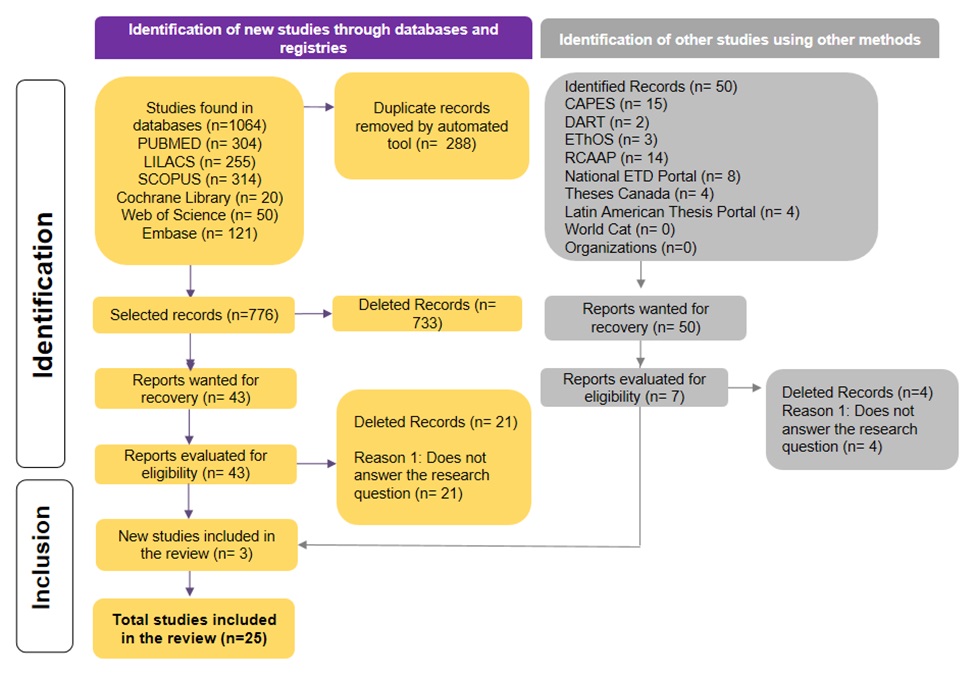
Figure 1. Flowchart of the search process, exclusion, and selection of studies. Divinópolis, (MG), Brazil, 2022.
The predominant language was English, with 16 (64%) studies. Nine (36%) were in Portuguese. There was a predominance of 14 (56%) qualitative studies, followed by 11 (44%) quantitative studies.
On this topic, four studies presented nursing interventions in the preoperative period of intestinal stoma creation, 10 addressed postoperative practices, and 11 addressed both the preoperative and postoperative periods.
According to the evidence found, the most important interventions to reduce the occurrence of complications in patients undergoing stoma surgery were: preoperative counseling, promotion of self-awareness and stoma management, selection of the ideal collection device, and site marking by a stoma care nurse. These interventions were summarized, grouped, and described along with their classification levels of evidence (Figure 2).
|
Interventions |
Authors/Year |
Level of evidence |
|
Preoperative care: ·Perform sensitivity testing. ·Mark the optimal location for the stoma by a stoma care nurse. ·Provide counseling and assess psychological state. ·Conduct personalized nutritional assessment and support. ·Offer nursing consultations. |
(Silva et al., 2013; Salomé et al., 2015; Lima, 2016; Silva et al., 2017; Bulkley et al., 2018; Shao et al., 2020; Zhang et al., 2017; Folguera-Arnau et al., 2020; McMullen et al., 2011) |
IV, II, V |
|
Postoperative care: ·Perform the first change of the collection device 48 to 72 hours after surgery. ·Evaluate the stoma, paying particular attention to its color and output. ·Provide a collection system that meets the patient's needs to promote better self-care. ·Assess the condition of the stoma, peristomal skin, and peristomal sutures at each interaction with the patient. ·Conduct home visits or follow-up phone calls. ·Manage techniques for measuring the collection devices. |
(Silva et al., 2013; Xinxuan, Liwen, & Mingxiu, 2014; Lim et al., 2015; Ay, Bulut, 2015; Sasaki et al., 2017; Steinhagen, Colwell & Cannon, 2017; Xiaofei & Jun, 2018; Xia, 2020; Liu & Ni, 2021; Su et al., 2021; Folguera-Arnau et al., 2020; McMullen et al., 2011) |
IV, I, II, V |
|
Health education actions: ·Explain the diagnosis, prognosis, and treatment plan to the patient's family. ·Assess the patient's individual needs and knowledge about surgery, stoma care, and lifestyle implications. ·Provide predischarge counseling. ·Establish health goals. ·Advise on the inclusion and avoidance of certain foods, control of gases and odors, and the purchase of dietary supplements. |
(Silva et al., 2013; Xinxuan, Liwen, & Mingxiu, 2014; Lima, 2016; Alwi, 2017; Ribeiro, 2019; Farias, Nery & Santana, 2019; Santos, Fava & Dázio, 2019; Huang et al., 2021; Krouse et al., 2016; McMullen et al., 2011, Zhang et al., 2017; Folguera-Arnau et al., 2020; McMullen et al., 2011) |
IV, II, V |
|
Self-image: ·Encourage the patient to observe and touch the stoma. ·Provide psychosocial interventions that encourage open communication, identify family resources, promote positive attitudes, encourage acceptance, and encourage effective and healthy coping with the continuation of lifestyle behaviors. ·Assist with rehabilitation, recreation, and ability to perform daily activities. ·Provide brochures, manuals, and relevant materials. ·Provide counseling and encourage participation in support groups. |
(Silva et al., 2013; Lim et al., 2015; Ercolano et al., 2016; Xu et al., 2018; Paczek et al., 2020; Sujianto, Billy & Margawati, 2020; Xia, 2020; Liu & Ni, 2021; Su et al., 2021; Krouse et al., 2016; McMullen et al., 2011) |
IV, I, II, V |
|
Self-care: ·Provide instructions on ostomy care and use of collection devices. ·Instruct the patient to remove the appliance under running water, to empty the appliance into the toilet, to clean the peristomal area, and to be aware of the risk of burns from hot water and the need to dry the skin before applying a new appliance. ·Advise when to empty the device and the importance of carrying a spare collection device when leaving home. |
(Silva et al., 2013; Dalmolin et al., 2017; Sasaki et al., 2017; Alwi, 2017; Farias, Nery & Santana, 2019; Xia, 2020; Huang et al., 2021; McMullen et al., 2011; Folguera-Arnau et al., 2020; McMullen et al., 2011) |
IV, II, V |
Figure 2. Nursing care for patients undergoing stoma surgery. Divinópolis (MG), Brazil, 2022.
DISCUSSION
This scoping review provides a relevant sample of research on ostomy creation in patients diagnosed with colorectal cancer. The ongoing pursuit of comprehensive patient care is observed in different approaches by health care services, considering that patients with stoma face changes in body image and self-care deficits that directly affect their quality of life. Studies on this topic, particularly highlighting the role of nurses, have grown exponentially since the pioneering work of Norma Gill, who sought to provide strategies to improve the quality of life for patients with stoma.11
One of the possible strategies is the role of these professionals in promoting well-being through education and the development of autonomy after surgery. These patients should preferably be followed by a stoma nurse from the diagnosis and creation of the stoma, whether in an outpatient or inpatient setting, through the hospital stay and preparation for discharge, and into the late postoperative period.12
In the perioperative period, the nurse should begin by identifying the individual needs of the patient and family, assessing their level of understanding of the surgical procedure, and evaluating the recovery equipment that best meets their needs. This should facilitate the promotion of self-care and early discharge, with rehabilitation goals established with the patient and family.13
Marking the ostomy site by a nurse with theoretical and practical knowledge reduces potential skin complications as well as the likelihood of leakage and other problems that can cause unnecessary distress and further hinder the patient’s adaptation and acceptance process. In addition, this approach allows for assessment of the patient's abdomen while sitting, standing, or in other common positions.14
The family plays a crucial role as their reaction to the surgical intervention can either minimize or maximize the consequences on the patient’s self-image and adaptation to the stoma. It is therefore important to provide support and guidance to the family, as a well-informed and emotionally prepared family can facilitate the patient’s adjustment. Conversely, if the family is not adequately guided, they may hinder the patient's confidence in self-care at home. This underscores the need to support family members as well.15
The development of strategies for the immediate postoperative period is a necessary and highly relevant intervention. This action will effectively contribute to minimizing early and late skin complications through a thorough evaluation, including patient history, physical examination, and data collection interviews. However, the conceptual adoption of autonomy and independence must consider the needs and demands of the patient.16-17
Therefore, in the late postoperative period, it is important to plan interventions that focus not only on hygiene care and stoma appliance replacement, but also on addressing the patient’s needs comprehensively. This planning should preferably include health education strategies so that the person with a stoma can improve their skills and become autonomous and independent in their self-care.18
As an educational alternative, the nurse can facilitate communication and patient understanding by using informational activities or resources. Among these resources, the creation of educational and informational videos with a less technical approach can serve as an educational and technological tool. This tool provides knowledge, critical awareness, health promotion, and aids in the understanding of certain events for both the patient and their family.19
Nursing interventions during this period include teleconsultation, verbal support, emotional support, assistance in promoting adherence to medical treatment, monitoring, and follow-up visits with the stoma nurse, all aimed at improving the quality of life of these patients.20-21
A review comparing the effectiveness of an inpatient-only model of care with another that included the patient’s home and community found that the latter was more likely to improve patient self-efficacy and prevent ostomy complications.22-25
Patients experience a variety of changes in their stoma experience, which can lead to concerns that require strategies to provide confidence, self-esteem, and quality of life. The studies reviewed in this analysis indicate that changes in self-image affect patients with stomas. Therefore, nursing interventions are related to encouraging the patient to look at and touch their stoma, assisting in coping with family as well as resocialization and participation in support groups.26
Another recurring theme in health education as a nursing intervention is the promotion of self-care. When the patient is supported with this approach throughout the pre- and postoperative process, better acceptance of the surgery, treatment, and adjustment to the new condition is observed. This is because the stoma goes from being unknown to being known, which reduces the context of the situation and makes it easier to learn the necessary care.27-28
Therefore, the nurse who spends the most time with the patient becomes the primary motivator and guide. They are responsible for helping the patient acquire self-care skills, which will consequently prevent home confinement and possible social isolation. It is also emphasized that effective health education interventions can reduce the likelihood of readmission for patients who are unable to self-care effectively, thus preventing their rehospitalization.29
Besides, clinical practices for cancer patients are still not ideal, but are improving, especially for patients requiring colostomy creation. The age of patients diagnosed has increased in recent years, particularly due to the COVID-19 pandemic. However, there has also been a significant increase in the implementation of prehabilitation and rehabilitation practices over the period 2019-2023.30
It is important to be aware of the limitations of conducting this scoping review, which include the retrieval of studies with low levels of evidence and the possibility that relevant research may exist in other indexing databases.
CONCLUSION
This study, based on national and international scientific evidence, reinforces the importance of initiating support and rehabilitation strategies for patients with intestinal stomas, together with their families, from the moment they are admitted to hospital. This approach aims to provide a comprehensive understanding of the new health condition, encourage self-care with the stoma, and the use of collection devices.
With a focus on patient self-care, this study emphasizes essential information such as protecting the skin around the stoma, proper changing of the collection device, stoma hygiene, and proper diet to prevent gas formation. It also highlights the importance of continuing education, both at home and in support groups, to benefit not only the patient but also their family.
These findings, combined with the results of the systematic review, underscore the importance of promoting self-care and providing comprehensive support to patients with stomas. By adopting the practical recommendations provided in this review, nurses can play a crucial role in reducing complications, improving quality of life and providing emotional support to these patients throughout their journey, from preoperative to late postoperative.
When considering the direct impact of these interventions on nurses’ routines and on the lives of individuals with stomas, it becomes clear that there is a need to integrate these care practices in a consistent and comprehensive manner. This review not only contributes to the advancement of scientific knowledge in oncology nursing and stoma care, but also has the potential to significantly improve the well-being and quality of life of many individuals with intestinal stomas resulting from malignant neoplasms.
Therefore, health care workers need to be aware of these recommendations and incorporate them into their clinical practice to improve the quality of patient-centered care for those who face the challenge of living with a stoma.
CONFLICT OF INTEREST
The authors declare that there are no potential conflicts of interest, including political and/or financial interests related to patents or ownership, provision of materials and/or inputs and equipment used in the study by the manufacturers.
REFERENCES
- Santos M de O, Lima FC da S de, Martins LFL, Oliveira JFP, Almeida LM de, Cancela M de C. Estimativa de Incidência de Câncer no Brasil, 2023-2025. Revista Brasileira de Cancerologia. 2023;69(1). DOI: https://doi.org/32635/2176-9745.RBC.2023v69n1.3700
- Paczek RS, Engelmann AI,Perini GP, Aguiar GPSde, Duarte ERM. Perfil de usuários e motivos da consulta de enfermagem em estomaterapia. Rev enferm UFPE online.2020;14:e245710. DOI: https://doi.org/10.5205/1981-8963.2020.245710
- Farias DLS, Nery RNB, De Santana ME. O enfermeiro como educador em saúde da pessoa estomizada com câncer colorretal. Enfermagem em Foco. 2019 Feb 27;10(1). Available from: http://revista.cofen.gov.br/index.php/enfermagem/article/view/1486/490
- Dalmolin A, Girardon-Perlini NMO, Beuter M, Gomes E da S, Moraes JT, Niestsche EA. Knowledge and practices of nursing professionals in caring for ostomates. Revista Brasileira de Enfermagem [Internet]. 2020;73(5). DOI: https://doi.org/10.1590/0034-7167-2020-0018
- Sasaki VDM, Teles AA da S, Russo TM da S, Aguiar JC, Paraizo-Horvath CMS, Sonobe HM. Care in the Ostomates Programs: the multidisciplinary team’s perspective. Rev Rene. 2020 Sep 14;21:e44295. DOI: https://doi.org/10.15253/2175-6783.20202144295
- Souza RDS, Sousa ATO, Cardins KKB, Pimentel ERS. Perfil epidemiológico, clínico e terapêutico de pacientes em pós-operatório de estomas de alimentação. Revista Enfermagem Atual In Derme. 2021 Apr 2;95(34). DOI: https://doi.org/10.31011/reaid-2021-v.95-n.34-art.999
- Borchartt DB, Sangoi KCM. A importância do enfermeiro navegador na assistência ao paciente oncológico: uma revisão integrativa da literatura. Research, Society and Development. 2022 Apr 5;11(5):e25511528024. DOI: https://doi.org/10.33448/rsd-v11i5.28024
- The JBI Approach. Grades of recommendation. Levels of Evidence [Internet]. Adelaide (AU): The Joanna Briggs Institute; 2014 [cited 2018 Oct 20]. Available from: https://jbi.global/sites/default/files/2019-05/JBI-Levels-of-evidence_2014_0.pdf.
- Tricco AC, Lillie E, Zarin W, O’Brien K, Colquhoun H, Kastner M, et al. A scoping review on the conduct and reporting of scoping reviews. BMC Medical Research Methodology [Internet]. 2016 Feb 9;16(1):1–10. DOI: https://doi:1186/s12874-016-0116-4
- Peters MDJ, Godfrey C, McInerney P, Munn Z, Tricco AC, Khalil, H. Chapter 11: Scoping Reviews (2020 version). In: Aromataris E, Munn Z (Editors). JBI Manual for Evidence Synthesis, JBI, 2020. DOI: https://doi.org/46658/JBIMES-20-12
- Santos R de P, Fava SMCL, Dázio EMR. Self-care of elderly people with ostomy by colorectal cancer. Journal of Coloproctology. 2019 Jul;39(3):265–73. DOI: https://doi.org/10.1016/j.jcol.2019.01.001
- Sujianto U, Billy R, Margawati2 A. Family’s Experience: Nursing Care for Colorectal Cancer Patients with Colostomy. repositoryunaracid [Internet]. 2020 Apr 24 [cited 2023 Oct 2]. DOI: https://doi.org/14710/nmjn.v10i1.28725
- Steinhagen E, Colwell J, Cannon L. Intestinal Stomas—Postoperative Stoma Care and Peristomal Skin Complications. Clinics in Colon and Rectal Surgery. 2017 May 22;30(03):184–92. DOI: https://doi.org/10.1055/s-0037-1598159
- Salomé GM, Carvalho MRF, Massahud MR, Mendes B. Profile of ostomy patients residing in Pouso Alegre city. Journal of Coloproctology [Internet]. 2015 Apr 1 [cited 2022 Oct 24];35(2):106–12. DOI: https://doi.org/5205/1981-8963.2020.245710V
- Xia L. The Effects of Continuous Care Model of Information-Based Hospital-Family Integration on Colostomy Patients: a Randomized Controlled Trial. Journal of Cancer Education. 2019 Jan 26. DOI: https://doi.org/10.1007/s13187-018-1465-y
- Ercolano E, Grant M, McCorkle R, Tallman NJ, Cobb MD, Wendel C, et al. Applying the Chronic Care Model to Support Ostomy Self-Management: Implications for Oncology Nursing Practice. Clinical journal of oncology nursing [Internet]. 2016 Jun 1 [cited 2021 Mar 11];20(3):269. DOI: https://doi.org/10.1188/16.CJON.20-03AP
- Sasaki VDM, Teles AA da S, Lima MS de, Barbosa JCC, Lisboa BB, Sonobe HM. Reabilitação de pessoas com estomia intestinal: revisão integrativa. Rev enferm UFPE on line [Internet]. 2017 [cited 2023 Oct 2];1745–54. DOI: https://doi.org/10.5205/reuol.10438-93070-1-RV.1104sup201717
- Rodriguez G, Muter P, Inglese G, Goldstine JV, Neil N. Evolving Evidence Supporting Use of Rectal Irrigation in the Management of Bowel Dysfunction. Journal of Wound, Ostomy & Continence Nursing. 2021 Nov;48(6):553–9. DOI: https://doi.org/10.1097/WON.0000000000000816
- Dalmolin A, Girardon-Perlini NMO, Coppetti L de C, Rossato GC, Gomes JS, Silva MEN da. Vídeo educativo como recurso para educação em saúde a pessoas com colostomia e familiares. Revista Gaúcha de Enfermagem. 2016;37(spe). DOI: https://doi.org/10.1590/1983-1447.2016.esp.68373
- Xu S, Zhang Z, Wang A, Zhu J, Tang H, Zhu X. Effect of Self-efficacy Intervention on Quality of Life of Patients With Intestinal Stoma. Gastroenterology Nursing. 2017 Jul;1. DOI: https://doi.org/1097/SGA.0000000000000290
- Alwi F, Setiawan, Asrizal. Quality of life of persons with permanent colostomy: a phenomenological study. Journal of Coloproctology. 2018 Oct;38(4):295–301. DOI: https://doi.org/10.1016/j.jcol.2018.06.001
- Ay A, Bulut H. Assessing the Validity and Reliability of the Peristomal Skin Lesion Assessment Instrument Adapted for Use in Turkey. Ostomy/Wound Management [Internet]. 2015 Aug 1 [cited 2023 Oct 2];61(8):26–34. Available from: https://pubmed.ncbi.nlm.nih.gov/26291898/
- Borchartt DB, Sangoi KCM. A importância do enfermeiro navegador na assistência ao paciente oncológico: uma revisão integrativa da literatura. Research, Society and Development. 2022 Apr 5;11(5):e25511528024. DOI: https://doi.org/33448/rsd-v11i5.28024
- Bulkley JE, McMullen CK, Grant M, Wendel C, Hornbrook MC, Krouse RS. Ongoing ostomy self-care challenges of long-term rectal cancer survivors. Supportive Care in Cancer. 2018 May 29;26(11):3933–9. DOI: https://doi.org/10.1007/s00520-018-4268-0
- McMullen CK, Wasserman J, Altschuler A, Grant ML, Hornbrook MC, Liljestrand P, et al. Untreated Peristomal Skin Complications Among Long-Term Colorectal Cancer Survivors With Ostomies. Clinical Journal of Oncology Nursing. 2011 Nov 26;15(6):644–50. DOI: https://doi.org/10.1188/11.CJON.644-650
- Chen XF, Chen J. Effect of continuity nursing on wound healing, complications, and self-care ability in patients after gastrointestinal surgery for colorectal cancer. World Chinese Journal of Digestology. 2018 May 28;26(15):945–50. DOI: https://doi.org/10.11569/wcjd.v26.i15.945
- Souza RDS, Sousa ATO, Cardins KKB, Pimentel ERS. Perfil epidemiológico, clínico e terapêutico de pacientes em pós-operatório de estomas de alimentação. Revista Enfermagem Atual In Derme. 2021 Apr 2;95(34). DOI: https://doi.org/10.31011/reaid-2021-v.95-n.34-art.999
- Ferrara F, Parini D, Bondurri A, Veltri M, Barbierato M, Pata F, et al. Italian guidelines for the surgical management of enteral stomas in adults. Techniques in Coloproctology. 2019 Oct 12;23(11):1037–56. DOI: https://doi.org/10.1007/s10151-019-02099-3
- Huang Q, Zhuang Y, Ye X, Li M, Liu Z, Li J, et al. The effect of online training-based continuous nursing care for rectal cancer-patients undergoing permanent colostomy. American Journal of Translational Research [Internet]. 2021 Apr 15 [cited 2022 Nov 29];13(4):3084–92. Available from: https://www.ncbi.nlm.nih.gov/pmc/articles/PMC8129263/
- Ciumărnean L, Bancoș MD, Orășan OH, Milaciu MV, Alexescu T, Vlad CV, et al. Age-related trends in colorectal cancer diagnosis: focus on evaluation of prehabilitation and rehabilitation programs. Balneo and PRM Research Journal [Internet]. 2024 Mar 31 [cited 2024 Apr 24];15(1):661–1. DOI: https://doi.org/10.12680/balneo.2024.661
Correspondência
Higor Mateus Josino
E-mail: higormts@gmail.com
Copyright© 2024 Revista de Enfermagem UFPE on line/REUOL.
Este é um artigo de acesso aberto distribuído sob a Atribuição CC BY 4.0 Creative Commons Attribution-ShareAlike 4.0 International License, a qual permite que outros distribuam, remixem, adaptem e criem a partir do seu trabalho, mesmo para fins comerciais, desde que lhe atribuam o devido crédito pela criação original. É recomendada para maximizar a disseminação e uso dos materiais licenciados.
 Português (Brasil)
  English
  Español (España)