Idioma
Autonomous medication management aimed at psychological disorders and chronic diseases in primary care: scoping review protocol
INTRODUCTION
Primary Health Care (PHC) is considered the basis for the formation and organization of care in the Unified Health System (SUS – Sistema Único de Saúde), since it enables the participation and social control of users and their families in decisions regarding established treatments and therapeutic plans, as well as promoting continuity of care as a central element of the ongoing relationship between the health professional and the user.1
Chronic pathologies such as diabetes, diseases of the cardiovascular, pulmonary and musculoskeletal systems, as well as mental disorders are among the most prevalent health problems within PHC.1,2
The complexity of the demands made by users with chronic diseases and mental disorders requires the ability of health professionals to assist people who have doubts and anxieties related to the disease and to the correct management of established treatments. An appropriate correlation between diagnosis and therapeutic measures is essential to minimize damage, promote longevity and improve the users' quality of life.1,2
Prescription drugs have been listed as the only treatment capable of maintaining control of chronic diseases and mental disorders, despite the growing criticism of purely chemical treatments around the world, since the indiscriminate use of drugs can encourage the practice of self-medication, lead to addiction and cause adverse health effects.1,2,3 In this scenario, PHC has used soft technologies as an intervention, working on health education practices associated with the rational use of drugs, with the aim of achieving better rates of effectiveness and adherence to therapeutic plans directed at controlling chronic and mental diseases.2
Interventions of different technological densities, associated with strategies that promote lifestyle changes, help to control chronic diseases, promote mental health and establish a bond between professionals and users, as well as contributing to the promotion of autonomy, the exercise of citizenship and the well-being of individuals in the process of adapting to the disease.4 Approaches focused on the autonomy and empowerment of individuals favor shared responsibility for care between the multi-professional team, users and family members in order to strengthen bonds and build behavioral changes and skills in disease control so as to enhance the correct management of the implemented treatments.2,4
In this context, group practices emerge as powerful health education strategies that enable subjects, groups and families to reflect critically on health care actions, favoring discussions on the conditioning and determining factors linked to the process of illness, treatment, and health promotion.5 In order to guarantee users autonomy in decisions regarding established treatments, in 1990 a new intervention approach called Autonomous Medication Management (GAM – Gestão Autônoma da Medicação) emerged in Quebec City (Canada), a device initially used by multi-professional teams to encourage patients using psychotropic drugs to participate in group meetings, a space where subjects can exchange and externalize experiences, gain access to information, claim rights, and become active in therapeutic decisions related to their own health.3,5
In this regard, the use of GAM as a group practice enhances the role of PHC, since it contributes to the development of health education actions and stimulates changes in behavior. The use of GAM can encourage users with chronic diseases and mental disorders to start a dialogue, opening up discussions about the place that the disease occupies in their lives, how it is understood, and how medication can act in this context, enhancing critical thinking about the indiscriminate use of drugs, about desired and undesired effects, as well as the singularities and potentialities that medication can infer in the users' quality of life and in the biopsychosocial sphere.3,5
An exploratory search was carried out on the Open Science Framework (OSF) and PROSPERO platforms, and on the MEDLINE, Cochrane Database of Systematic Reviews, and JBI Evidence Synthesis databases. No scoping or protocol reviews were identified on the implementation of GAM as an intervention approach in PHC. The identified reviews cover other aspects of health literacy, addressing the use of GAM at other levels of health care, such as medium complexity.
Thus, this protocol will focus on the following question: what is the scientific evidence on the use of the Autonomous Medication Management Guide for users with mental disorders or chronic diseases in general treated in Primary Health Care?
OBJECTIVE
To map evidence from the literature on the application of GAM among users with mental disorders or chronic diseases in the context of PHC.
METHOD
This is a research protocol based on a scoping review, a method that enables the identification of the main concepts and scientific evidence on a given subject, pointing out gaps in existing research for the development of new studies.6
This protocol was registered on the Open Science Framework (OSF) platform under identification number 10.17605/OSF.IO/74MWP and DOI https://doi.org/10.17605/OSF.IO/74MWP. The protocol will follow the method proposed by the Joanna Briggs Institute,7 and the report will be written according to the PRISMA-ScR8 guidelines for reporting review protocols. The population, concept and context (PCC)7 strategy will be considered to include studies: a) regarding the population: users seen at the PHC, over 18 years of age, with mental disorders or chronic diseases who have been taking controlled medication for more than six months; b) regarding the concept: use of Autonomous Medication Management and its evaluative or interventionist components that promote the critical sense and biopsychosocial well-being of users; c) regarding the context: health literacy in the scope of Primary Health Care.
Types of evidence sources: scientific articles, dissertations or theses, primary and secondary studies without time or language delimitation will be included. Searches will be carried out on the COCHRANE, National Library of Medicine (MEDLINE) via PubMed, SCOPUS, Web of Science, Embase, PsycINFO (American Psychological Association), Education Resources Information Center (ERIC), Scientific Electronic Library Online (SciELO), Latin American and Caribbean Health Sciences Literature (LILACS) via the Virtual Health Library (VHL), BDENF, and on the Cumulative Index to Nursing and Allied Health Literature (CINAHL) databases. The search for gray literature will be carried out on the Bank of Theses and Dissertations of the Coordination for the Improvement of Higher Education Personnel (CAPES), ProQuest, the GAM Observatory Portal of the Federal University of São Paulo (UNIFESP), Portugal's Open Access Scientific Repository (RCAAP), the Brazilian Digital Library of Theses and Dissertations (BDTD), and Google Scholar.
To build the search strategy, the following Health Sciences Descriptors (DeCS) and Medical Subject Headings (MeSH) will be used: Atenção Primária à Saúde/Primary Health Care; Saúde Mental/Mental Health; Doenças Crônicas/Chronic Diseases; Educação em Saúde/Health Education; Gestão da Medicação/Medication Management. The variation in the use of descriptors will be adapted for each database, combined with the Boolean operators AND and OR to meet the specificities of each database in order to obtain greater range and sensitivity of results (Chart 1). Finally, the search strategy will be implemented by using the PCC6 strategy in three stages, as recommended in the JBI6 manual. The first stage will be carried out on the MEDLINE/PubMed, CINAHL, and Embase databases. The second stage will be carried out via the CAPES journal portal, accessing the databases with the developed search strategy. The third stage will cover the search for gray literature.
Chart 1. Search strategy. Recife (PE), Brazil, 2023.
|
Database |
Search Strategy |
|
MEDLINE/PubMed |
"autonomous medication management" [All Fields] AND ("Health Education" [MeSH Terms] OR "Health Education" [Title/Abstract] OR "Mental Health" [MeSH Terms] OR "Mental Health" [Title/Abstract] OR "Mental Hygiene" [All Fields] OR "Chronic Disease" [MeSH Terms] OR "Chronic Disease" [Title/Abstract] OR "Chronic Diseases" [Title/Abstract] OR "Chronic Illness" [All Fields] OR "Chronic Illnesses" [All Fields] OR "Chronic Condition" [All Fields] OR "Chronic Conditions" [All Fields] OR "Chronically Ill" [All Fields]) AND ("Primary Health Care" [MeSH Terms] OR "Primary Health Care" [All Fields] OR "Primary Healthcare" [All Fields] OR "Primary Care" [All Fields]) |
|
CINAHL |
("autonomous medication management" OR "gaining autonomy and medication management") AND ("Health Education" OR "Mental Health" OR "Mental Hygiene" OR "Chronic Disease" OR "Chronic Diseases" OR "Chronic Illness" OR "Chronic Illnesses" OR "Chronic Condition" OR "Chronic Conditions" OR "Chronically Ill") AND ("Primary Health Care" OR "Primary Healthcare" OR "Primary Care") |
|
BVS/LILACS |
("autonomous medication management" OR "gaining autonomy and medication management" OR "gestão autônoma da medicação" OR "gestión autónoma de la medicación" OR "gestion autonome de la médication") AND ("Health Education" OR "Mental Health" OR "Mental Hygiene" OR "Chronic Disease" OR "Chronic Diseases" OR "Chronic Illness" OR "Chronic Illnesses" OR "Chronic Condition" OR "Chronic Conditions" OR "Chronically Ill" OR "Educação em saúde" OR "Educación en Salud" OR "Saúde Mental" OR "Higiene Mental" OR "Salud Mental" OR "Doença Crônica" OR "Casos Cronicos" OR "Condição Crônica" OR "Doente Crônico" OR "Doença Degenerativa" OR "Doenças Crônicas" OR "Doenças Degenerativas" OR "Moléstia Crônica" OR "Quadros Crônicos" OR "Enfermedad Crónica" OR "Condición Cronica" OR "Cuadros Crónicos" OR "Dolencias Crónicas" OR "Enfermedades Crónicas" OR "Enfermos Crónicos" OR "trastorno crónico") AND ("Primary Health Care" OR "Primary Healthcare" OR "Primary Care" OR "Atenção Primária à Saúde" OR "Atendimento Básico" OR "Atendimento Primário" OR "Atendimento Primário de Saúde" OR "Atenção Básica" OR "Atenção Básica de Saúde" OR "Atenção Básica à Saúde" OR "Atenção Primária" OR "Atenção Primária de Saúde" OR "Atenção Primária em Saúde" OR "Cuidado Primário de Saúde" OR "Cuidado de Saúde Primário" OR "Cuidados Primários" OR "Cuidados Primários de Saúde" OR "Cuidados Primários à Saúde" OR "Cuidados de Saúde Primários" OR "Primeiro Nível de Assistência" OR "Primeiro Nível de Atendimento" OR "Primeiro Nível de Atenção" OR "Primeiro Nível de Atenção à Saúde" OR "Primeiro Nível de Cuidado" OR "Primeiro Nível de Cuidados" OR "Atención Primaria de Salud" OR "Asistencia Primaria" OR "Asistencia Primaria de Salud" OR "Asistencia Sanitaria de Primer Nivel" OR "Atención Básica" OR "Atención Primaria" OR "Atención Sanitaria de Primer Nivel" OR "Primer Nivel de Asistencia Sanitaria" OR "Primer Nivel de Atención" OR "Primer Nivel de Atención Sanitaria" OR "Primer Nivel de Atención de Salud" OR "Primer Nivel de la Asistencia Sanitaria") AND ( db:("LILACS")) |
The search and selection procedure for the studies in this review will be carried out by two reviewers, in a paired and independent manner. Initially, duplicate studies will be identified and excluded with the help of Endnote, a reference management software used by researchers to identify duplicates, organize and format bibliographical references.9 The identified articles will be imported and operationalized using the Rayyan reference manager (Qatar Computing Research Institute, Doha, Qatar), a free online software that allows for blinding among reviewers and improved screening of studies.10
Subsequently, the titles and abstracts will be read and those that do not meet the inclusion criteria will be excluded. If there is disagreement between the selected articles, the two reviewers will meet to decide on which studies should be included in the sample by consensus or with the help of the third reviewer. The selected articles will then be read in full to decide whether they should be included in the final sample of this study. The results of the search and study inclusion process will be presented and described using a PRISMA-ScR8 flowchart (Figure 1).
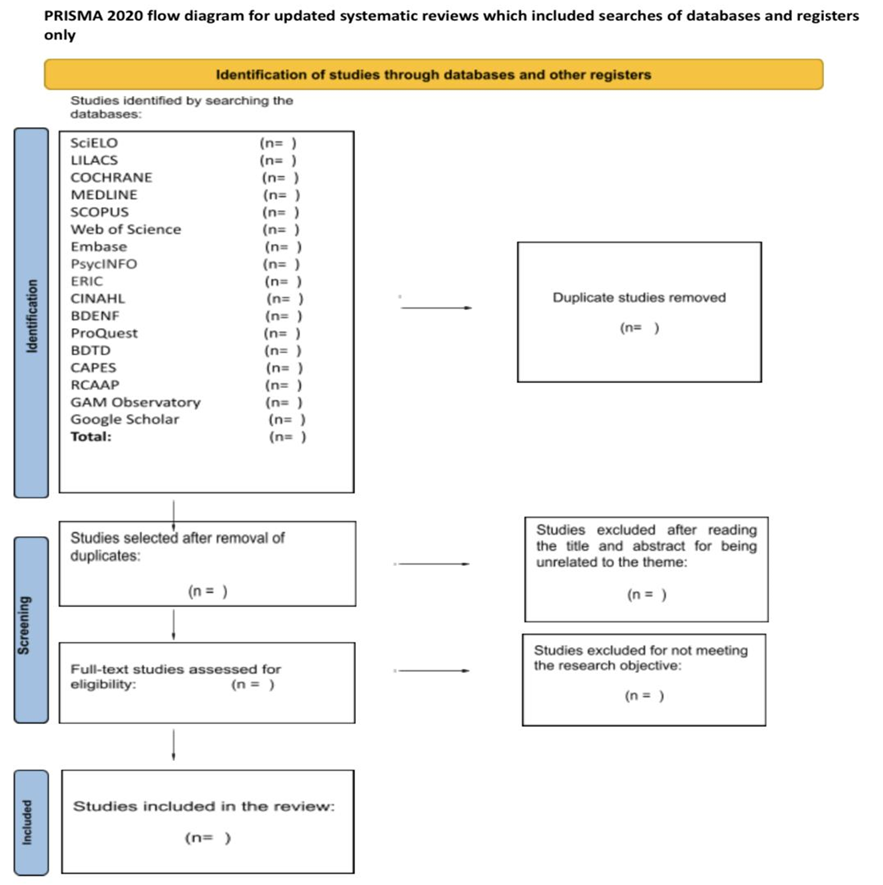
Figure 1. Flowchart of study selection according to the Preferred Reporting Items for Systematic Reviews and Meta-Analyses (PRISMA-ScR). Adapted for Scope Review. Recife (PE), Brazil, 2023.
The included studies will be read and analyzed for data extraction using a previously prepared tool (Chart 2), according to the JBI7 manual. The tool will allow the extraction and organization of essential data, such as: author, title, year of publication, country where the study was carried out, methodological design, journal, language, database, study objective, participants, and main identified results. The data will then be systematized by the reviewers in Microsoft Excel spreadsheets.
Chart 2. Data extraction tool. Recife, Pernambuco, Brazil. 2023.
|
Author |
|
|
Title |
|
|
Year of publication |
|
|
Country of study |
|
|
Methodological design |
|
|
Journal |
|
|
Language |
|
|
Database |
|
|
Study objective |
|
|
Participants |
|
|
Main results found |
|
|
In charge of extraction |
|
ANALYSIS AND PRESENTATION OF RESULTS
To analyze the results, the evidence will be grouped into thematic categories for better discussion and interpretation, based on the objective and guiding question of this review. The findings will then be interpreted and discussed in line with the current literature in order to map the evidence on the GAM literacy in mental health and chronic diseases in the context of Primary Health Care, which will make it possible to identify existing gaps in the literature and potential fields for new studies.
CONTRIBUTIONS
Sousa CES and Souza MC contributed to the conception, planning, analysis and interpretation of the data and the writing of the study. Frazão IS and Silva TA contributed to the critical review of the study.
CONFLICTS OF INTERESTS
There are no conflicts of interests.
REFERENCES
- Sterling RA, Gonçalves LF, Haas P. Atenção à saúde mental na atenção primária de saúde: uma revisão sistemática. Res Soc Dev [Internet]. 21 mar 2021 [citado 3 jul 2023];10(3):e43210313394. DOI: https://doi.org/10.33448/rsd-v10i3.13394.
- De Souza RNM. Confecção de um organizador de medicamentos como estratégia para ampliação da autonomia de usuários na Atenção Básica. [Tese de Doutorado]. São Paulo: Universidade Federal de São Paulo; 2019. [citado 3 jul 2023]; Available from: https://cedess.unifesp.br/mestrado/produto_tese_bx/096_bx_rosana_neves_produto.pdf
- Onocko-Campos RT, Passos E, Palombini AD, Santos DV, Stefanello S, Gonçalves LL, Andrade PM, Borges LR. A Gestão Autônoma da Medicação: uma intervenção analisadora de serviços em saúde mental. Cienc Amp Saude Coletiva [Internet]. Out 2013 [citado 8 jul 2023];18(10):2889-98. Available from: https://doi.org/10.1590/s1413-81232013001000013.
- Rosa EZ, Vicentin MCG, Avarca CADC, Sereno D. (2020). La Gestión Autónoma de la Medicación: estrategia territorial de cogestion en el cuidado. Revista Polis e Psique. [Internet]. [citado 8 jul 2023]; 10(2): 76-98. DOI: https://dx.doi.org/10.1590/S1413-81232004000100021.
- Chaves SC, Nobrega MD, Silva TD. Intervenções não farmacológicas ofertadas ao usuário com transtorno mental comum na atenção primária à saúde. J Nurs Health [Internet]. 14 maio 2019 [citado 20 jul 2023];9(3). DOI: https://doi.org/10.15210/jonah.v9i3.14472.
- Peters MD, Marnie C, Tricco AC, Pollock D, Munn Z, Alexander L, McInerney P, Godfrey CM, Khalil H. Updated methodological guidance for the conduct of scoping reviews. JBI Evid Synth [Internet]. 22 set 2020 [citado 23 jul 2023];18(10):2119-26. DOI: https://doi.org/10.11124/jbies-20-00167.
- Peters M, GC MP, Munn Z, Tricco AC, Khalil H. JBI Manual for Evidence. Aromataris E MZ. [Internet]. 2020. [citado 23 jul 2023]; DOI: https://doi.org/10.46658/JBIMES-20-01.
- Mattos SM, Cestari VRF; Moreira TMM. Scoping protocol review: PRISMA-ScR guide refinement. Rev Enferm UFPI. [Internet]. 2023 [citado 23 jul 2023]; 12(1). DOI: https://doi.org/10.26694/reufpi.v12i1.3062.
- Gotschall T. EndNote 20 desktop version. Journal of the Medical Library Association: JMLA [Internet]. 2021. [citado 23 jul 2023];109(03):520. DOI: https://doi.org/10.5195/jmla.2021.1260.
- Johnson N, Phillips M. Rayyan for systematic reviews. Journal of Electronic Resources Librarianship. [Internet]. 2018. [citado 18 jul 2023]; 30(01):46-48. DOI: http://dx.doi.org/10.1080/1941126X.2018.1444339.
Correspondence
Caroline Eloisa da Silva Sousa
Email: caroline.esousa@ufpe.br
Copyright© 2024 Revista de Enfermagem UFPE on line/REUOL.
This is an open access article distributed under Attribution CC BY 4.0 Creative Commons Attribution-ShareAlike 4.0 International License, which allows others to distribute, remix, adapt and build upon the material, even for commercial purposes, as long as due credit is given for the original creation. This is recommended to maximize the dissemination and use of licensed materials.
 Português (Brasil)
  English
  Español (España)