Idioma
Leaflet for the prevention of pressure injuries in patients with severe acute respiratory syndrome in the prone position
INTRODUCTION
Severe acute respiratory syndrome, also known by the acronym SARS, is a respiratory illness that affects the lungs, leading to the development of severe pneumonia and symptoms such as fever, difficulty breathing, headache and general malaise.1
SARS can be caused by viruses, such as the severe acute respiratory syndrome coronavirus (SARS-CoV) or the H1N1 influenza virus, or by bacteria, such as Streptococcus pneumoniae or Legionella, and must be treated quickly with medical assistance as it can rapidly progress to severe respiratory failure, which can be life-threatening.2
With the aim of improving the respiratory pattern of patients with SARI, prone positioning theoretically improves ventilation by reducing ventral alveolar distension and dorsal alveolar collapse, thereby reducing the difference between dorsal and ventral transpulmonary pressures, as well as reducing lung compression and improving lung perfusion.3
Prone positioning can lead to the main complication, pressure injuries. These injuries occur on bony prominences and soft tissues and can be superficial or deep due to the ischemic etiology caused by the increase in external pressure.4,5 Injuries developed by patients in the prone position usually occur on bony prominences such as the shoulders, nose, cheeks, forehead, jaw, sternum and others.6,7
Pressure injuries are a major challenge in the care of patients with severe acute respiratory syndrome admitted to intensive care units, resulting in increased hospital costs and significant physical and emotional impact on patients and their families.8-10
Due to the complexity of the technique, it is essential to develop educational materials for professionals caring for patients with severe acute respiratory syndrome. Leaflets, algorithms and booklets are used to guide the positioning of patients in the prone position. These materials should be based on evidence-based protocols with the aim of reducing the incidence of pressure injuries and their complications. These resources will help healthcare professionals to provide care with the lowest possible risk, preventing adverse events and promoting safe, high quality care.
When starting to produce educational material, the professional should be aware that educational technologies must concisely describe the step-by-step procedure. Leaflets are commonly used in healthcare as simple, objective and accessible tools that provide a complete overview of the procedure to be performed. They are also one of the most effective, reliable and economical sources of information to supplement the knowledge of healthcare professionals in clinical practice.9,10-12
This study is part of a project to develop an educational technology for professionals working in ICUs that provides adequate information on techniques for positioning patients in the prone position, as well as preventive measures and therapeutic approaches to prevent pressure injuries. The correct use of this technology can significantly contribute to the prevention of injuries and the provision of individualized, personalized and safe patient care, with the lowest possible risk and without damage or adverse events.
The aim of this study is to develop and validate the content of a leaflet to guide healthcare professionals in the technique of positioning patients in the prone position and to address preventive measures related to pressure injuries.
OBJECTIVE
To develop and validate the content of a leaflet to guide healthcare professionals in the technique of positioning patients in the prone position and to address preventive measures related to pressure injuries.
METHOD
This study was carried out in the form of technology production, specifically methodological development research. The research was carried out at the Samuel Libânio Clinical Hospital in Pouso Alegre (MG). The process of construction and validation of the instrument by the judges took place between July and November 2023. The research was approved by the Research Ethics Committee of the Universidade do Vale do Sapucaí, under opinion 4.845.564.
The process of constructing the leaflet included the following stages: Stage 1 - situational diagnosis; Stage 2 - literature review; Stage 3 - construction of the leaflet; and Stage 4 - validation of the leaflet's content by a panel of judges.12 Stage 1 - situational diagnosis; Stage 2 - literature review; Stage 3 - construction of the leaflet; and Stage 4 - validation of the leaflet's content by a panel of judges.
Stage one - situational diagnosis
The idea to develop this leaflet arose from a situational diagnosis based on observations made in clinical practice with patients admitted to intensive care with severe acute respiratory syndrome. It was observed that some staff had difficulties in positioning patients in the prone position and in applying pressure injury precautions.
Stage two - literature review
An integrative literature review was conducted. The following stages were defined for the development of the research: identification of the topic and selection of the research question; establishment of criteria for the inclusion and exclusion of studies; definition of the information to be extracted from the selected studies and categorisation of the studies; appraisal of the studies included in the integrative review; interpretation of the results and presentation of the review; and synthesis of the knowledge.13 The aim was to answer the following guiding questions.
The aim was to answer the following key question "What are the appropriate techniques for positioning the patient in the prone position and what measures can be taken to prevent pressure injuries?"
The PICO strategy was used to construct the appropriate question to address the clinical problem, with 'P' corresponding to the population (patients with an indication for prone positioning), 'I' to the intervention (prone positioning technique and pressure injury prevention measures), 'C' to the comparison (not applicable as this is not a comparative trial) and 'O' to the outcome (educational leaflet describing the prone positioning technique and pressure injury prevention measures).14
A literature search was conducted in MEDLINE, SciELO and Latin American and Caribbean Health Sciences Literature (Lilacs) databases to develop the educational leaflet. The search included articles published between 2019 and 2023 and was conducted in July 2023. Controlled health sciences descriptors were used, such as abdominal decubitus, severe acute respiratory syndrome and pressure injury (abdominal decubitus AND severe acute respiratory syndrome AND pressure injury), as well as the corresponding terms in Portuguese, English and Spanish. The search strategy was defined by combining the selected descriptors and the Boolean operator "AND".
The inclusion criteria for the selection of publications were: studies published in Portuguese, English and Spanish and available in full. We excluded theses, dissertations, monographs, technical reports, case reports and articles that, after reading the abstract, were not related to the subject of the study, as well as repeated publications in the databases.
During the integrative literature review, articles were selected according to the Preferred Reporting Items for Systematic Reviews and Meta-Analyses (PRISMA) flowchart, which includes the following stages: identification, screening, eligibility and inclusion.15
The Agency for Healthcare Research and Quality categories, which cover six levels, were used to classify the level of evidence of the selected studies: Level 1: evidence from meta-analysis of several randomized controlled clinical trials; Level 2: evidence from individual studies with an experimental design; Level 3: evidence from quasi-experimental studies; Level 4: evidence from descriptive (non-experimental) studies or a qualitative approach; Level 5: evidence from case reports or experience; Level 6: evidence based on expert opinion.
On the basis of the selected studies, the package leaflet was developed, which includes a sequence of procedures described in three main topics: 1 - care before positioning the patient, 2 - prone positioning technique, and 3 - measures to prevent pressure injuries while the patient is in the prone position.
Topic 1 describes the precautions to be taken before positioning the patient in the prone position. This includes the use of medical equipment, nutrition, limb positioning, body hygiene, anatomical areas most prone to pressure injury and the devices and coverings that should be used to prevent pressure injury.16
Topic 2 - The manoeuvres for positioning the patient in the prone position were described, as well as the care required with medical devices during these manoeuvres.17
Topic 3 - This was followed by a presentation of the care that healthcare professionals should take with medical devices after positioning the patient, as well as preventive measures to avoid pressure injuries while the patient is in the prone position.18
Stage 3 - Validation of leaflet content
To calculate the sample, we used the formula for an infinite population, where n= Z2 1-α/2 .P(1-P)/e2, where Z1-α/2 is the critical value of the standard normal distribution for the confidence level adopted, P is the expected proportion of professionals reflecting the appropriateness of each item, and 'e' is the acceptable margin of error. Assuming a minimum expected proportion of 80%, a confidence level of 95% and a margin of error of 15%, we obtained a minimum sample of 27 professionals.19
Inclusion criteria were professionals with a degree in nursing, physiotherapy or medicine, with more than five years' experience in ICUs and specialization in the field, who cared for patients with severe acute respiratory syndrome in the prone position. Professionals who did not respond to the questionnaire within the 15-day time limit were excluded.
Reviewers were selected by convenience and snowball sampling. After identifying a professional who met the inclusion criteria, they were asked to suggest other participants. An invitation letter was sent to 73 professionals, containing an initial presentation, information about the subject of the research, the opinion of the research ethics committee, detailed instructions for participation and a deadline of 15 days to complete each round of the questionnaire. A total of 52 professionals agreed to participate in the study. The reviewers were also asked to suggest the names and emails of other professionals, which characterizes snowball sampling.
To validate the content of the leaflet, an instrument adapted for the study was used.12 The judges received a questionnaire by e-mail, divided into two parts: identification of the evaluator, with four questions, and evaluation of the leaflet, with 22 questions. The judges rated various aspects of the leaflets, including graphic presentation, ease of reading, vocabulary, order of algorithm content, definition of prone position, pre-pronation care, types of devices to prevent and treat pressure injuries, description of the pronation technique, care of medical devices and post-pronation precautions.
When analyzing the data, responses marked 'adequate' or 'completely adequate' were considered valid. Suggestions made by the reviewers were revised and incorporated so that the content of the leaflet was considered valid, following guidelines from previous studies of this methodology.20 Questions marked as "inappropriate" or "partially appropriate" were revised and submitted to a second round of evaluation to seek consensus among the reviewers, using the Delphi technique.
The Delphi technique is a method of obtaining expert opinion through questionnaires by seeking agreement among evaluators with specific knowledge in the area. Typically, two to three rounds of evaluation are carried out, with the possibility of more cycles.20
To assess the reliability of the questionnaire, the Cronbach's alpha coefficient was used, which measures the internal consistency of a scale by analyzing the responses of the judges, looking for an average correlation between the questions. The value of the Cronbach's alpha coefficient must be equal to or greater than 0.80 to be considered acceptable.14
To validate the content of the leaflet, the Content Validity Index was used, which measures the degree of agreement between the judges on specific aspects of the algorithms developed in the study, assessed using the evaluation questionnaire. The Content Validity Index value must be equal to or greater than 0.80 to be considered acceptable.21
RESULTS
The initial search of the databases yielded a total of 8,578 studies, of which 8,380 were identified in PubMed, 184 in Lilacs and 14 in SciElo. During screening, 24 duplicate articles were excluded, 8,053 articles after reading the title, 462 after reading the abstract and 19 after reading the full article. In the end, 21 articles were selected for the leaflet (Figure 1).
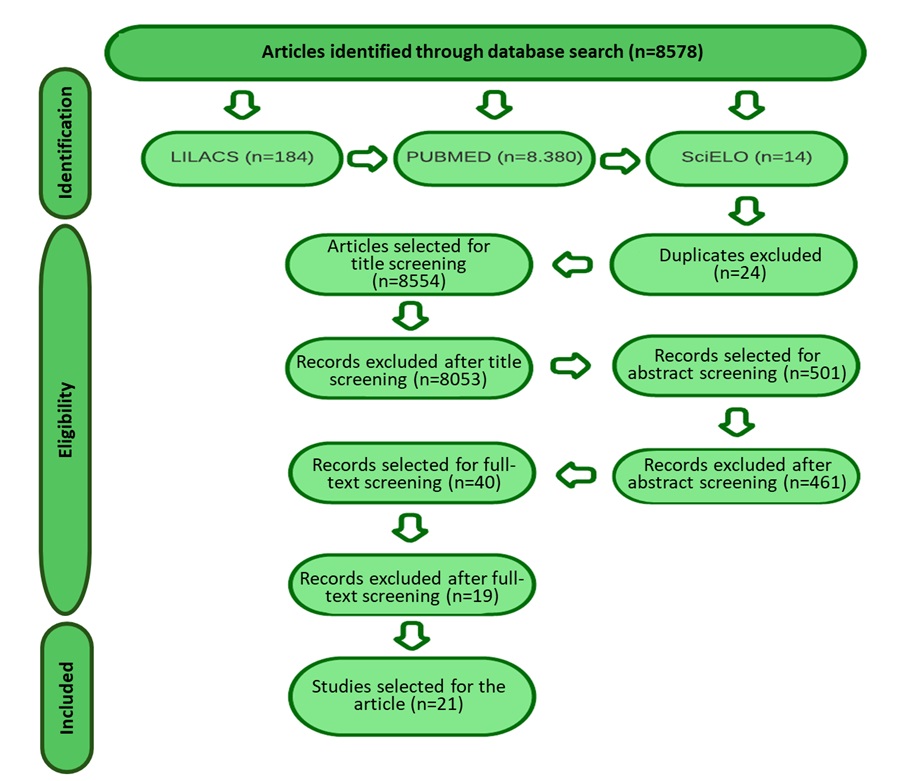
Figure 1. Flowchart of study identification, selection and inclusion, based on the PRISMA recommendations. Pouso Alegre (MG), Brazil, 2023.
Chart 1 shows the articles selected during the integrative literature review for the development of the pronation bulletin, classified according to the level of evidence.
Chart 1. Characteristics of the articles included in the review. Pouso Alegre (MG), Brazil, 2023.
|
Author |
Title |
Journal/Year/Vol/Number |
Level of evidence |
|
|
01 |
Cavalcante FML, Fernandes C da S, Rocha L dos S, Galindo-Neto NM, Caetano JÁ, Barros LM.22 |
Use of the prone position in pregnant women with covid-19 or other health conditions.
|
Rev Latino-Am Enfermagem [Internet]. 2021;29:e3494. Doi.org/10.1590/1518-8345.5181.3494 |
04 |
|
02 |
Santos VB, Aprile DCB, Lopes CT, Lopes J de L, Gamba MA, Costa KAL da, et al.23 |
Covid-19 patients in prone position: validation of instructional materials for pressure injury prevention
|
Rev Bras Enferm [Internet]. 2021;74:e20201185. 0201185. Doi.org/10.1590/0034-7167-2020-1185 |
04 |
|
03 |
Fourie A, Ahtiala M, Black J, Hevia H, Coyer F, Gefen A, LeBlanc K, Smet S, Vollman K, Walsh Y, Beeckman D.24 |
Skin damage prevention in the prone ventilated critically ill patient: A comprehensive review and gap analysis (PRONEtect study). |
J Tissue Viability. 2021;30(4):466-477. Doi: 10.1016/j.jtv.2021.09.005. |
01 |
|
04 |
Costa LP, Caetano DSB, Santos JS, Santos PSSR 25 |
Fatores de risco para lesão por pressão em pacientes com COVID-19 em unidade de terapia intensiva.
|
R Pesq Cuid Fundam [Internet]. 14:e11787. Doi.org/10.9789/2175-5361.rpcfo.v14.11787PESQUISA
|
04 |
|
05 |
Morata L, Vollman K, Rechter J, Cox J.26 |
Manual Prone Positioning in Adults: Reducing the Risk of Harm Through Evidence-Based Practices. |
Crit Care Nurse. 2023 Feb 1;43(1):59-66. Doi: 10.4037/ccn2023174. |
03 |
|
06 |
Silva, M. F. ., Tominaga, L. B. L. ., Silva, J. C. da ., & Trindade, B. A.. 27 |
Intervenções de enfermagem na prevenção de complicações na manobra prona em pacientes com COVID-19. |
Revista De Enfermagem Da UFSM. 2023;12(e53):1-7.Doi.org/10.5902/2179769269395 |
02 |
|
07 |
Soldera D; Soares CF; Girondi JBR; Salum NC; Stein M; Amante LN; Sebold LF; Miranda GM 28 |
. Prevenção de lesões por pressão na pronação de pacientes Covid-19: construção de uma narrativa gráfica. |
ESTIMA, Braz. J. Enterostomal Ther., 2021, 19: e2821. Doi.org/10.30886/estima.v19.1136_IN |
04 |
|
08 |
Zanchetta FC, Perissoto S, Pedrosa RBS, Gasparino RC, Silva VA, Kumakura ARSO, et al. 29 |
Incidence of prone position pressure sores during the COVID-19 pandemic: a cohort study. |
Online Braz J Nurs. 2022;21 Suppl 2:e20226569.Doi.org/10.17665/1676-4285.20226569 |
04 |
|
09 |
Accoce M, Calvo Delfino M, Cardoso G, Castro L, Pérez J, Dorado JH. 30 |
Successive prone positioning sessions in mechanically ventilated patients with moderate and severe acute respiratory distress syndrome secondary to COVID-19: case series. |
Med Intensiva (Engl Ed). 2022 Nov;46(11):652-654. Doi: 10.1016/j.medin.2022.01.005 |
04 |
|
10 |
Adeola JO, Patel S, Goné EN, Tewfik G. 31 |
A Quick Review on the Multisystem Effects of Prone Position in Acute Respiratory Distress Syndrome (ARDS) Including COVID-19. |
Clin Med Insights Circ Respir Pulm Med. 2021.15:1-8 Doi: Jul 1;15:11795484211028526. |
01 |
|
11 |
Aisa T, Hassan T, Khan E, Algrni K, Malik MA. 32 |
Efficacy and feasibility of awake proning in patients with COVID-19-related acute hypoxemic respiratory failure: an observational, prospective study. |
Ir J Med Sci. 2023 Apr;192(2):811-815.Doi.org/10.1007/s11845-022-03009-7 |
02 |
|
12 |
Araújo MS, Santos MMPD, Silva CJA, Menezes RMP, Feijão AR, Medeiros SM. 33 |
Prone positioning as an emerging tool in the care provided to patients infected with COVID-19: a scoping review. |
Rev Lat Am Enfermagem. 2021 Jan 8;29:e3397. . Doi: http://dx.doi.org/10.1590/1518-8345.4732.3397
|
04 |
|
13 |
Bower G, He H. 34 |
Protocol for awake prone positioning in COVID-19 patients: to do it earlier, easier, and longer. |
Crit Care. 2020 Jun 23;24(1):371. Doi: 10.1186/s13054-020-03096-x. |
04 |
|
14 |
Cammarota G, Bruni A, Morettini G, Vitali L, Brunelli F, Tinarelli F, Simonte R, Rossi E, Bellucci M, De Girolamo G, Galzerano A, Vetrugno L, Maggiore SM, Bignami E, Azzolina D, Dow O, Navalesi P, De Robertis E. 35 |
Lung ultrasound to evaluate aeration changes in response to recruitment maneuver and prone positioning in intubated patients with COVID-19 pneumonia: preliminary study. |
Ultrasound J. 2023 Jan 25;15(1):3. (2023) Doi.org/10.1186/s13089-023-00306-9 |
02 |
|
15 |
Ceruti S, Glotta A, Biggiogero M, Bona G, Saporito A, Faldarini N, Olivieri D, Molteni C, Petazzi S, Capdevila X. 36 |
Multidisciplinary team approach in critically ill COVID-19 patients reduced pronation-related complications rate: A retrospective cohort study. |
Ann Med Surg (Lond). 2021 Oct;70:102836. Doi: 10.1016/j.amsu.2021.102836. |
02 |
|
16 |
Chen YY, Kuo JS, Ruan SY, Chien YC, Ku SC, Yu CJ, Chien JY.37 |
Prognostic value of computed tomographic findings in acute respiratory distress syndrome and the response to prone positioning. |
Cardiol Res Pract. 2021 Feb 11;2021:6653061. Doi: 10.1155/2021/6653061. |
02 |
|
17 |
Daralammouri Y, Azamtta M, Hamayel H, Adas A, Sawalmeh O, Ismail Y, Zyoud SH. 38 |
Impact of Prone Position on 12-Lead Electrocardiogram in Healthy Adults: A Comparison Study with Standard Electrocardiogram. |
Cardiol Res Pract. 2021 Feb 11;2021:6653061. Doi: 10.1155/2021/6653061. |
03 |
|
18 |
Esperatti M, Busico M, Fuentes NA, Gallardo A, Osatnik J, Vitali A, Wasinger EG, et al.39 |
Impact of exposure time in awake prone positioning on clinical outcomes of patients with COVID-19-related acute respiratory failure treated with high-flow nasal oxygen: a multicenter cohort study. |
Crit Care. 2022 Jan 7;26(1):16. Doi.10.1186/s13054-021-03881-2. |
02 |
|
19 |
Gemelli N, Sotera Lic G, Barrios C, Pina D, Carboni Bisso I, Las Heras M. 40 |
Feasibility of prone position with a single operator for low resources ICU: Step-by-step technical description. |
Rev Esp Anestesiol Reanim (Engl Ed). 2023 Mar;70(3):180-182.Doi: 10.1016/j.redare.2022.01.005 |
04 |
|
20 |
Peko L, Barakat-Johnson M, Gefen A. 41 |
Protecting prone positioned patients from facial pressure ulcers using prophylactic dressings: A timely biomechanical analysis in the context of the COVID-19 pandemic. |
Int Wound J. 2020 Dec;17(6):1595-1606.Doi: 10.1111/iwj.13435. |
03 |
|
21 |
Salomé GM, Almeida CB de, Prudêncio FM. 42 |
Algoritmos para prevenir lesão por pressão em paciente com COVID-19 em prona. |
Acta Paulista De Enfermagem.2023, 36, eAPE02702.Doi:10.37689/acta-ape/2023AO02702. |
04 |
It was found that 27 (52%) of the participants were nurses, 14 (27%) were physiotherapists and 11 (21%) were doctors. The participants had been trained for more than ten years. In terms of postgraduate qualifications, 15 (29%) were doctors, 10 (19%) were masters and 27 (52%) were specialists. Most of the participants had experience in the care sector and as teachers.
The Cronbach's alpha coefficient ranged from 0.90 to 0.93, indicating that the tool used by the judges to validate the leaflet had excellent internal consistency. In the first evaluation the content validity index ranged from 0.712 to 0.981 and in the second evaluation cycle the content validity index ranged from 0.981 to 1.00 (Table 1).
Table 1. Cronbach's Alpha coefficient and Content Validity Index values for the questions used to validate the leaflet. Pouso Alegre (MG), Brazil, 2023.
|
Items evaluated by the judges |
Cronbach's alpha |
Content validity index |
|
|
First evaluation |
Second evaluation |
||
|
Is the content suitable for the target audience? |
0,905 |
0,981 |
1,000 |
|
Does the content contain relevant information? |
0,906 |
0,981 |
1,000 |
|
Are subheadings relevant? |
0,904 |
0,923 |
1,000 |
|
Is the sequence of the text logical and coherent? |
0,905 |
0,962 |
1,000 |
|
Does the content facilitate the teaching and learning process? |
0,906 |
0,962 |
1,000 |
|
Is the vocabulary accessible to the target audience? |
0,905 |
0,942 |
1,000 |
|
Is the text of the leaflet clear and objective? |
0,906 |
0,981 |
1,000 |
|
Is verbal language easy to understand? |
0,909 |
0,942 |
0,981 |
|
Are the manual's illustrations necessary for understanding the content? |
0,907 |
0,885 |
1,000 |
|
Do illustrations motivate leaflet handling? |
0,909 |
0,865 |
1,000 |
|
Are the illustrations appropriate to the content? |
0,908 |
0,712 |
1,000 |
|
Do the illustrations have adequate resolution? |
0,931 |
0,846 |
1,000 |
|
Are the font type and size in the text appropriate? |
0,906 |
0,942 |
1,000 |
|
Is the visual composition attractive and organized? |
0,907 |
0,923 |
1,000 |
|
Is content motivating? |
0,906 |
0,962 |
1,000 |
|
Does the content interest you? |
0,907 |
0,981 |
1,000 |
|
Did the content clear up any doubts? |
0,906 |
0,962 |
1,000 |
|
Is the definition of the prone position appropriate? |
0,908 |
0,981 |
1,000 |
|
Description of care before prone positioning |
0,906 |
0,981 |
1,000 |
|
Description of the prone positioning technique |
0,906 |
0,962 |
1,000 |
|
Description of care related to post-positioning devices for prone patients |
0,913 |
0,981 |
1,000 |
|
Measures to prevent pressure injury after pronation |
0,916 |
0,923 |
1,000 |
|
Average values |
0,908 |
0,935 |
0,999 |
Table 2 shows the results of the first round of judges' evaluation of the content of the leaflet using the Delphi technique. In the first evaluation, the judges rated the content from inadequate to completely adequate.
Table 2. First cycle of leaflet content evaluation using the Delphi technique. Pouso Alegre (MG), Brazil, 2023.
|
Questions |
Inadequate |
Partially adequate |
Adequate |
Totally adequate |
|
|
n(%) |
n(%) |
n(%) |
n(%) |
|
Is the content suitable for the target audience? |
0(0) |
1(1,92) |
25(48,08) |
26(50,00) |
|
Does the content contain relevant information? |
0(0) |
1(1,92) |
19(36,54) |
32(61,54) |
|
Are subheadings relevant? |
1(1,92) |
1(1,92) |
24(46,15) |
26(50,00) |
|
Is the sequence of the text logical and coherent? |
0(0) |
2(3,85) |
24(46,15) |
26(50,00) |
|
Does the content facilitate the teaching and learning process? |
0(0) |
2(3,85) |
23(44,23) |
27(51,92) |
|
Is the vocabulary accessible to the target audience? |
0(0) |
3(5,77) |
26(50,00) |
23(44,23) |
|
Is the text of the leaflet clear and objective? |
0(0) |
1(1,92) |
29(55,77) |
22(42,31) |
|
Is verbal language easy to understand? |
0(0) |
3(5,77) |
18(34,62) |
31(59,62) |
|
Are illustrations in the manual necessary for understanding the content? |
0(0) |
6(11,54) |
22(42,31) |
24(46,15) |
|
Do illustrations motivate leaflet handling? |
1(1,92) |
6(11,54) |
33(63,46) |
12(23,08) |
|
Are the illustrations appropriate to the content? |
1(1,92) |
14(26,92) |
21(40,38) |
16(30,77) |
|
Do the illustrations have adequate resolution? |
2(3,85) |
6(11,54) |
27(51,92) |
17(32,69) |
|
Are the font type and size in the text appropriate? |
3(5,77) |
0(0) |
23(44,23) |
26(50,00) |
|
Is the visual composition attractive and organized? |
2(3,85) |
2(3,85) |
19(36,54) |
29(55,77) |
|
Is content motivating? |
1(1,92) |
1(1,92) |
25(48,08) |
25(48,08) |
|
Does the content interest you? |
0(0) |
1(1,92) |
25(48,08) |
26(50,00) |
|
Did the content clear up any doubts? |
0(0) |
2(3,85) |
22(42,31) |
28(53,85) |
|
Is the definition of the prone position appropriate? |
0(0) |
1(1,92) |
25(48,08) |
26(50,00) |
|
Description of care before prone positioning |
0(0) |
0(0) |
30(57,69) |
22(42,31) |
|
Description of the prone positioning technique |
0(0) |
2(3,85) |
25(48,08) |
25(48,08) |
|
Description of care related to post-positioning devices for prone patients |
0(0) |
0(0) |
20(38,46) |
32(61,54) |
|
Description of measures to prevent pressure injury after pronation |
0(0) |
0(0) |
20(38,46) |
32(61,54) |
After the evaluators had corrected the suggestions, the leaflet was sent back to the judges for a second evaluation and was rated between adequate and completely adequate (Table 3).
Table 3. Second cycle of leaflet content evaluation using the Delphi technique. Pouso Alegre (MG), Brazil, 2023.
|
Questions |
Inadequate |
Partially adequate |
Adequate |
Totally adequate |
|
|
n(%) |
n(%) |
n(%) |
n(%) |
|
Is the content suitable for the target audience? |
0(0) |
0(0) |
26(50,00) |
26(50,00) |
|
Does the content contain relevant information? |
0(0) |
0(0) |
19(36,54) |
33(63,46) |
|
Are subheadings relevant? |
0(0) |
0(0) |
25(48,08) |
27(51,92) |
|
Is the sequence of the text logical and coherent? |
0(0) |
0(0) |
26(50,00) |
26(50,00) |
|
Does the content facilitate the teaching and learning process? |
0(0) |
0(0) |
25(48,08) |
31(51,92) |
|
Is the vocabulary accessible to the target audience? |
0(0) |
0(0) |
30(57,69) |
22(42,31) |
|
Is the text of the leaflet clear and objective? |
0(0) |
0(0) |
25(48,08) |
27(51,92) |
|
Is verbal language easy to understand? |
0(0) |
0(0) |
21(40,38) |
31(59,62) |
|
Are illustrations in the manual necessary for understanding the content? |
0(0) |
0(0) |
39(75,00) |
13(25,00) |
|
Do illustrations motivate leaflet handling? |
0(0) |
0(0) |
30(57,69) |
22(42,31) |
|
Are the illustrations appropriate to the content? |
0(0) |
0(0) |
32(61,54) |
20(38,46) |
|
Do the illustrations have adequate resolution? |
0(0) |
0(0) |
25(48,08) |
27(51,92) |
|
Are the font type and size in the text appropriate? |
0(0) |
0(0) |
22(42,31) |
30(57,69) |
|
Is the visual composition attractive and organized? |
0(0) |
0(0) |
25(48,08) |
27(51,92) |
|
Is content motivating? |
0(0) |
0(0) |
25(48,08) |
27(51,92) |
|
Does the content interest you? |
0(0) |
0(0) |
24(46,15) |
28(53,85) |
|
Did the content clear up any doubts? |
0(0) |
0(0) |
25(48,08) |
27(51,92) |
|
Is the definition of the prone position appropriate? |
0(0) |
0(0) |
30(57,69) |
22(42,31) |
|
Description of care before prone positioning |
0(0) |
0(0) |
26(50,00) |
26(50,00) |
|
Description of the prone positioning technique |
0(0) |
0(0) |
20(38,46) |
32(61,54) |
|
Description of care related to post-positioning devices for prone patients |
0(0) |
0(0) |
20(38,46) |
32(61,54) |
|
Description of measures to prevent pressure injury after pronation |
0(0) |
0(0) |
20(38,46) |
32(61,54) |
Chart 2 summarizes the suggestions made by the nurses who evaluated the leaflet. All suggestions were accepted because they were scientifically based.
Chart 2. Evaluators' suggestions for the content of a leaflet to guide health professionals in the technique of positioning patients in the prone position and in preventive measures for pressure injuries. Pouso Alegre (MG), Brazil, 2023.
|
Suggestions accepted |
|
Increase font size |
|
Improving the definition of the prone position |
|
Improve the formatting of figures |
|
Replace covers to prevent pressure damage with skin protectors to prevent pressure damage |
Figure 2 shows the leaflet to guide healthcare professionals in the technique of positioning the patient in the prone position and in the prevention of pressure injuries.
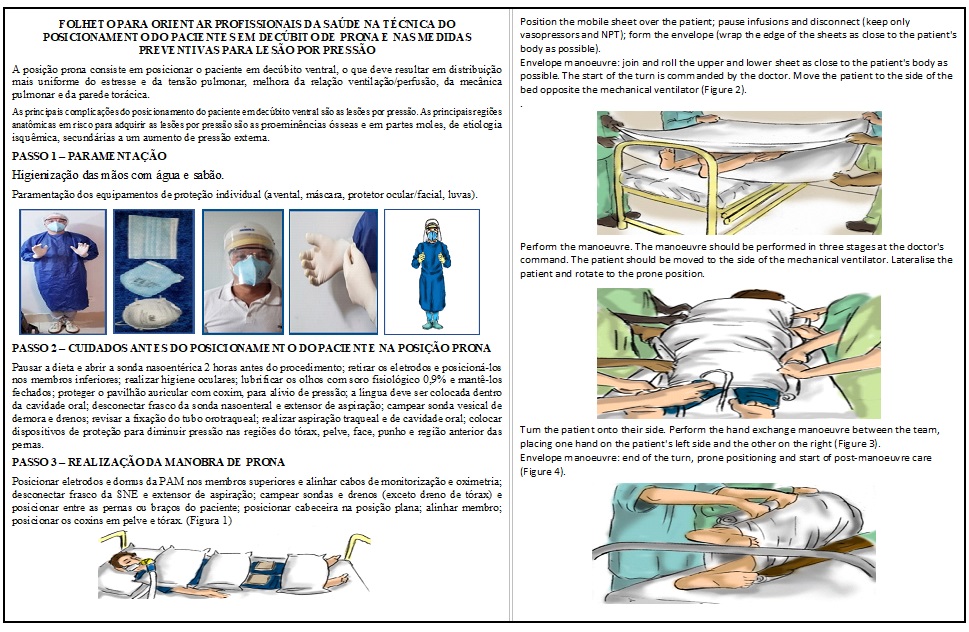
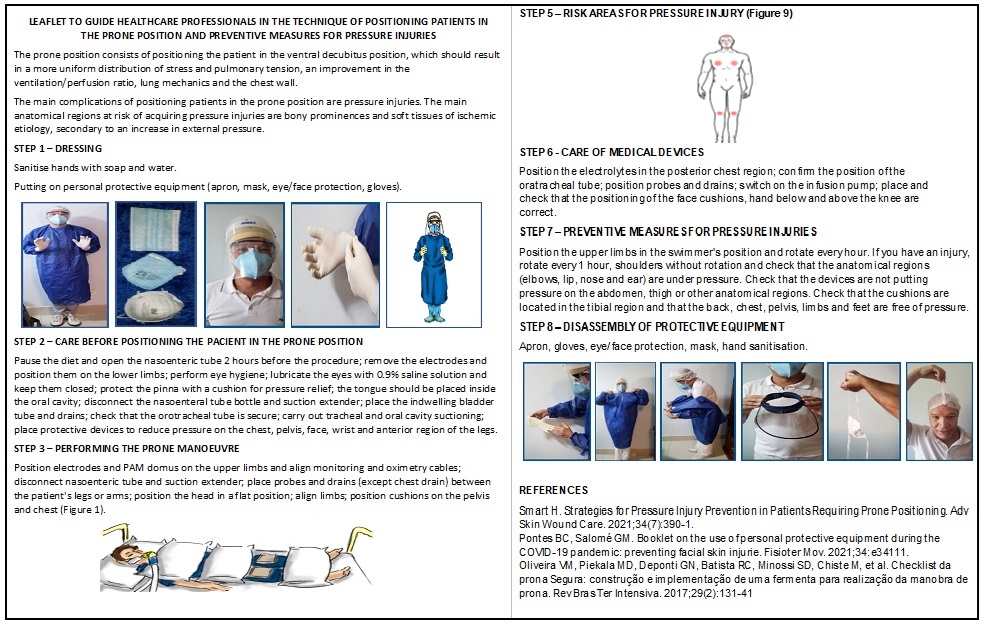
Figure 2. Leaflet to guide health professionals in the technique of positioning the patient in prone position and in preventing pressure injuries. Pouso Alegre, MG, Brazil, 2023.
DISCUSSION
The leaflet has been developed following a review of the literature and validation of its content. It can help healthcare professionals caring for people admitted to intensive care units who have clinical conditions that indicate they should be placed in the prone position, by offering preventive measures and therapeutic procedures for the management of pressure injuries. Leaflets are an important educational tool for addressing a range of issues in ICU care and management. Studies validated by scientific evidence show that the leaflets are based on technical, organizational and policy guidelines and focus on standardizing clinical and preventive procedures for the management of severe acute respiratory syndrome.12,42-44
The leaflet produced in this study was developed following a review of the literature. The Delphi technique was used for validation. It was validated by health professionals with specialization and experience in the field. After the first cycle of evaluation of the first version of the leaflet, the responses and suggestions were analyzed and accepted.
These suggestions ranged from details, such as changing terms to make the text easier to understand, to important considerations about preventive measures, types of devices and pronation technique. All suggestions were accepted, which helped to ensure that there were no negative responses in the second evaluation cycle, increasing the reliability of the final tool, as has been observed in other studies.43,44
Leaflets are creative, reliable and useful tools for health education. They contribute to the teaching-learning process and to the clinical practice of health professionals, enabling them to provide care with the least possible risk and harm.12,43
The content of the leaflet in this study was approved by consensus by reviewers who are experts in the field and have experience of treating patients in the prone position, indicating that these tools have the potential to be used by the target audience and to be of benefit to healthcare professionals. The leaflet presents the correct technique for positioning the patient in the prone position and information on assessing the patient's skin before and after positioning, as well as preventive measures and dressings indicated for the treatment of pressure injuries.
Among educational technologies, pamphlets, algorithms and booklets can be considered as effective communication tools for health promotion. They not only contribute to user empowerment, but also enable professionals to act as multipliers, presenting the material to other members of the community.9,45-47
Leaflets are seen as an important tool for addressing a range of issues in the delivery and management of health services. They are based on technical, organizational and political guidelines, with a focus on standardizing clinical and preventive behavior. The development of new tools requires the incorporation of new technologies that meet the needs of treatment and health care organisations.12,15-18
The development of educational tools such as pamphlets, algorithms, booklets and apps to prevent pressure injuries in prone patients enables healthcare professionals to provide quality and safe care with minimal risk and harm. These educational tools provide a description of pronation techniques and preventive measures relevant to pressure injuries.9,15,42-45
These tools are highly relevant. According to a systematic review of the literature involving 1,109 patients, patients in the prone position have a 22-fold increased risk of developing a pressure injury.44 A retrospective study found that 14% of 170 patients in the prone position developed a pressure injury.45
Several studies have reported that the prone position is important for improving ventilatory support and is an adjunct therapy in the treatment of severe hypoxemia caused by acute respiratory distress syndrome (ARDS). However, the majority of patients in the prone position have complications, mainly pressure injuries, which can prolong hospital stay and increase the risk of infection, medication use and other clinical complications. It is therefore important for professionals to develop protocols and educational materials to prevent them.8,45-47
The leaflet developed in this study contributes to innovation in the work of nurses, doctors and physiotherapists, particularly in clinical decision support, prone positioning technique and pressure injury prevention. This is important because if the professional does not use this technique correctly when placing the patient in the prone position, they could put the patient at risk and cause harm, such as pressure injuries and other complications. In addition, the leaflet provides information to keep professionals up to date with the theoretical and practical approach to the content.
The leaflet developed in this study contributes to innovation in the work of nurses, doctors and physiotherapists in clinical decision making related to the correct technique for positioning patients in the prone position and preventive measures for pressure injuries. It is also hoped that the tool will help keep professionals up to date with the theoretical and practical approach to the content.
A limitation of this study is that the leaflet was only evaluated by professionals in higher education. In future studies, the tool could be evaluated by nursing technicians in order to understand the results found. It is important that the content of the leaflet is validated by nurses, as these professionals will use and evaluate the content of the leaflet in practice, checking its relevance, its reliability in clinical practice and whether it has an accessible language.
CONCLUSION
Following an integrative literature review, the content of the leaflet was developed to guide healthcare professionals in the prevention of pressure injuries in patients with severe acute respiratory syndrome in the prone position. The content was validated by nurses, physiotherapists and doctors who care for patients in the prone position and have experience in this area, and there was consensus among the reviewers in the second evaluation.
This means that the leaflet developed in this study contributes to innovation in the work of nurses, doctors and physiotherapists, particularly in supporting clinical decision making and prevention of pressure injuries in prone patients. It is also hoped that the tool will help keep professionals up to date with the theoretical and practical approach to the content.
CONTRIBUTIONS
All authors participated equally in the design of the research project, data collection, analysis and discussion of the data, drafting of the manuscript and critical revision of the manuscript.
CONFLICTS OF INTEREST
Nothing to declare.
ACKNOWLEDGEMENTS
The author would like to express gratitude to the National Council for Scientific and Technological Development (CNPq) for the Productivity Grant in Technological Development and Innovative Extension (DT-2).
REFERENCES
- Bezerra KP, Costa KFL, Oliveira LC, Fernandes ACL, Carvalho FPB, Nelson ICASR. Ensino remoto em universidades públicas estaduais: o futuro que se faz presente. Research, Society and Development. 2020;9(9): DOI: https://doi.org/10.33448/rsd-v9i9.7226
- Ministério da Saúde (BR); Secretaria de Atenção Especializada à Saúde; Departamento de Atenção Hospitalar, Domiciliar e de Urgência. Protocolo de manejo clínico da COVID-19 na atenção especializada [Internet]. Brasília: Ministério da Saúde; 2020 [cited 2022 Oct 27]. Available from: https://www.unasus.gov.br/especial/covid19/pdf/105
- Alhazzani W, Møller MH, Arabi YM, Loeb M, Gong MG, Fan E, et al. Surviving sepsis campaign: guidelines on the management of critically ill adults with coronavirus disease 2019 (COVID-19). Intensive Care Med. 2020;46(5)854-87. DOI: https://doi.org/10.1007/s00134-020-06022-5
- Moore Z, Patton D, Avsar P, McEvoy NL, Curley G, Budri A, et al. Prevention of pressure ulcers among individuals cared for in the prone position: lessons for the COVID-19 emergency. J Wound Care. 2020;29(6):312-20. DOI: https://doi.org/12968/jowc.2020.29.6.312
- Yu JN, Wu BB, Feng LP, Chen HL. COVID-19-related pressure injuries in patients and personnel: a systematic review. J Tissue Viability. 2021;30(3):283-90. DOI: https://doi.org/10.1016/j.jtv.2021.04.002
- Barbosa JM, Salomé GM. Occurrence of pressure injury in patients hospitalized in a school hospital. Estima Braz J Enterostomal Ther. 2018;16:e2718. DOI: https://doi.org/30886/estima.v16.523
- Sieggree N. National pressure ulcer advisory panel responds to editorial. Adv Skin Wound Care. 2016; 29(12):535. DOI:https://doi.org/10.1097/01.ASW.0000508227.61503.f9
- Santos VB, Aprile DC, Lopes CT, Lopes JL, Gamba MA, Costa KA, et al. COVID-19 patients in prone position: validation of instructional materials for pressure injury prevention. Rev Bras Enferm. 2021;74(1):e20201185. DOI: https://doi.org/10.1590/0034-7167-2020-1185
- Salomé GM. Algoritmo para paramentação, desparamentação e prevenção de lesões faciais: COVID-19. Rev Enferm Contemp. 2021;10(2):333-46. DOI: https://doi.org/10.17267/2317-3378rec.v10i2.3317
- Carvalho MR, Salomé GM, Ferreira LM. Construction and validation of algorithm for treatment of pressure injury. J Nurs UFPE on line. 2017;11(Suppl 10):4171-83. DOI: https://doi.org/5205/reuol.10712-95194-3-SM.1110sup201722
- Pontes BC, Salomé GM. Booklet on the use of personal protective equipment during the COVID-19 pandemic: preventing facial skin injurie. Fisioter Mov. 2021;34:e34111. DOI: https://doi.org/10.1590/fm.2021.34111
- Salomé GM, Dutra RA. Prevention of facial injuries caused by personal protective equipment during the COVID-19 pandemic. Rev Bras Enferm. 2021;74(Suppl 1):e20201219. DOI: https://doi.org/10.1590/0034-7167-2020-1219
- Mendes ER, Sabino LM, Almeida PC, Melo ES, Penha JC, Rocha SS, et al. Technologies for maternal self-efficacy in preventing childhood diarrhea: a clinical trial. Acta Paul Enferm. 2021;34:eAPE03232. DOI: https://doi.org/10.37689/acta-ape/2021AO03232
- Santos CMC, Pimenta CAM, Nobre MRC. A estratégia PICO para a construção da questão de pesquisa e busca de evidências. Rev Latino-Am Enfermagem. 2007;15(3):508–11. DOI: https://doi.org/10.1590/S0104-11692007000300023
- Panic N, Leoncini E, de Belvis G, Ricciardi W, Boccia S (2013) Evaluation of the Endorsement of the Preferred Reporting Items for Systematic Reviews and Meta-Analysis (PRISMA) Statement on the Quality of Published Systematic Review and Meta-Analyses. PLoS ONE. 2013;8(12):e83138. DOI: https://doi.org/10.1371/journal.pone.0083138
- Salomé GM, Almeida CB, Prudencio FM. Algorithms to prevent pressure injury in COVID-19 patients in prone position. Acta Paul Enferm. 2023;36:eAPE02702. DOI: https://doi.org/10.37689/acta-ape/2023AO027022
- Morata L, Vollman K, Rechter J, Cox J Manual Prone Positioning in Adults: Reducing the Risk of Harm Through Evidence-Based Practices. Crit Care Nurse. 2023;43(1):59-66. DOI: https://doi.org/10.4037/ccn2023174
- Santos VB, Aprile DCB, Lopes CT, Lopes J, Gamba MA, Costa KAL, et al Covid-19 patients in prone position: validation of instructional materials for pressure injury prevention. Rev Bras Enferm. 2021;74:e20201185. DOI: https://doi.org/1590/0034-7167-2020-1185
- Patino CM, Ferreira JC. What is the importance of calculating sample size? J Bras Pneumol. 2016;42(2):162-162. DOI: https://doi.org10.1590/S1806-37562016000000114
- Scarparo AF, Laus AM, Azevedo ALCS, Freitas MRI, Gabriel CS, Chaves LDP. Reflexões Sobre O Uso Da Técnica Delphi Em Pesquisas Na Enfermagem.Rev Rene. 201213(1):242-51. Available from: https://www.redalyc.org/pdf/3240/324027980026.pdf
- Polit DF, Beck CT. The content validity index: are you sure you know what’s being reported? Critique and recommendations. Res Nurs Health. 2006;29(5):489-97. DOI: https://doi.org/10.1002/nur.20147
- Cavalcante FML, Fernandes C da S, Rocha L dos S, Galindo-Neto NM, Caetano Já, Barros LM. Use of the prone position in pregnant women with covid-19 or other health conditions. Rev Latino-Am Enfermagem [Internet]. 2021;29:E3494. DOI: https://doi.org/10.1590/1518-8345.5181.3494
- Santos VB, Aprile DCB, Lopes CT, Lopes JL, Gamba MA, Costa KAL, et al. COVID-19 patients in prone position: validation of instructional materials for pressure injury prevention rev bras enferm [Internet]. 2021;74:e20201185. DOI: http://dx.doi.org/10.1590/0034-7167-2020-1185
- Fourie A, Ahtiala M, Black J, Hevia H, Coyer F, Gefen A, LeBlanc K, Smet S, Vollman K, Walsh Y, Beeckman D. Skin damage prevention in the prone ventilated critically ill patient: A comprehensive review and gap analysis (PRONEtect study). J Tissue Viability. 2021;30(4):466-477. DOI: https://doi.org/1016/j.jtv.2021.09.005
- Costa LP, Caetano DSB, Santos JS, Santos PSSR. Fatores de risco para lesão por pressão em pacientes com COVID-19 em unidade de terapia intensiva. R Pesq Cuid Fundam. 2022;14:e11787. DOI: https://doi.org/10.9789/2175-5361.rpcfo.v14.11787
- Morata L, Vollman K, Rechter J, Cox J. Manual Prone Positioning in Adults: Reducing the Risk of Harm Through Evidence-Based Practices. Crit Care Nurse. 2023 Feb 1;43(1):59-66. DOI: https://doi.org/4037/ccn2023174
- Silva MF, Tominaga LBL, Silva JC, Trindade BA. Intervenções de enfermagem na prevenção de complicações na manobra prona em pacientes com COVID-19. Revista de Enfermagem da UFSM, 12, e53. 2023.DOI: https://doi.org/10.5902/21797692
- Soldera D, Soares C, Girondi JBR, Salum NC, Stein M, Amante LN, Sebold LF,Miranda GM. Prevenção de lesões por pressão na pronação de pacientes Covid-19: construção de uma narrativa gráfica. Estima Braz. J. Enterostomal Ther., 2021, 19: e2821. DOI: https://doi.org/10.30886/estima.v19.1136_PT
- Zanchetta FC, Perissoto S, Pedrosa RBS, Gasparino RC, Silva VA, Kumakura ARSO, et al. Incidence of prone position pressure sores during the COVID-19 pandemic: a cohort study. Online Braz J Nurs. 2022;21 (Suppl 2):e20226569. DOI: https://doi.org/10.17665/1676-4285.20226569
- Accoce M, Calvo Delfino M, Cardoso G, Castro L, Pérez J, Dorado JH. Successive prone positioning sessions in mechanically ventilated patients with moderate and severe acute respiratory distress syndrome secondary to COVID-19: case series. Med Intensiva. 2022;46(11):652-654. DOI: https://doi.org/1016/j.medin.2022.01.005
- Adeola JO, Patel S, Goné EN, Tewfik G. A Quick Review on the Multisystem Effects of Prone Position in Acute Respiratory Distress Syndrome (ARDS) Including COVID-19. Clin Med Insights Circ Respir Pulm Med. 2021;15:11795484211028526. DOI: https://doi.org/1177/11795484211028526
- Aisa T, Hassan T, Khan E, Algrni K, Malik MA. Efficacy and feasibility of awake proning in patients with COVID-19-related acute hypoxemic respiratory failure: an observational, prospective study. Ir J Med Sci. 2023;192(2):811-815. DOI: https://doi.org/10.1007/s11845-022-03009-7
- Araújo MS, Santos MMPD, Silva CJA, Menezes RMP, Feijão AR, Medeiros SM. Prone positioning as an emerging tool in the care provided to patients infected with COVID-19: a scoping review. Rev Lat Am Enfermagem. 2021 Jan 8;29:e3397. DOI: https://doi.org/10.1590/1518-8345.5556.3501
- Bower G, He H. Protocol for awake prone positioning in COVID-19 patients: to do it earlier, easier, and longer. Crit Care. 2020 Jun 23;24(1):371. DOI: https://doi.org/1186/s13054-020-03096-x
- Cammarota G, Bruni A, Morettini G, Vitali L, Brunelli F, Tinarelli F, et al. Lung ultrasound to evaluate aeration changes in response to recruitment maneuver and prone positioning in intubated patients with COVID-19 pneumonia: preliminary study. Ultrasound J. 2023 Jan 25;15(1):3. DOI: https://doi.org/10.1186/s13089-023-00306-9
- Ceruti S, Glotta A, Biggiogero M, Bona G, Saporito A, Faldarini N, Olivieri D, Molteni C, Petazzi S, Capdevila X. Multidisciplinary team approach in critically ill COVID-19 patients reduced pronation-related complications rate: A retrospective cohort study. Ann Med Surg (Lond). 2021;70:102836. DOI: https://doi.org/1016/j.amsu.2021.102836
- Chen YY, Kuo JS, Ruan SY, Chien YC, Ku SC, Yu CJ, Chien JY.Prognostic value of computed tomographic findings in acute respiratory distress syndrome and the response to prone positioning. BMC Pulm Med. 2022 Feb 25;22(1):71. DOI: https://doi.org/1186/s12890-022-01864-9
- Daralammouri Y, Azamtta M, Hamayel H, Adas A, Sawalmeh O, Ismail Y, Zyoud SH. Impact of Prone Position on 12-Lead Electrocardiogram in Healthy Adults: A Comparison Study with Standard Electrocardiogram. Cardiol Res Pract. 2021;2021:6653061. DOI: https://doi.org/10.1155/2021/6653061
- Esperatti M, Busico M, Fuentes NA, Gallardo A, Osatnik J, Vitali A, et al. Argentine Collaborative Group on High Flow and Prone Positioning. Impact of exposure time in awake prone positioning on clinical outcomes of patients with COVID-19-related acute respiratory failure treated with high-flow nasal oxygen: a multicenter cohort study. Crit Care. 2022;26(1). DOI: https://doi.org/10.1186/s13054-021-03881-2
- Gemelli N, Sotera Lic G, Barrios C, et al. Viabilidade da posição prona com um único operador para UTI de poucos recursos: Descrição técnica passo a passo. Revista Espanola de Anestesiologia y Reanimacion. 2023;70(3):180-182. DOI: https://doi.org/10.1016/j.redare.2022.01.005
- Peko L, Barakat-Johnson M, Gefen A. Protecting prone positioned patients from facial pressure ulcers using prophylactic dressings: A timely biomechanical analysis in the context of the COVID-19 pandemic. Int Wound J. 2020 Dec;17(6):1595-1606. DOI: https://doi.org/10.1111/iwj.13435
- Salomé GM, Almeida CB, Prudencio FM. Algoritmos para prevenir lesão por pressão em paciente com COVID-19 em prona. Acta Paulista De Enfermagem. 2023;36: eAPE02702. DOI: https://doi.org/10.37689/acta-ape/2023AO02702
- Salomé GM, Miranda FD. Validation of a brochure to guide health professionals in the dressing and undressing of personal protective equipment during the SARS-CoV-2 pandemic. J Coloproctol. 2022;42(1):7-13. DOI: https://doi.org/10.1055/s-0041-1730424
- Zang X, Wang Q, Zhou H, Liu S, Xue X. Efficacy of early prone position for COVID-19 patients with severe hypoxia: a single-center prospective cohort study. Intensive Care Med. 2020;46(10):1927-9. DOI: https://doi.org/10.1007/s00134-020-06182-4
- Lucchini A, Bambi S, Mattiussi E, Elli S, Villa L, Bondi H, et al. Prone position in acute respiratory distress syndrome patients: a retrospective analysis of complications. Dimens Crit Care Nurs. 2020;39(1):39-46. DOI: https://doi.org/1097/DCC.0000000000000393
- Braga PP, Romano MC, Gesteira EC, Souza DB, Pinto MG, Santos VG. Educational technology on cleaning and disinfecting toys for school environments in the face of the COVID-19 pandemic. Esc Anna Nery. 2021; 25(Spe):e20210023. DOI: https://doi.org/10.1590/2177-9465-EAN-2021-0023
- Miranda FD, Salomé GM. Development of a mobile app to assess, treat and prevent pressure injury. Acta Paul Enferm. 2022; 35:eAPE0329345. DOI: https://doi.org/37689/acta-ape/2022AO03293459
Correspondence
Gerado Magela Salomé
Email: salomereiki@yahoo.com.br
Copyright© 2024 Revista de Enfermagem UFPE on line/REUOL.
Este é um artigo de acesso aberto distribuído sob a Atribuição CC BY 4.0 Creative Commons Attribution-ShareAlike 4.0 International License, a qual permite que outros distribuam, remixem, adaptem e criem a partir do seu trabalho, mesmo para fins comerciais, desde que lhe atribuam o devido crédito pela criação original. É recomendada para maximizar a disseminação e uso dos materiais licenciados.
 Português (Brasil)
  English
  Español (España)