Idioma
Benefits of footbaths combined with aromatherapy, music therapy and phytotherapy in promoting the mental health of nursing undergraduates
 Leonarda Carneiro Rocha Bezerra1, Danielle Victor Fernandes2, Maria do Socorro Trindade Morais3, Suellen Duarte de Oliveira Matos4
1,2,3Federal University of Paraíba. João Pessoa (PB), Brazil.
4New Hope Colleges. João Pessoa (PB), Brazil.
Introduction
Students go through various transformations in the academic environment due to changes in their daily routine. Adaptation is part of each student's individual and collective journey, as the transformations can be intense and, when not guided, can lead to physical, mental and social distress.1
Most of the time, undergraduates are affected by stress, which causes organic aggressions capable of unbalancing their internal mechanisms, leading to emotional reactions in the face of any uncomfortable situation. As a result, the need to meet all student expectations triggers increased levels of psychological stress, leading to the emergence of other problems such as anxiety, depression, insomnia, emotional burnout, negative and suicidal feelings, as well as changes in lifestyle and in socio-affective relationships.2
In this scenario, this public, throughout their education, will develop some psychological and emotional disorder greater than the prevalence in the general population and in young adults who are not students, which is between 10% and 20%, highlighting the magnitude of this problem for undergraduates.3
It should be noted that psychosomatic problems can be treated in a variety of ways, from the introduction of psychotropic drugs, which generally cause adverse effects and do not address the cause of the problem, to complementary and comprehensive care.4 In this sense, integrative and complementary health practices (ICHPs) and other non-conventional techniques within other cultures play a fundamental role as they see the human being as a whole, using natural resources to activate the body itself in the healing process.5-8
Amongst the various therapies available, the footbath stands out, incorporated into the Chinese Traditional Medicine (CTM), which consists of immersing the feet in warm water to re-establish the body's energy balance from the meridians, and can be used along with the ICHPs to enhance the effects.9
According to the CTM, meridians are energy channels that connect the surface of the body to the internal organs. Thus, the feet contain meridians and points that are fundamental to the flow of vital energy. Therefore, footbaths help to distribute Yang energy to the feet, which are considered a cold extremity of Yin energy for the rest of the body, establishing an energetic balance.10
In addition, some ICHPs that can be used along are aromatherapy with the application of essential oils, offering approaches to dealing with mental issues, promoting well-being and relieving tension; music therapy, using frequencies at 432 hertz, aimed at calming the mind; and medicinal herbs used with soothing, anxiolytic properties, and on sleep quality.6-8
In view of the problems listed involving the academic students surveyed, the offer of therapeutic strategies through integrative approaches could ease these issues and disorders, being low cost compared to conventional treatments, using natural and non-pharmacological methods, which can be alternative or complementary, with holistic and integral effects, from a preventive, treating and mental health promoting perspective, capable of minimizing the problems caused by psychological suffering.
From the above, the objective is to highlight the benefits of footbaths combined with aromatherapy, music therapy and phytotherapy in promoting the mental health of Nursing undergraduate students.
Method
This is a descriptive study with a qualitative approach.11 In this study, the population consisted of students in the eighth term of the Bachelor of Nursing course at a private college in João Pessoa - Paraíba, comprising 41 students in the morning and evening shifts. However, eight students from the morning shift and five students from the evening shift took part in the intervention, according to acceptance for convenience, making a sample of 13 final-year Nursing students.
The study was carried out virtually through a WhatsApp group and telephone contact with the participants. Two phone calls of approximately five to eight minutes were made: the first one after six days of starting the footbath practice along with the ICHPs (use of essential oils, herbs and music), and the second one after 12 days.
The inclusion criteria were the student being duly enrolled in the final year of the Nursing course, owning a phone with an instant messaging application, and being over 18 years old.
Data collection began in September 2021 by contacting the coordination of the undergraduate Nursing course at the research institution to request the emails and contact numbers of the undergraduate students. Once these details were available, they were contacted virtually due to the COVID-19 pandemic, which prevented the practice from being conducted in person, informing them of the purpose of the research and the method of data collection.
The proposal and objectives of the intervention were presented in order to request authorization to carry it out, as well as to define the most appropriate dates and times for the students to participate. The footbath technique with ICHPs was applied for two consecutive weeks according to the student's availability, totaling 12 days at the end.
The practice was recommended to be carried out preferably between 7pm and 10pm because, in the view of the CTM, this time is related to the biological cycle of the pericardium (heart), which is the ideal time to relax and induce sleep. To do this, the students had to fill in a list of the times when they performed the technique so that the researchers could better monitor the sessions.
The students were then provided with kits to carry out the footbath technique, which consists of immersing the feet in warm water with salts, essential oils and medicinal herbs. They were also sent a link (https://www.youtube.com/watch?v=blyCJdgcMnk&t=40s ®) to a playlist of songs at a frequency of 432 hertz (Hz), as this is a tuning that provides balance between the body and mind, as well as establishing calm, softness and harmony when listening.
Each kit contained the following materials: 2 cups of sea salt; 4 drops of lavender essential oil (Lavandula angustifolia) diluted in 30 ml of grape seed vegetable oil, plus 1 tablespoon of this dilution and 1 teaspoon of herbs (chamomile and fennel) (Figure 1).

Figure 1 - Footbath kit. João Pessoa (PB), Brazil, 2021.
The technique was conducted according to the instructions described in Chart 1.
Chart 1 - Instructions for conducting the practice. João Pessoa (PB), Brazil, 2021.
|
Step 1 |
Go somewhere quiet in your home. |
|
Step 2 |
Turn off the TV and disconnect from social networks. |
|
Step 3 |
Set aside a container in which your feet can remain completely immersed in the water. |
|
Step 4 |
You should avoid plastic containers; wooden ones are best. If you do not have a wooden container, use the one you have at home. |
|
Step 5 |
Set aside a towel to dry your feet. |
|
Step 6 |
Pour enough water to cover your ankles. |
|
Step 7 |
The water temperature should be warm enough for you to keep your feet immersed in it. |
|
Step 8 |
Once the water has been poured into the container, add the kit you have been given. |
|
Step 9 |
Click on the music playlist available on the messaging network. |
|
Step 10 |
Keep your feet in the water for 15 to 20 minutes or until you feel the water has cooled down. |
|
Step 11 |
Remove your feet and dry them well. |
|
Step 12 |
Pour off the water with all the ingredients. |
The researcher sent a reminder on the messaging network to each participant 1 (one) hour before the scheduled time and after the end of the session to check adherence to the practice. The participants took photographs and sent them via the messaging application at the end of each practice (Figure 2).
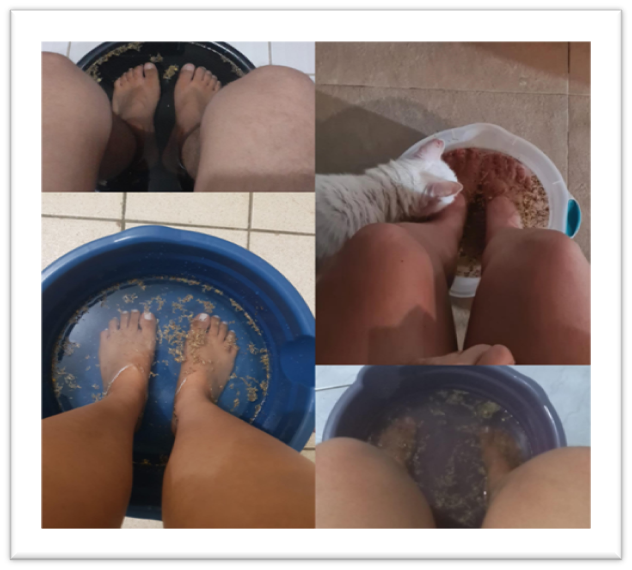
Figure 2 - Photographic record of the footbath with the ICHPs. João Pessoa (PB), Brazil, 2021.
At the end of the 12th day of the footbath technique with the ICHPs, the researchers made phone calls to investigate whether there had been any difficulties in adhering to the technique and the students' perception regarding the questions: “What did you notice while doing the practice?”; “What feelings were aroused?”; and “Did you feel or notice any changes in mental aspects after doing the practice?”.
The answers resulted in 3 categories based on the rescue of foundations, practices and definitions of the CTM involving the footbath technique: “Apprehension of changes in aspects of mental health according to the CTM”; “Improvement of mental health with the use of the footbath technique in the view of the CTM for health promotion”; and “Looking at and reflecting on the feelings aroused during self-care”.
It should be noted that the calls took approximately five to eight minutes; the participants' conversations were recorded using the telephone audio recorder.
In order to analyze the data, the speeches from the 6th and 12th days of the intervention were transcribed into Word and coded according to participation number (stud_01 to stud_13), producing a textual corpus in which several readings and refinements were conducted in order to obtain a better semantic understanding of the speeches.
For the textual analysis of the corpus, the Descending Hierarchical Classification (DHC) was used, which allows a lexographic analysis of the text, distributing it in classes and frequencies of evocation of the words according to the categorization of the set of text segments.6 The data were subsequently imported into the Interface de R pour les Analyses Multidimensionnelles de Textes et de Questionnaires software (IRAMUTEQ).
In order to statistically analyze the information according to the DHC, the text segments were explored based on their respective vocabularies divided into frequencies of word repetitions, and classes were created according to the text segments.12
After processing the empirical material following the intervention, it was found that the corpus comprising the 13 speeches generated 36 Elementary Context Units (ECUs) corresponding to the text segments in line with the size of the corpus.
A rate of 75% or more is considered good use of the ECU. The DHC retained 28 ECUs with 80,56% utilization, generating classes of answers to the questions asked in the intervention stage based on the words that formed each class according to the chi-square test values. (χ2) (Chart 2).
Chart 2 - Corpus description by the IRAMUTEQ software. João Pessoa (PB), Brazil, 2021.
|
Number of texts |
13 |
|
Number of text segments |
36 |
|
Number of forms |
401 |
|
Number of occurrences |
1188 |
|
Number of slogans |
304 |
|
Number of active forms |
254 |
|
Number of additional forms |
46 |
|
Number of active frequency forms |
>=3:67 |
|
Average number of occurrences per segment |
33.000000 |
|
Number of classes |
7 |
|
366 segments classified into 310 |
80,56% |
The data were imported into the IRAMUTEQ software and analyzed using the Content Analysis technique proposed by Bardin, in three stages: 1) pre-analysis, in which, after grouping and organizing ideas, there is a floating reading, the determination of objectives and hypotheses, and the preparation of the material; 2) exploration of the material to carry out the coding and categorization of the contents; and 3) treatment of the results, inference and interpretation of the information collected for the analysis.13
In order to construct the categories relating to the intervention and post-intervention, it was necessary to interpret the data generated by the DHC according to the classes and text segments, thus enabling the data collected via telephone contact and the questions in the survey script to be linked.
With regard to ethical aspects, the study was approved by the Research Ethics Committee of the Nova Esperança Nursing College - FACENE, under protocol No. 4.983.482.
Results
Among the 13 participants, 8 were from the morning shift and 5 from the evening shift, with ages ranging from 21 to 38 years, with a predominance of the 20 to 25 year-old group, with a prevalence of 21-year-olds, and female.
To better understand the results, a dendrogram was drawn up from the phylogram provided by IRAMUTEQ. It should be noted that this corpus was generated at the time of the intervention after the 12th day of application of the footbath technique with the ICHPs by the students. There were 13 sets of texts fragmented into 36 segments, using 29 text segments. To present the classes and lists of words, the frequencies (f) and occurrences generated using the chi-square test were analyzed (χ2) (Figure 3).

Figure 3 - Phylogram-type dendrogram referring to the distribution of words according to the Descending Hierarchical Classification. João Pessoa (PB), Brazil, 2024.
Discussion
Classes 1, 3 and 6, made up of the words “sleep”, “body”, “better”, “sleeping”, “night”, “rest”, “then”, “stress”, “improve”, “relationship”, and “because”, supported the creation of Category 1: “Apprehension of changes in aspects of mental health according to the CTM”. The speeches included in the category were:
“The quality of my sleep has improved a lot, as has my concentration, tranquillity, lightness, calmness, joy, good mood, more tranquillity, concentration, less anxiety attacks and depression.” stud_05
“What I noticed most clearly was that it was easier to fall asleep, and that my sleep was less interrupted at night, I woke up less in the early hours of the morning. [...] and more tranquillity, because at night I would arrive tired and even though I was tired and my body was restless, I managed to calm down and think better about the things that were pending, my reasoning was clearer.” stud_10
“I noticed that my body was more relaxed, starting with my feet and then the rest of my body, and it felt good, my mind was rested, I felt quite sleepy, just that little music, I was relaxed and then I felt sleepy. [...] When I wake up I feel I have slept better, as if it were a deeper sleep, and in relation to the mental aspects, I am managing to control my emotions more when it comes to anxiety, just this issue of sleep that I realized I am sleeping better.” stud_13
“I noticed that it really helps to improve my emotions, I was very stressed and could not sleep, and my sleep also improved, so it was very beneficial in this respect, and one thing I found very interesting was that the swelling in my ankles reduced a lot. [...] Communication has improved here at home because I am less stressed, so I can handle family relationships more smoothly.” stud_06
The vast majority of the population has the energy syndrome of Yang Qi deficiency (vital energy), Yin deficiency or blood deficiency, whether acute or chronic. In addition to the energy diagnosis, other characteristics are common, such as cold extremities, discouragement, lack of energy, difficulty in concentrating, poor quality sleep, a very poor diet, and poor breathing, symptoms of modern humanity that can be felt in the medium and long term.9
According to the CTM, based on the balance of Yin and Yang polarity, the footbath is an ancient practice that helps to distribute the Yang energy from above (head) to the cold extremity, to the Yin energy from below (feet). This energetic balance with the use of the footbath can help when one is mentally exhausted, stressed, physically or mentally fatigued, and is an excellent therapeutic resource for relieving headaches, tiredness, muscle tensions, worries, restless minds, insomnia, irritability, impatience, respiratory problems, and depression.10
The footbath technique aims to increase blood and energy circulation, reduce edema, control anxiety and insomnia by balancing the meridians (liver, spleen, pancreas, bladder, kidney, stomach and gallbladder), which will warm the feet and ankles.5
Healthy and restful sleep is important for maintaining physical, mental and emotional balance. When the body rests during the sleep period, a number of mechanisms take place, such as the cleansing of toxins accumulated during the day, the structuring and preservation of memory, improved brain function and the strengthening of the immune system, which helps to prevent various diseases. Conversely, insomnia can lead to mental illnesses such as anxiety, weight problems and cardiovascular diseases.14
For this reason, it is essential to practice sleep hygiene, i.e., to change daily habits in order to improve the quality of sleep. It is important to eat a light, balanced diet and exercise. Alcohol, caffeinated substances, eating too much and exercising close to bedtime should also be avoided. The environment should be less brightly lit, without extremes of temperature or noise stimuli and, if possible, some of the integrative techniques should be used to get a healthier night's sleep.15
Next, Category 2, “Improving mental health with the use of the footbath technique in the CTM view of health promotion”, was structured based on the words from classes 2 and 7: “foot”, “also”, “practical”, “reduce”, “stress”, “relaxation”, and “anxiety”.
The following are some of the students' speeches for organizing the category:
“I associated it with the practice of the footbath, because even though I was tired I would not fall asleep quickly, and I am also so calm that I have even thought before getting angry and saying everything that comes into my head.” stud_01
“During the practice, I kept feeling instant relief, especially when my legs were aching from spending too much time on my feet, I also felt a sense of relaxation, and in terms of sleep, it improved a lot, bringing tranquillity and calmness.” stud_12
“More relaxation, better breathing, the smell is wonderful, you get so relaxed at the time that you do not even know what you are feeling, the tension has reduced so much that I am calmer and more peaceful, relief from anxiety, stress and more calmness.” stud_02
“Tranquility to sleep, it was difficult, my sleep got better and my stress and anxiety were reduced.” studt_04
One of the main etiological factors of anxiety is emotional stress.16 However, excessive emotions triggered throughout life, such as worry, fear, joy, shock, guilt, shame or over-thinking can generate some Qi (energy) stagnation. Over time, stagnant Qi can generate heat and, if there is no care for health, this can damage the blood and Yin, causing a state of deficiency. Heat can stir the mind, causing anxiety. Blood and Yin deficiency deprive the mind of its “home” and generate anxiety.10
With regard to the use of the CTM in health promotion, it can be seen that essential oils, medicinal herbs and music are interventions aimed at relaxation in an attempt to relieve stressful factors. These techniques, combined with the footbath, can revitalize the body, balancing the distribution of heat and energy, promoting blood circulation and the circulation of defence cells, reducing brain activity along with the congestion of negative thoughts and promoting physical, mental and spiritual health.8
The footbath technique in Chinese medicine is considered a self-care practice. When the feet are immersed in water, more than local effects are produced, as the descending of Yang to the lower part provides relief from symptoms of anxiety and restlessness.5
A study observed a reduction in stress in undergraduate students with the use of lavender and bergamot essential oils.6 Another study, also with students, carried out with music therapy, reduced stress, anxiety and insomnia, with these effects promoting mental health.7
According to classes 4 and 5, the most common words were “stop”, “think”, “mainly”, “yes”, “know”, “well”, “feeling” and “solve”. These words led to the construction of Category 3, “Looking at and reflecting on the feelings aroused during self-care”, highlighted in the following statements:
“Tranquillity and peace were basically the biggest changes, mainly in relation to reasoning, thinking about issues, how to solve them on a daily basis, stopping and thinking without acting on impulse.” stud_10
“It was peace, tranquillity and happiness, I felt much less stressed and nervous, it helped me sleep better and I stopped having as many nightmares as before.” stud_12
“I felt good, it brought me tranquillity, relaxation, and reduced my stress; a sense of peace, during the process we disconnect a little from the world and reflect more on things in life, moments of reflection.” stud_04
Mental health is entirely involved with the individual's ability to realize their abilities in a state of total well-being. The preservation of mental health thus influences various existential factors, whether behavioral, emotional, psychological, spiritual or physical. Therefore, any negative experience and/or the vulnerability of everyday life can have a direct influence on mental health if the individual is unable to cope with such distressing situations.17
Therefore, it is important to manage these aspects that affect mental health, because emotional and psychological preservation allows other organic functions to operate in perfect condition, in addition to contributing to the individual's life as a whole, favoring the development of their skills, competencies and collective interactions, and allowing a good organization of thoughts, ideas and emotions, thus boosting the quality of life.18
Managing emotions is a practice of self-care, as the process of knowing oneself increases the degree of problem-solving. When one is affected by a certain compromising situation, it is necessary to find escape mechanisms for better coexistence, resolution and continuity. Hence, self-knowledge is essential in order to stifle or get out of these situations, having more satisfying and happier moments in daily life.19
Therefore, recognizing one's abilities and potential allows for a better and more peaceful life, as it requires self-acceptance with a more human, welcoming and grateful look, without judging one's own being, having full autonomy and independence to make decisions more safely, to balance emotional intelligence and to better define objectives and goals, thus developing good physical and mental health.
In summary, the benefits achieved in the participatory sample brought several contributions to nursing, given that integrative and complementary practices are low-cost therapeutic options when compared to traditional treatments, being easy to access, and can be implemented at any level of nursing care, contributing in a holistic and integral way to the physical, mental, spiritual and energetic health of individuals.
A limitation to this study was the small sample size, although all the students in the last term of the Nursing course were contacted. This may have been because the intervention, due to the pandemic context, was carried out virtually.
Conclusion
The footbath, along with the integrative and complementary practices used, were strategies that contributed to the promotion of mental health among Nursing undergraduates, with an improvement in concentration, well-being, restful sleep, relaxation, as well as a reduction in stress and irritability among those surveyed.
The experience of practicing the footbath along with the ICHPs reinforced the participants' autonomy. Even though the instructions were not face-to-face, they fulfilled the research criteria independently, becoming participatory elements in care/learning. These students are expected to be able to apply the practices experienced in this study to their nursing care in the future, contributing to improving the health of the population under assistance.
Authors Contributions
Study design: Leonarda Carneiro Rocha Bezerra, Danielle Victor Fernandes, Maria do Socorro Trindade Morais, Suellen Duarte de Oliveira Matos. Data collection: Leonarda Carneiro Rocha Bezerra, Danielle Victor Fernandes, Maria do Socorro Trindade Morais, Suellen Duarte de Oliveira Matos. Data analysis and interpretation: Leonarda Carneiro Rocha Bezerra, Danielle Victor Fernandes, Maria do Socorro Trindade Morais, Suellen Duarte de Oliveira Matos. Manuscript writing: Leonarda Carneiro Rocha Bezerra, Danielle Victor Fernandes, Maria do Socorro Trindade Morais, Suellen Duarte de Oliveira Matos. Critical review of the manuscript: Leonarda Carneiro Rocha Bezerra, Danielle Victor Fernandes, Maria do Socorro Trindade Morais, Suellen Duarte de Oliveira Matos. Approval of the final version of the text: Leonarda Carneiro Rocha Bezerra, Danielle Victor Fernandes, Maria do Socorro Trindade Morais, Suellen Duarte de Oliveira Matos.
Conflict of interest
The authors have declared that there is no conflict of interest.
References
- Penha JRL, Oliveira CC, Mendes AVS. University student mental health: integrative review. Journal Health NPEPS[Internet]. June 2020 [cited 2023 Dec 01];5(1):369-95. Available from: https://periodicos.unemat.br/index.php/jhnpeps/article/view/3549
- Xing Li RN, Wen Song MSN, Jia-Yi Zhang MSN, Chang Lu MSN, Ya-Xi Wang MSN, Yan-Xue Zheng MSN et al.Factors associated with mental health of graduate nursing students in China. Medicine [Internet]. Jan 2021 [cited 2023 Nov 05];100(3):e24247. DOI: https://doi.org/10.1097/md.0000000000024247
- Rodrigues DS, Cruz DMC, Nascimento JS, Cid MFB. Prevalência de transtornos mentais comuns e fatores associados em estudantes de uma universidade pública brasileira. Cadernos Brasileiros de Terapia Ocupacional [Internet]. July 2022 [cited 2023Sept 03];30:e3305. DOI: https://doi.org/10.1590/2526-8910.ctoao252833051
- Boaretto JP, Silva MZ, Martins EAP. Ansiedade e depressão na universidade: contribuições da Terapia Comunitária Integrativa. Temas em Educação e Saúde [Internet]. Sept2020 [cited 2023 Oct 10];16(esp.1):296-310. DOI: https://doi.org/10.26673/tes.v16iesp.1.14309
- Aguir FS, Toniasso E, Pagno AR, Cargnin MB, Madalóz RJ. Escalda-pés e os benefícios à saúde no processo de cuidado de enfermagem. Salão do Conhecimento UNIJUÍ [Internet]. Oct 2020 [cited 2023Feb 28];6(6). Available from: https://publicacoeseventos.unijui.edu.br/index.php/salaoconhecimento/article/view/18363
- Camargo IM, Carvalho DK. Efficacy of aromatherapy in the reduction of stress in university students. RUNA - Repositório Universitário da Ânima - UNISUL [Internet]. 2019[cited 2023 Sept 03]. Available from: https://repositorio.animaeducacao.com.br/items/2a6edfbb-5027-4264-9184-b2b0a214f8d8
- Silva L da SOS, Nazaré ENON, Pires MPCP, Vasconcelos NVSV, Aragão HL, França SS. A música como estratégia de promoção de saúde mental entre estudantes universitários. Saúde em Redes [Internet]. May 2019 [cited 2023Nov 20];5(3):329-41. DOI: https://doi.org/10.18310/2446-4813.2019v5n3p329-341
- Nascimento A, Prade ACK. Aromaterapia: o poder das plantas e dos óleos essenciais. 2 ed. Recife: ObservaPICS; 2020.
- Auteroche B, Navailh P. Medicina Chinesa: Diagnóstico Diferencial. 1 ed. São Paulo: Andrei; 1996.
- Cooper JC. Yin & Yang, a harmonia taoísta dos opostos. 1 ed. São Paulo: Martins Fontes; 1981.
- Patias ND, Von Hohendorff J. Critérios de qualidade para artigos de pesquisa qualitativa. Psicologia Em Estudo[Internet]. Nov 2019 [cited 2023 Dec 18];24: e43536. DOI: https://doi.org/10.4025/psicolestud.v24i0.43536
- Sousa YSO, Gondim SMG, Carias IA, Batista JS, Machado KCM. O uso do software Iramuteq na análise de dados de entrevistas. Pesquisas e Práticas Psicossociais [Internet]. Juny 2020 [cited 2023 Dec 30];15(2):1-19. Available from:http://pepsic.bvsalud.org/scielo.php?script=sci_arttext&pid=S1809-89082020000200015&lng=pt&nrm=iso
- Sousa JR, Santos SCM. Análise de conteúdo em pesquisa qualitativa. Pesquisa e Debate em Educação[Internet]. Dec 2020 [cited 2023 Dec 30];10(2):1396-416. DOI: https://doi.org/10.34019/2237-9444.2020.v10.31559
- Carone CM de M, Silva BDP, Rodrigues LT, Tavares P de S, Carpena MX, Santos IS. Fatores associados a distúrbios do sono em estudantes universitários. Cadernos de Saúde Publica [Internet]. 2020 [cited 2023 Oct15];36(3):e00074919. DOI: https://doi.org/10.1590/0102-311x00074919
- Araújo MFS, Lopes X de F de M, Azevedo CVM, Dantas D de S, Souza JC. Qualidade do sono e sonolência diurna em estudantes universitários: prevalência e associação com determinantes sociais. Revista Brasileira de Educação Médica[Internet]. 2021 [citado 08 set 2023];45(2). DOI: https://doi.org/10.1590/1981-5271v45.2-20200182
- Malheiros PC, Vanderlei AD, Brum EHM. Meditação para estresse e ansiedade em universitários: um ensaio clínico randomizado. Revista Brasileira de Educação Médica[Internet]. 2023 [cited 2023 Sept 10];47(1):e025. DOI: https://doi.org/10.1590/1981-5271v47.1-20220021
- Nogueira ZR, Favareto APA, Arana ARA. Saúde mental e ambientes restauradores urbanos em tempos de covid-19. Psicologia USP[Internet]. 2022 [cited 2023 Dec 07];33:e220012. DOI: https://doi.org/10.1590/0103-6564e220012
- Alcântara VP, Vieira CAL, Alves SV. Perspectivas acerca do conceito de saúde mental: análise das produções científicas brasileiras.Ciência & Saúde Coletiva [Internet]. Jan 2022 [cited 2023 Sept 06];27(1):351-61. DOI: https://doi.org/10.1590/1413-81232022271.22562019
- Barbosa NS, Costa APC, Ribeiro AA de A, Rocha EP, Ribeiro PV de S, Fernandes MA. Práticas de autocuidado em saúde mental de enfermeiros na pandemia da covid-19. Revista Enfermagem Atual In Derme[Internet]. Juny 2023 [cited 2023 Dec 03];97(2):e023116. DOI: https://doi.org/10.31011/reaid-2023-v.97-n.2-art.1717
Corresponding Author
Leonarda Carneiro Rocha Bezerra
Email: leonardarocha@hotmail.com
© The Author(s) 2025. This work is licensed under Creative Commons Attribution 4.0 International. License text for use: https://creativecommons.org/licenses/by/4.0/
 Português (Brasil)
  English
  Español (España)