Idioma
Nursing diagnoses, outcomes and interventions in adult hospital emergency care: integrative review
 Tatiane Félix Barbosa de Queiroz1, Priscilla Alfradique de Souza2, Natália Chantal Magalhães da Silva3, Rosane Barreto Cardoso4, Rodrigo Jensen5
1,2,3Federal University of the State of Rio de Janeiro Pernambuco. Rio de Janeiro (RJ), Brazil.
4 University of the State of Rio de Janeiro. Rio de Janeiro (RJ), Brazil.
5University of São Paulo. São Paulo (SP), Brazil.
Introduction
Hospital emergency units provide specialized assistance to patients with acute or chronically acute, potentially life-threatening conditions. In these environments, efficient, problem-solving workflows and clear communication are needed to ensure effective clinical care.1-2
Communication is enhanced in this scenario through the application of the nursing process (NP), a methodological tool that organizes assistance and directs the prescription of care through standardized nursing terminology (SNT) that labels nursing diagnoses, outcomes and interventions, promoting the nurse's clinical reasoning.3-4
Along these lines, the following classifications stand out: NANDA-International (NANDA-I), proposed in 1982 to document nursing diagnoses (ND);5 the Nursing Outcomes Classification (NOC), published in 1992 to record nursing outcomes (NO);6 and the Nursing Intervention Classification (NIC), published in 1997, which standardizes nursing interventions (NI) and recommends nursing activities (NA).7
A study carried out in São Paulo identified prevalent NANDA-I ND for patients in urgent and emergency situations. However, the authors mentioned the need to develop research involving the “standardized terminology” and “emergency” themes, with a view to guiding and facilitating nursing care in drawing up individualized care plans for clients in critical situations.8
Regarding the NO proposed by the NOC, in a hospital located in the south of Brazil the NO aimed to assess sensitivity to the “excessive fluid volume” ND in patients with heart failure to NI. The findings indicate that the applicability of NOC outcomes favors the organization of critical thinking and makes it possible to investigate the impact of the intervention on the diagnosed clinical condition.9
Another study carried out in Rio Grande do Sul mentioned 18 pharmacological and non-pharmacological NI set out in the NANDA-I NIC for patients with “acute pain” ND, which facilitate the choice of care according to the uniqueness of the complaint and the resources and supplies available, broadening the forms of treatment for patients in the emergency setting, who most of the time are only submitted to analgesic care, providing humanized care and effective treatment.10
The SNT in the emergency context aims to provide nurses with autonomy in drawing up the care plan; encouragement to implement the NP; systematization, standardization and qualification of the assistance record for implementation in a manual or computerized system; management of nursing care; strengthening the work of this class; interaction of the multi-professional team through records of the activities carried out; and, in parallel, client satisfaction with the focal care received.3-4
The three terminologies mentioned are called the NNN-link and show which aspects need to be analyzed in order to plan and implement care. However, studies involving this link need to be expanded in order to strengthen assistance and broaden the nurses' access to documents that standardize their services.
To strengthen the argument that studies are needed in various settings, such as hospital emergency rooms, to enhance the NNN-link and provide personalized and systematized care as well as providing nurses with relevant information for developing and implementing specific protocols for this clientele in the network,11 this study seeks to identify NNN-link nursing diagnoses, outcomes and interventions that are applicable to the adult hospital context.
From the above, the objective is to identify in the literature the nursing diagnoses, outcomes and interventions applicable to adult hospital emergencies.
Method
This is an integrative review, established and conducted based on the recommendations of the Preferred Reporting Items for Systematic reviews and Meta-Analyses protocol (PRISMA).12 The purpose of this type of research is to find out more about a particular subject through five stages: developing the guiding question (1), searching the literature (2), collecting data (3), critically analyzing the studies included (4), discussing the results (5), and presenting the integrative review (6).13
The guiding question was presented with the elements of the acronym PICo: what are the nursing diagnoses, outcomes and interventions for the adult patient (P: population) used in nursing care (I: interest) in the hospital emergency setting (Co: context)?
To direct the search, controlled and non-controlled terms were used, arranged in the Health Sciences Descriptors (Descritores em Ciências da Saúde - DeCS), the Medical Subject Headings (MeSH), and the Cumulative Index to Nursing and Allied Health Literature (CINAHL), associated with the Boolean operators AND and OR. The search was carried out in December 2022 on the Latin American and Caribbean Literature in Health Sciences (LILACS), the Medical Literature Analysis and Retrieval System online (Medline), the Scientific Electronic Library Online (SCIELO), and the Nursing Database (Base de Dados de Enfermagem - BDEnf) databases (Chart 1).
Chart 1 - Database search strategy. Rio de Janeiro (RJ), Brazil, 2022.
|
Database |
Search strategy |
|
|
LILACS, MEDLINE, BVS |
1) Terminologia Padronizada em Enfermagem OR Diagnóstico de Enfermagem OR Processo de Enfermagem AND Serviços Médicos de Emergência OR Serviço Hospitalar de Emergência OR Emergências |
|
|
2) Processo de Enfermagem AND Serviço Hospitalar de Emergência |
||
|
3) Planejamento de Assistência ao Paciente OR Diagnóstico de Enfermagem AND Emergências |
||
|
4) Terminologia Padronizada em Enfermagem OR Diagnóstico de Enfermagem AND Emergências |
||
|
5) Terminologia Padronizada em Enfermagem AND Serviço Hospitalar de Emergência OR Serviços Médicos de Emergência OR Emergências |
||
|
6) Diagnóstico de Enfermagem AND Emergência |
||
|
7) Planejamento de Assistência ao Paciente AND Emergências |
||
|
8) Processo de Enfermagem AND Emergências |
||
|
9) Processo de Enfermagem AND Sistemas de Apoio a Decisões Clínicas AND Enfermagem em Emergência |
||
|
10) Enfermagem no Consultório OR Diagnóstico de Enfermagem OR Planejamento de Assistência ao Paciente AND Emergências |
||
|
11) Planejamento de Assistência ao Paciente AND Serviço Hospitalar de Emergência |
||
|
PUBMED, CINAHL |
1) Standardized Nursing Terminology OR Nursing Diagnosis OR Nursing Process AND Emergency Medical Services OR Emergency Service, Hospital OR Emergencies |
|
|
2) Nursing Process AND Emergency Service, Hospital |
||
|
3) Patient Care Planning OR Nursing Diagnosis AND Emergencies |
||
|
4) Standardized Nursing Terminology OR Nursing diagnosis AND Emergencies |
||
|
5) Standardized Nursing Terminology AND Emergency Service, Hospital OR Emergency Medical Services OR Emergencies |
||
|
6) Nursing Diagnosis AND Emergencies |
||
|
7) Patient Care Planning AND Emergencies |
||
|
8) Nursing Process AND Emergencies |
||
|
9) Nursing Process AND Decision Support Systems, Clinical AND Emergency Nursing |
||
|
10) Office Nursing OR Nursing Diagnosis OR Patient Care Planning AND Emergencies |
||
|
11) Patient Care Planning AND Emergency Service, Hospital |
The inclusion criteria were complete primary articles in English, Spanish and Portuguese, with no time restriction; whereas the exclusion criteria were studies in the pre-hospital and aeromedical context, approaches to the infant and pregnancy profile, monographs, dissertations, theses, simple and expanded abstracts, and editorials.
The studies were selected manually by one of the researchers. After applying the filters, duplicates were removed and titles and abstracts were read. Two researchers took part in reading the articles in full, with a third being included later to refine the articles included in the review.
The selected articles were categorized by using the following key information: title of the article; authors; place, year and journal of publication; main outcomes; and level of evidence according to the references of the Oxford Center for Evidence-Based Medicine. (CBME)14 (Chart 2).
Chart 2 - Level of evidence of studies according to the Oxford Center for Evidence-Based Medicine (CBME). Rio de Janeiro (RJ), Brazil, 2022.
|
1a |
Systematic review of randomized clinical trials |
|
1b |
Individual randomized controlled trial with narrow confidence interval |
|
1c |
Controlled study in which no subject suffered a serious event during treatment |
|
2a |
Systematic review of cohort studies |
|
2b |
Individual cohort studies, including low-quality randomized controlled studies |
|
2c |
Ecological studies |
|
3a |
Systematic review of case-control studies |
|
3b |
Controlled studies |
|
4 |
Cohort studies, case-control studies, poor quality case series or studies |
Source: Oxford Centre for Evidence-Based Medicine, 2009.
Results
Initially, 4176 articles were identified. With the manual removal of duplicates, 3554 were part of the triage process. Next, by reading the titles, abstracts and full text, 15 studies were selected to comprise the review (Figure 1).
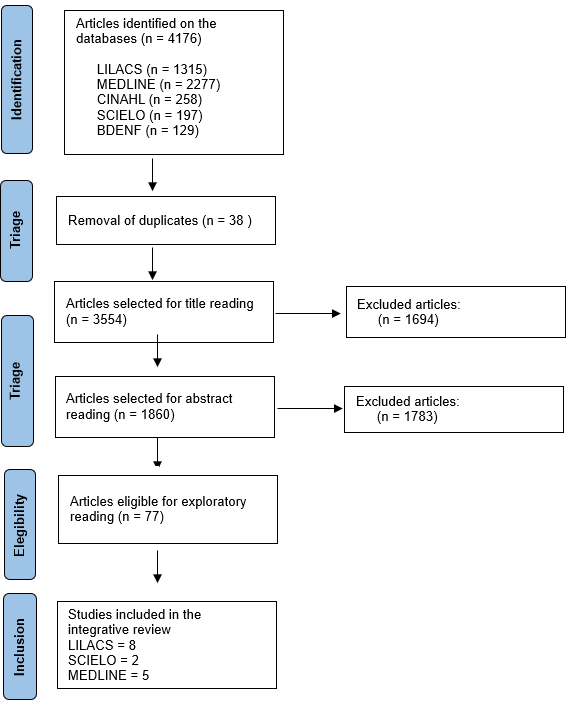
Figure 1 - PRISMA flowchart of the selection process for the studies included in the integrative review. Rio de Janeiro (RJ), Brazil, 2022.
Chart 3 shows the characterization of the 15 included studies.
Chart 3 - Characterization of the studies included in the review. Rio de Janeiro (RJ), Brazil, 2022.
|
Id.* |
Title of article |
Place, year and periodical |
Objective |
Main results |
EL** |
|
A1 |
Nursing diagnoses in patients with liver cirrhosis in an emergency hospital service(15) |
Brazil, 2022 HU Revista |
To describe the sociodemographic and clinical variables and to list the NANDA-I nursing diagnoses in patients with liver cirrhosis treated in an emergency hospital. |
38 NANDA-I diagnoses: risk of infection, risk of electrolyte imbalance, imbalanced nutrition (less than body needs), acute pain, risk of excessive fluids, risk of bleeding, risk of unstable blood pressure, risk of unstable blood glucose, dysfunctional gastrointestinal motility, ineffective peripheral tissue perfusion, risk of imbalanced fluid volume, acute confusion, risk of constipation, ineffective health maintenance, ineffective protection, risk of pressure injury, risk of impaired skin integrity, risk of acute substance withdrawal syndrome, constipation, risk-prone health behavior, risk of falls, risk of ineffective peripheral tissue perfusion, impaired cardiac output, impaired spontaneous ventilation, risk of shock, risk of impaired cardiac tissue perfusion, risk of acute confusion, impaired urinary elimination, risk of aspiration, impaired swallowing, ineffective respiratory pattern, impaired gas exchange, risk of gas damage, risk of urinary tract injury, impaired ambulation, fatigue, risk of injury, nausea, and urinary retention. |
2c |
|
A2 |
B-type natriuretic peptide levels and diagnostic accuracy: excess fluid volume(16) |
Brazil, 2020 Revista Brasileira de Enfermagem |
To analyze the behavior of the BNP in the presence of defining characteristics (DC) of the “fluid volume excess” ND (00026) in patients hospitalized for decompensated heart failure. |
1 NANDA-I diagnosis: excess fluid volume (00026). |
2a |
|
A3 |
Nursing interventions for patients with acute pain(10) |
Brazil, 2019 Journal of Nursing UFPE online |
To identify the nursing interventions carried out on patients with acute pain. |
Based on the NANDA-I diagnosis “acute pain”, 18 nursing activities related to pharmacological methods (administration of analgesia) and non-pharmacological methods (physical and verbal assessment of pain, dialog, pain scale and notifications to the medical team) were validated using the pain management intervention. |
2c |
|
A4 |
Nursing assistance to the emergency/urgency patient(17) |
Brazil, 2018 Journal of Nursing UFPE online |
To describe the experience of teaching in the assistance practice of undergraduate Nursing students using an emergency protocol. |
32 NANDA-I diagnoses established for ABCDE trauma mnemonic: ineffective airway clearance and risk of aspiration, impaired gas exchange, impaired spontaneous ventilation, ineffective breathing pattern and dysfunctional response to weaning, decreased cardiac output, excessive fluid volume, acute pain, ineffective peripheral tissue perfusion, impaired urinary elimination, risk of ineffective renal perfusion, poor fluid volume, risk of bleeding, risk of shock, risk of electrolyte imbalance and risk of impaired cardiac tissue perfusion, acute confusion, risk of acute confusion, risk of ineffective cerebral tissue perfusion, risk of unstable glycemia, impaired physical mobility, ineffective protection, hypothermia, hyperthermia, dysfunctional gastrointestinal motility, risk of unbalanced nutrition (less than body needs), risk of infection, risk of falls, risk of impaired skin integrity, and risk of imbalance in body temperature. |
2c |
|
A5 |
Association between Manchester Triage System discriminators and nursing diagnoses(18) |
Brazil, 2018 Revista Gaúcha de Enfermagem |
To analyze associations between MTS discriminators and ND in adult patients classified as clinical priority I (emergency) and II (very urgent). |
23 NANDA-I diagnoses: ineffective respiratory pattern, acute pain, risk of ineffective cerebral tissue perfusion, risk of falls, decreased cardiac output, impaired comfort, risk of unstable blood glucose, unilateral neglect, risk of bleeding, ineffective cardiopulmonary tissue perfusion, impaired spontaneous ventilation, acute confusion, risk of impaired fluid volume, risk for impaired respiratory dysfunction, ineffective airway clearance, chronic pain, impaired fluid volume, risk of fluid volume imbalance, impaired gas exchange, risk of electrolyte imbalance, risk of infection, imbalanced nutrition (less than body needs), and impaired urinary elimination. |
2c |
|
A6 |
Nursing diagnostics according to the Self-care Theory in patients with myocardial infarction(19) |
Brazil, 2018 Aquichan |
To identify nursing diagnoses in people with myocardial infarction in hospital emergency, according to Orem's self-care theory. |
10 NANDA-I diagnoses: sedentary lifestyle, risk-prone health behavior, self-neglect, decreased cardiac output, risk of frail elderly syndrome, ineffective breathing pattern, anxiety, impaired comfort, impaired physical mobility, and risk of intolerance to activity. |
2c |
|
A7 |
Implementation of nursing diagnoses and care after nasoenteral tube placement in an emergency service(20) |
Brazil, 2017 Cogitare Enfermagem |
To identify the frequency of ND and care related to nasoenteral tube insertion and maintenance. |
3 NANDA-I diagnoses: unbalanced nutrition (less than body needs), impaired swallowing, and impaired self-care for feeding. |
2a |
|
A8 |
Profile of patients diagnosed with chronic ulcer of diverse etiology admitted to an emergency unit(21) |
Brazil, 2016
Ciência, Cuidado e Saúde |
To identify the profile of patients with chronic ulcers of various etiologies admitted to an emergency hospital with "impaired skin integrity” and “impaired tissue integrity” ND, according to the NANDA-I taxonomy (2012-2014). |
2 NANDA-I diagnoses: impaired skin integrity and impaired tissue integrity . |
2c |
|
A9 |
Nursing diagnosis applied to patients with decompensated heart failure(22) |
Brazil, 2016
Cogitare Enfermagem (Online) |
To identify priority ND for patients with decompensated heart failure. |
8 NANDA-I diagnoses: decreased cardiac output, intolerance to activity, impaired physical mobility, ineffective breathing pattern, excessive fluid volume, impaired skin integrity, impaired spontaneous ventilation, and anxiety. |
2c |
|
A10 |
The most used nursing diagnoses at an emergency service(8) |
Brazil, 2015 Cogitare Enfermagem
|
To identify the main ND used by experts in emergency areas. |
7 NANDA-I diagnoses: impaired gas exchange, ineffective breathing pattern, impaired spontaneous ventilation, risk of infection, risk of impaired skin integrity, impaired tissue integrity, and risk of falls. |
2c |
|
A11 |
Defining characteristics of peripheral vascular trauma in urgency and emergency services: occurrence and types(23) |
Brazil, 2013 Escola Anna Nery
|
To calculate the occurrence of and document the clinical evidence of vascular trauma in peripheral punctures of adults and the elderly in an urgency and emergency service in Minas Gerais, Brazil. |
1 NANDA-I diagnosis: risk of vascular trauma. |
2c |
|
A12 |
Diagnoses of nursing in patients in an emergency unit(24) |
Brazil, 2013 Journal of Nursing UFPE online
|
To identify the profile of ND devised for patients treated in an emergency unit.
|
25 NANDA-I diagnoses: unbalanced nutrition (less than body needs), risk of impaired skin integrity, risk of infection, ineffective breathing pattern, impaired spontaneous ventilation, impaired skin integrity, impaired bed mobility, risk of constipation, excessive fluid volume, decreased cardiac output, impaired physical mobility, dysfunctional response to ventilator weaning, risk of ineffective renal perfusion, impaired verbal communication, impaired swallowing, risk of aspiration, risk of fluid volume imbalance, anxiety, ineffective self-control of health, constipation, increased fluid balance disposition, intolerance to activity, risk of impaired cardiac tissue perfusion, risk of ineffective cerebral tissue perfusion, and risk of falls. |
2c |
|
A13 |
Nursing diagnoses in trauma victims in the first six hours after the event(25) |
Brazil, 2012 Acta Paulista de Enfermagem
|
To identify the frequency of ND in trauma victims in the first 6 hours after the traumatic event, and to verify the relationship between these diagnoses and mortality. |
42 NANDA-I diagnoses: risk of infection, impaired skin integrity, acute pain, impaired comfort, impaired tissue integrity, impaired physical mobility, anxiety, risk of bleeding, risk of aspiration, impaired transferability, risk of peripheral neurovascular dysfunction, risk of ineffective cerebral tissue perfusion, fear, risk of fluid volume imbalance, ineffective breathing pattern, impaired spontaneous ventilation, impaired memory, risk of acute confusion, decreased intracranial adaptive capacity, risk of shock, impaired verbal communication, impaired memory, disturbed sensory perception (visual and kinesthetic), risk of body temperature imbalance, impaired oral mucosa, ineffective peripheral tissue perfusion, decreased cardiac output, impaired gas exchange, hypothermia, ineffective airway clearance, risk of ineffective renal perfusion, impaired dentition, risk of decreased cardiac tissue perfusion, risk of electrolyte imbalance, impaired cognition, risk of ineffective gastrointestinal tissue perfusion, poor fluid volume, ineffective thermoregulation, nausea, moral distress, grief, and risk of disturbed mother-fetus dyad. |
2c |
|
A14 |
Nursing diagnoses in trauma victims with fatal outcomes in the emergency scenario(26) |
Brazil, 2012 Revista Latino-Americana de Enfermagem
|
To identify and analyze nursing diagnoses that constitute risk factors for death in trauma victims in the first 6 hours after the event. |
42 NANDA-I diagnoses: risk of infection, risk of aspiration, impaired skin integrity, ineffective respiratory pattern, risk of bleeding, impaired spontaneous ventilation, impaired tissue integrity, risk of ineffective cerebral perfusion, risk of shock, decreased cardiac output, impaired gas exchange, cranial adaptive capacity, hypothermia, risk of body temperature imbalance, decreased cardiac perfusion, ineffective airway clearance, risk of ineffective renal perfusion, risk of ineffective gastrointestinal perfusion, risk of neurovascular dysfunction, ineffective peripheral tissue perfusion, decreased fluid volume, acute confusion, impaired oral mucosa, acute pain, risk of hydroelectrolyte imbalance, impaired transferability, impaired verbal communication, ineffective thermoregulation, impaired dentition, impaired physical mobility, disturbed sensory perception (visual and kinesthetic), impaired memory, anxiety, risk of acute confusion, fear, nausea, grief, moral distress, impaired cognition, and compromised mother/fetus dyad risk. |
2c |
|
A15 |
Validation of the impaired gas exchange diagnoses in adults who receive emergency care(27) |
Brazil, 2008 Ciencia y enfermería |
To validate the content of the DC of the "impaired gas exchange" ND for adult clients with respiratory and oxygenation alterations in emergency assistance. |
1 NANDA-I diagnosis: impaired gas exchange.
|
2c |
Id.* (Identification); EL** (Evidence Level)
The final sample consisted of articles published between 2008 and 2022, 72% (n=11) in English and 28% (n=4) in Portuguese. Among them, 78% (n=14) corresponded to terms from NANDA-I,15-16,17-27 and 5% (n=1) to terms from NIC.10
A total of 89 titles of nursing diagnoses from the NANDA-I15-27 terminology were identified, and one title corresponding to an NI from the NIC, enabling 18 nursing activities to be identified.10 No nursing outcomes from the NOC were identified.
The NANDA-I ND were mapped in the 2021-2023 version,5 making it possible to recognize the discontinuation of eight titles and 27 updates. As a result, 81 titles are applicable to the adult emergency context. The most frequent ND were: “ineffective breathing pattern” (11%, n=9),8,15,17-19,22,24-26 “impaired spontaneous ventilation” (10%, n=8),8,15,17-18,22,24-26 “decreased cardiac output” (10%, n=8),8,15,17-19, 22,24-26 “impaired gas exchange” (9%, n=7),8,15,17-18,25-27 “impaired physical mobility” (9%, n=7),17,19,22,24-26 “risk of infection” (7%, n=6),8,15,17-18,24-26 and “acute pain” (6%, n=5).15,17-18,25-26
Discussion
In this study, we identified headings from the NANDA-I and NIC terminologies that guide the application of the intermediate stages of NP in the adult hospital emergency setting. The prevalent identified NANDA-I titles were: “ineffective breathing pattern”, “impaired spontaneous ventilation”, “decreased cardiac output”, “impaired gas exchange”, “impaired physical mobility”, “risk of infection”, and “acute pain”, whereas in the NIC, the prevalent NI was “pain control”.
In the emergency setting, the nurses' clinical reasoning is stimulated by the signs and symptoms identified in the reception and risk classification process. It is therefore expected that these professionals should refer to the standardized terms to be entered into in the client's medical records.
Thus, when admitting a patient with respiratory alterations (dyspnea, altered breathing sounds, decreased vesicular murmur, cough, use of accessory muscles, nose wing beat, and tachypnea) and systemic signs (confusion, restlessness, abnormal skin color, and hypoxia),28-36 nurses are directed to the “ineffective breathing pattern”, “impaired spontaneous ventilation”, and “impaired gas exchange” ND.5
In order to encourage robust and refined care, it is essential that nurses understand that the “ineffective breathing pattern” ND is translated as inspiration and/or expiration without adequate ventilation5 influenced by advanced age, the impact of diseases of the cardiovascular system with external causes, and fatigue.31 Associated with this ND are the “comfort state”, “respiratory status: airway permeability”, and “response to mechanical ventilation: adult” NO.6 This care plan becomes feasible when NA such as gasometry collection, airway stabilization, elevation of the head angle, orotracheal aspiration with a closed system, aspiration, use of personal protective equipment, control of invasive and non-invasive mechanical ventilation, care of vital signs, listed in the “acid-base” or “respiratory monitoring” NI are undertaken.7
The “impaired spontaneous ventilation” ND is defined by the individual's inability to start and/or maintain adequate breathing without external resources.5 The instability of this situation requires attention from the nursing team to prevent aggravation. Therefore, it is suggested to associate it with the “respiratory status” NO and to the “control of mechanical ventilation: invasive” NI, which provides guidance on the patient's hand and oral hygiene; aspiration, when necessary; sedation and extubation care; emptying condensed water from the reservoirs and ventilator parameters.7,34
With regard to the “impaired gas exchange” ND, this refers to excess or decreased oxygenation and/or elimination of carbon dioxide.5 In order to subsidize its application, the "improve gas exchange" NO is recommended.6 Thus, nurses need to define actions such as surveillance, oxygen therapy, arterial blood gases and elevated decubitus, described in the "acid-base control" NI.32
In view of the above, it can be seen that the ND mentioned are on the rise in the literature,1,5,7,10,12,15,17,32-35 and are listed in situations of allergic processes, trauma effects, and COVID-19 infection, which trigger respiratory alterations and systemic dysfunctions.30-31,34-37 These titles denote similarities in NA, since they require vigilant assessment of respiratory sounds, change of decubitus with elevation, oxygen supply, and hemodynamic assessment.
It is common in the emergency setting for male patients who are sedentary, obese, dyslipidemic, smokers, with a cardiovascular history, living with diabetes mellitus and systemic arterial hypertension, subjected to stressful situations to be admitted due to inadequate blood pumping to meet the needs of the human body. Among the frequent alterations are preload, characterized by edema, fatigue and jugular vein distension; contractility, evidenced by decreased ejection fraction and/or paroxysmal nocturnal dyspnea; and afterload, with dyspnea on minimal or moderate exertion, cyanosis or skin pallor, which trigger impacts on the heart rhythm (bradycardia, tachycardia and palpitations), hyperglycemic stress, aggravation in relation to the prone and left lateral positions, and sleep deprivation.30-31,35,38-40
The presentations suggest raising the “decreased cardiac output”5 ND associated with the "vital signs" and "cardiac pump efficacy"6 NO, and the "vital signs monitoring" and "cardiac care: acute phase" NI, leading to nursing actions such as hyperglycemia control, nutritional therapy, positioning and improved sleep to stabilize patients with a related profile.7,28
At the same time, individuals who seek post-operative care with involuntary and independent movement of the body's limbs, chronic non-transmissible diseases, as well as reports of discomfort, fatigue and impairment in carrying out essential activities for the body29 direct the nurse's reasoning to the “impaired physical mobility” ND.6 From this perspective, the “comfort”6 NO is recommended in order to promote, especially in the emergency setting of the short-stay sector, NA based on support for transfers, guidance and fall prevention methods, which are indicated in the “self-care assistance: transfer” NI.7
Other recurring manifestations in these environments are feverishness, tachycardia, lethargy and hypotension in elderly patients, obese patients, alcoholics, patients with chronic diseases and skin lesions. This clinic leads to the “risk of infection” ND, showing susceptibility to invasion and multiplication of pathogenic organisms5 through the presence of injuries and invasive procedures that lead to a decrease in the body's defenses, with the potential presence of antimicrobial-resistant microorganisms and a previous history of hospitalization.30,34
To mitigate the effects of this ND, it is recommended to associate the “severity of infection”, “risk control: infectious process” and “self-control: infection” NO to promote actions such as proper hand hygiene; elevation of the head of the bed; care of the mechanical ventilator circuit; aspiration; assessment of invasive device spots; monitoring of vital signs; supervision of the skin, avoiding dampness; checking the surgical incision spot after each dressing; use of aseptic techniques; and neurological assessment with the Neurologic Intensive Care Evaluation scale, related to the “protection against infection” NI.7,40
In urgent and emergency care settings, reports of pain are common. This process stems from chest discomfort due to the onset of cardiac arrhythmias, acute myocardial infarction, trauma and/or aggravation of previously installed painful processes.7,37,40 These human responses lead to the “acute pain” ND, understood as an acute condition that refers to unpleasant sensory and emotional changes.5
For proper management of such condition, seven NO are pointed out: “pain level”, “vital signs”, “pain control”, “comfort level”, “level of symptoms”, “anxiety level”, and “stress level”,6 as well as the “pain control” NI,7 which points out NA based on pain characterization and pharmacological applications applicable in the emergency context, such as: complete assessment of pain (frequency, intensity, location and precipitators), characterizing it as the fifth vital sign, with stratification using the Critical Care Pain Observation Tool and Nonverbal Pain Scale in sedated patients; precise analgesia care; verbal and non-verbal indicators that lead to the visual analogue scale; and risk classification that directs precordial pain to the opening of the chest pain protocol.31-34,37,41-43
Thus, the NNN-links mentioned support the recording of the NP, favoring its applicability in the adult emergency context, strengthening the nurse's critical and reflective thinking, as well as the nursing clinical practice. Among the benefits of an evidence-based practice are quality in the continuity of care, agility in records, patient satisfaction and better communication between the multidisciplinary team,34 as well as stimulating soft technologies (humanization, welcoming, and risk classification), soft-hard technologies (clinical reasoning, standardized nursing terminology and nursing theories) and hard technologies (manuals, routines, standard operating procedures and electronic patient records).28,44-51
The limitations of this study are the number of databases used to build the IR, the number of languages selected, the small sample size, and the time in which it was developed (COVID-19 pandemic).
Conclusion
Eighty-one NANDA-I diagnoses were identified, with seven prevalent ND: ineffective breathing pattern, impaired spontaneous ventilation, decreased cardiac output, impaired gas exchange, impaired physical mobility, risk of infection, and acute pain; and one NIC nursing intervention: pain control.
The terms identified in the review were combined with the literature in order to demystify the description of NNN-links that cover the intermediate stages of the NP and provide nurses with the development of skills and autonomy to make clinical decisions concerning human needs and the recording of a feasible care plan in the adult hospital emergency service.
In addition, this study presents findings that offer potential for the development of a manual containing nursing diagnoses, outcomes and interventions with NANDA-I, NOC and NIC links that can guide professionals working in adult hospital emergency departments, as well as contributing to the construction of evidence-based electronic record systems.
Authors Contributions
Study design: Tatiane Félix Barbosa de Queiroz, Priscilla Alfradique de Souza, Natália Chantal Magalhães da Silva, Rosane Barreto Cardoso, Rodrigo Jensen. Data collection: Tatiane Félix Barbosa de Queiroz, Priscilla Alfradique de Souza, Natália Chantal Magalhães da Silva, Rosane Barreto Cardoso, Rodrigo Jensen. Data analysis and interpretation: Tatiane Félix Barbosa de Queiroz, Priscilla Alfradique de Souza, Natália Chantal Magalhães da Silva, Rosane Barreto Cardoso, Rodrigo Jensen. Manuscript writing: Tatiane Félix Barbosa de Queiroz, Priscilla Alfradique de Souza, Natália Chantal Magalhães da Silva, Rosane Barreto Cardoso, Rodrigo Jensen. Critical review of the manuscript: Tatiane Félix Barbosa de Queiroz, Priscilla Alfradique de Souza, Natália Chantal Magalhães da Silva, Rosane Barreto Cardoso, Rodrigo Jensen. Approval of the final version of the text: Tatiane Félix Barbosa de Queiroz, Priscilla Alfradique de Souza, Natália Chantal Magalhães da Silva, Rosane Barreto Cardoso, Rodrigo Jensen.
Conflict of interest
The authors declare that there is no conflict of interest.
Acknowledgments
Coordination for the Improvement of Higher Education Personnel, Federal Nursing Council and Postgraduate Program in Health and Technology in the Hospital Space of the Federal University of the State of Rio de Janeiro, Professional Master's modality, Notice no. 1/2020 with a focus on the Systematization of Nursing Care.
References
1. Sousa KHJF, Damasceno CKCS, Almeida CAPL, Magalhães JM, Ferreira MA. Humanization in urgent and emergency services: contributions to nursing care. Rev Gaúcha Enferm [Internet]. 2019 [cited 2024 Jul 12];40:e20180263. DOI: https://doi. org/10.1590/1983-1447.2019.20180263
2. Nascimento SS, Jesus CAC. Nursing diagnoses in urgency and emergency using King's systems: descriptive study. REAS [Internet]. 2022 [cited 2024 Jul 12];15(2):e9737. DOI:https://doi.org/10.25248/reas.e9737.2022
3. Cofen - Conselho Federal de Enfermagem (Brasil). Resolução nº. 736, de 17 de janeiro de 2024. Dispõe sobre a implementação do Processo de Enfermagem em todo contexto socioambiental onde ocorre o cuidado de enfermagem. Diário Oficial da União 23 jan 2024; Seção 1. Available from: https://www.cofen.gov.br/resolucao-cofen-no-736-de-17-de-janeiro-de-2024/
4. Junior AF, Silva BL, Barros BL, Costa RL, Farias KF. Fournier’s Syndrome: Implementation of the nursing process according to the theory of Wanda Horta. Enferm Foco. 2022 [cited 2024 Jul 12];13:e-202230ESP1. DOI: https://doi.org/10.21675/2357-707X.2022.v13.e-202230ESP1
5. Herdman TH, Kamitsuru S, Lopes CK. NANDA International, Inc. Diagnósticos de Enfermagem: definições e classificações. Thieme Medical Publishers, Inc. 2021;12:4-412.
6. Moorhead S, Swanson E, Johnson M, Maas ML. Classificação dos resultados de enfermagem Guanabara Koogan. 2020;6:1-1714.
7. Butcher HK, Dochterman JM, Bulechek GM, Wagner CM. Classificação das Intervenções de Enfermagem. Elsevier. 2020;7:1-1037.
8. Okuno MFP, Costa N, Lopes MCBT, Campanho CRV, Batista REA. The most used nursing diagnoses at na emergency service. Cogitare Enferm. [Internet]. 2015 [cited 2023 ago 12]; 20(2):383-8. DOI: https://doi.org/10.5380/ce.v20i2.38606
9. Linhares JCC, Orlandin L, Aliti GB, Rabelo-Silva ER. Aplicabilidade dos resultados de enfermagem em pacientes com insuficiência cardíaca e volume de líquidos excessivo. Rev Gaúcha Enferm [Internet]. 2016 [cited 2024 Jul 31];37(2):e61554. DOI: http://dx.doi. org/10.1590/1983-1447.2016.02.61554
10. Cavalheiro JT, Ferreira GL, Souza MB, Ferreira AM. Nursing interventions for patients with acute pain. J Nurs UFPE online [Internet]. 2019 [cited 2024 Jul 12]; 13(3):632-9. DOI: https://doi.org/10.5205/1981-8963-v13i03a238069p632-639-2019
11. Camacho ACLF, Oliveira BGRB. Diagnósticos, resultados e intervenciones de enfermería en la asistencia ambulatoria al paciente con úlcera venosa. Rev Cub Enfermería [Internet]. 2020 [cited 2 Ago 2024]; 36(2) Available from: https://revenfermeria.sld.cu/index.php/enf/article/view/3169
12. Beller EM, Glasziou PP, Altman DG, Hopewell S, Bastian H, Chalmers I, Gøtzsche PC, Lasserson T, Tovey D. PRISMA for Abstracts: reporting systematic reviews in journal and conference abstracts. PLoS Med [Internet]. 2013 [cited 2024 Jul 12]; 10(4):e1001419. DOI: https://doi.org/10.1371/journal.pmed.1001419
13. Souza MT, Silva MD, Carvalho R. Integrative review: what is it? How to do it? Einstein [Internet]. 2010 [cited 2024 Jul 12]; 8(1):102-6. Available from: https://journal.einstein.br/wp-content/uploads/articles_xml/1679-4508-eins-S1679-45082010000100102/1679-4508-eins-S1679-45082010000100102-pt.pdf?x56956
14. Oxford Centre for Evidence-Based Medicine. Oxford Centre for Evidence-Based Medicine: Levels of Evidence (March 2009) — Centre for Evidence-Based Medicine, University of Oxford. Available from: https://www.cebm.ox.ac.uk/resources/levels-of-evidence/oxford-centre-for-evidence-based-medicine-levels-of-evidence-march-2009
15. Maia JC, Bertoncello KCG, Silva AM, Pereira APGT, Colaço AD, Bellaguarda MLR. Nursing diagnoses in patients with liver cirrhosis in an emergency hospital service. HU Rev [Internet]. 2022 [cited 2024 Jul 12]; 48:1–8. DOI: https://doi.org/10.34019/1982-8047.2022.v48.36042
16. Trojahn MM, Barilli SLS, Bernardes DS, Pedraza LL, Aliti GB, Rabelo-Silva ER. B-type natriuretic peptide levels and diagnostic accuracy: excess fluid volume. Rev Gaúcha de Enferm [Internet]. 2020 [cited 2024 Jul 12]; 41:e20190095. DOI: https://doi.org/10.1590/1983-1447.2020.20190095
17. Bonfim CV, Gonçalves FR, Almeida AC, Furtado BMASM. Nursing assistance to the emergency/urgency patient. J Nurs UFPE online [Internet]. 2018 [cited 2024 Jul 12]; 12(12):3506-12. DOI: https://doi.org/10.5205/1981-8963-v12i12a237472p3506-3512-2018
18. Franco B, Busin L, Chianca TCM, Moraes VM, Pires AUB, Lucena AF. Association between Manchester Triage System discriminators and nursing diagnoses. Rev Gaúcha Enferm [Internet]. 2018 [cited 2024 Jul 12];39:e2017. DOI: https://doi. org/10.1590/1983-1447.2018.2017- 0131
19. Cunha GH, Ramalho AKL, Cruz AMM, Lima MAC, Franco KB, Lima RCRO. Nursing Diagnostics According to the Self-care Theory in Patients with Myocardial Infarction. Aquichan [Internet]. 2018 [cited 2024 Jul 12]; 18(2):222–33. DOI: https://doi.org/10.5294/aqui.2018.18.2.9
20. Anziliero F, Corrêa APA, Batassini É, Dal Soler BE, Silva BA, Beghetto MG. Implementation of Nursing Diagnoses and Care After Nasoenteral Tube Placement in na Emergency Service. Cogitare Enferm [Internet]. 2017 [cited 2024 Jul 12]; 22(4):e50870. DOI: http://dx.doi.org/10.5380/ce.v22i4.50870
21. Tavares BC, Matos E, Maliska ICA, Benedet SA, Salum NC. Perfil dos pacientes com úlcera crônica de etiologia diversa, internados em serviço de emergência. Ciênc Cuid Saúde [Internet]. 2016 [cited 2023 Jul 12]; 15(4): 624-629. DOI: https://doi.org/10.4025/cienccuidsaude.v15i4.29027
22. Galvão PCC, Gomes ET, Figueirêdo TR, Bezerra SMM. Nursing diagnosis applied to patients with decompensated heart failure. Cogitare Enferm [Internet]. 2016 [cited 12 ago 2023]; 21(2):01-08. Available from: https://docs.bvsalud.org/biblioref/2016/07/642/44646-179456-1-pb.pdf
23. Krempser P, Arreguy-Sena C, Barbosa APS. Características definidoras de trauma vascular periférico em urgência e emergência: ocorrência e tipos. Esc. Anna Nery [Internet]. 2013 [citado 2023 ago 12];17(1):24-30. DOI: https://doi.org/10.1590/S1414-81452013000100004
24. Salgado PO, Gonçalves PC, Dantas RB, Castro MA, Chianca TCM. Diagnoses of nursing in patients in na emergency unit. Rev enferm UFPE on line [Internet]. 2013 [citado 2023 ago 12];7(1):83-9. Available from: file:///C:/Users/User/Downloads/wandenf,+Art+12.+3283-26766-1-SM+ORG+ENGLISH.pdf
25. Sallum AMC, Sousa RMC. Nursing diagnoses in trauma victims in the first six hours after the event. Acta Paul Enferm.[Internet]. 2012 [cited 2023 ago 12]; 25(2):256–62. DOI: https://doi.org/10.1590/S0103-21002012000200016
26. Sallum AMC, Santos JLF, Lima FD. Nursing diagnoses in trauma victims with fatal outcomes in the emergency scenario. Rev. Latino-Am. Enferm [Internet]. 2012 [cited 2023 ago 12]; 20(1):3–10. DOI: https://doi.org/10.1590/S0104-11692012000100002
27. Dalri MCB, Rossi LA, Cyrillo RMZ, Canini STMS, Carvalho EC. Validation of the impaired gas exchange diagnoses in adults receive emergency care. Cienc. Enferm [Internet]. 2008 [cited 2023 ago 12];1:63-72. Available from: https://www.scielo.cl/scielo.php?script=sci_arttext&pid=S0717-95532008000100008
28. Vieira MS, Roveri PF, Campos EC, Oliveira PG, Duarte AGG, Oliveira E, Florentino AO, Merighi C, Montes LG. Diagnósticos de enfermagem relacionados ao politraumatismo em atendimento pré-hospitalar móvel. Glob Acad Nurs [Internet]. 2022 [citado 2023 ago 12];3(Sup.1):e242. DOI: https://doi.org/10.5935/2675-5602.20200242
29. Prado PR, Bettencourt ARC, Lopes JL. Related factors of the nursing diagnosis ineffective breathing pattern in an intensive care unit. Rev Lat Amer Enferm [Internet]. 2019 [cited 2023 ago 12]; 27. DOI: https://doi.org/10.1590/1518-8345.2902.3153
30. Dantas TP, Aguiar CAS, Rodrigues VRT, Silva RRG, Silva MIC, Sampaio LRL, et al. Diagnósticos de enfermagem para pacientes com COVID-19. J Health NPEPS [Internet]. 2020[citado 2023 ago 12];5(1):396–416. DOI: https://dx.doi.org/10.30681/252610104575
31. Andrade TRSF, Santos IHA, Rezende GES, Torres EC, Marques CRG, Dias ES, Hora AB, Cavalcante AB, Jesus CCF, Ferrari YAC. Principais diagnósticos de enfermagem em pacientes com manifestações clínicas da COVID-19. REAS [Internet]. 2020 [cited 2023 ago 12]; 12(10):e4883. DOI: https://doi.org/10.25248/reas.e4883.2020
32. Lima LS, Bessa MM, Silva SWS, Moura KM, Souza JO, Freitas RJM. Nursing process for patients with respiratory manifestations of COVID-19. Rev enferm UFPE on line [Internet]. 2021 [cited 2023 ago 12];15(1):e245345. DOI: https://doi.org/10.5205/1981-8963.2021.245345
33. Borges GS, Marques KS, Simomura LS, Cândido M, Alves DCI, Baltazar MMM, Kassim MJN, Matos FGOA, Rodrigues LPGA. Nursing diagnoses, outcomes and interventions for patients with craniofacial anomalies: methodological study. REAS [Internet]. 2023 [cited 2023 ago 12]; 23(7). DOI: https://doi.org/10.25248/REAS.e12655.2023
34. Silva GS, Sampaio LRL, Vidal ECF, Nascimento MMX, Bernardo MSN, Morais NCB, Souza JL, Pinheiro WR. Nursing diagnoses and interventions for patients on invasive mechanical ventilation. CLCS [Internet]. 2023 [cited 2023 ago 12]; 16(12):33701-15. DOI: https://doi.org/10.55905/revconv.16n.12-275
35. Queiroz AGS, Souza RZ, Sottocornola SF, Barbosa SJ, Pinheiro FA, Souza LP. Nursing diagnoses according to the NANDA International taxonomy for systematizing nursing assistance to COVID-19. J. Health Biol Sci [Internet]. 2020 [cited 2023 ago 12];8(1):1-6. Available from: https://periodicos.unichristus.edu.br/jhbs/article/view/3352/1124
36. Rocha KNS, Moreira GLA, Nogueira LP, Vianna MF, Alves GFA, Gomes LHN, Pena FV, Oliveira JCT. Updates on anaphylaxis emergency treatment. BJHR [Internet]. 2022 [cited 2023 ago 12];5(1). DOI: https://doi.org/10.34119/bjhrv5n1-110
37. Will RC, Farias RG, Jesus HP, Rosa T. Cuidados de enfermagem aos pacientes politraumatizados atendidos na emergência. Nursing (São Paulo) [Internet]. 2020 [cited 2023 ago 12]; 23(263):3766-3777. DOI: https://doi.org/10.36489/nursing.2020v23i263p3766-3777
38. Silva MJRB, Matos ALA, Andrade EGR, Negrão SMC, Pinheiro AN, Nobre GG, et al. Fatores de risco para doenças cardiovasculares entre acadêmicos de enfermagem: estudo transversal. Rev Enferm Atenção Saúde [Internet]. 2023 [cited 2023 ago 12]; 12(2):e202384. Available from: https://seer.uftm.edu.br/revistaeletronica/index.php/enfer/article/view/6593
39. Silva RC, Gondim MC, Melo GB, Silva VM, Cavalcante AMRZ, Almeida MA, Lucena AF. Decreased cardiac output: an integrative review. Rev. Bras. Enferm [Internet]. 2023 [cited 2023 ago 12];76(2). DOI: https://doi.org/10.1590/0034-7167-2022-0265
40. Szpalher AS, Batalha MC. Cardiac arrhythmias: Nursing Diagnoses based on the NANDA-I Taxonomy (2018-2020). REAS [Internet];11(17):e1447. DOI: https://doi.org/10.25248/reas.e1447.2019
41. Mello BS, Almeida MA, Pruinelli L, Lucena AF. Nursing Outcomes for pain assessment of patients undergoing palliative care. Rev Bras Enferm [Internet]. 2019 [cited 2023 ago 12]; 72(1):64-72. DOI: http://dx.doi.org/10.1590/0034-7167-2018-0307
42. Lima VMR, Silva MMF, Carvalho IS, Carneiro C, Morais APP, Torres GMC, Pinto AGA. The use of assistance flow by nurses to the patient with chest pain: facilities and difficulties. Rev Brasil Enferm [Internet]. 2021 [cited 2024 ago 12]; 74(2):e20190849. DOI: http://dx.doi.org/10.1590/0034-7167-2019-0849
43. Santos AF, Machado RR, Ribeiro CJN, Neto JMM, Ribeiro MCO, Menezes MGV. Nursing Students’ Training of Pain Assessment. Rev Enferm UFPE [Internet]. 2019 [cited 2024 ago 12];13(5):1380. Available from: https://periodicos.ufpe.br/revistas/index.php/revistaenfermagem/article/view/238938/3227
44. Frota CA, Aquiar LSV, Cardoso AO, Sousa LF, Santos FAS, Trigo MHA, et al. Dificuldades enfrentadas pelos enfermeiros na realização da classificação de risco no serviço de urgência e emergência. REAS [Internet]. 2021 [cited 2023 ago 12]; 13(2):e5498-e5498. DOI: https://doi.org/10.25248/reas.e5498.2021
45. Pereira KC, Ferreira WFS. Classificação de riscos no atendimento de urgência e emergência: contribuição do enfermeiro. Rev Jurí Uniandrade [Internet]. 2020 [cited 2023 ago 12]; 31(1):43-55. Available from: https://revista.uniandrade.br/index.php/juridica/article/view/173
46. Ponte KMA, Bastos FES, Fontenele MGM, Sousa JG, Aragão OC. Comfort requirements of patients assisted by the urgency and emergency service: implications for the nursing profession. Rev Pesq Cuid Fundam [Internet]. 2019 [cited 2023 ago 12]; 11(4):925–30. DOI: https://doi.org/10.9789/2175-5361.2019.v11i4.925-930
47. Almeida AKA, Freire LT, Weber J, Rodrigues AFSS, Camargo D, Porto PS, et al. Relato de caso de um paciente com tromboembolismo pulmonar maciço: um olhar para diagnósticos e intervenções de enfermagem. REAS [Internet]. 2022 [cited 2023 ago 12]; 15(3):e9872. DOI: https://doi.org/10.25248/reas.e9872.2022
48. Chiavone FBT, Paiva RM, Moreno IM, Pérez PE, Feijão AR, Santos VEP. Technologies used to support the nursing process: scoping review. Acta Paul Enferm [Internet]. 2021 [cited 2023 ago 12]; 34:eAPE01132. DOI: https://doi.org/10.37689/acta-ape/2021AR01132
49. Carvalho EC; Cruz DALM; Herdman TH. Contribution of standardized languages for knowledge production, clinical reasoning and clinical Nursing practice. Rev Bras Enferm [Internet]. 2013 [cited 2023 Jul 31];66(esp):134-41. DOI: https://doi.org/10.1590/S0034-71672013000700017
50. Oliveira JS, Vasconcelos JMB, Veras RFS, Silva VA, França LMB, Leite DHB. Nursing terminology for the care of people with respiratory diseases and Covid-19. Rev Esc Enferm USP [Internet]. 2024[cited 2024 Jul 31];58:e20230124. DOI: https://doi.org/10.1590/1980-220X-REEUSP-2023-0124en
51. Boeira S, Dal Molin RS, Baltazar EM. Educação permanente para a qualificação do processo de enfermagem com o uso de terminologia padronizada de enfermagem. Enferm: Inov Tecnol Educ Saúde [Internet]. 2020 [cited 2024 Jul 12]; 15:206–17. Available from: https://www.editoracientifica.com.br/books/chapter/educacao-permanente-para-a-qualificacao-do-processo-de-enfermagem-com-o-uso-de-terminologia-padronizada-de-enfermagem
Corresponding Author
Tatiane Félix Barbosa de Queiroz
E-mail: tatianefbqueiroz@hotmail.com
© The Author(s) 2025. This work is licensed under Creative Commons Attribution 4.0 International. License text for use: https://creativecommons.org/licenses/by/4.0/
 Português (Brasil)
  English
  Español (España)