Idioma
Impacts of COVID-19 on Brazilians living abroad and the social determinants of their emotional health
 Margareth Santos Zanchetta1, Marcelo Medeiros2, Walterlânia Silva Santos3, Kênia Lara Silva4, Idevania Geraldina Costa5, Kelly Graziani Giacchero Vedana6, Stephanie Pedrotti Lucchese7, Mavi Galante Mancera Molinari Blotta, Vanessa Fracazzo9, Rosana Barbosa10, Maria Odete Pereira11, Clarissa Moura de Paula12
1,8,12Toronto Metropolitan University. Toronto (ON), Canada.
2Federal University of Goiás. Goiânia (GO), Brazil.
3Federal University of Brasília. Ceilândia (DF), Brazil.
4,11Federal University of Minas Gerais. Belo Horizonte (BH), Brazil.
5Lakehead University. Thunder Bay (ON), Canada.
6University of de São Paulo. Ribeirão Preto (SP), Brazil.
7McMaster University. Hamilton (ON), Canada.
6State University of Center-West of Paraná. Irati (PR), Brazil.
10Saint Mary's University. Halifax (NS), Canada.
Introduction
Living far from relatives and friends due to work, studies, and a search for better opportunities in the present and for the future can be a milestone in an individual’s life. This is particularly evident among immigrants, refugees, international students, and temporary international workers who live away from their home countries. However, this common phenomenon was widely disrupted due to the unprecedented events provoked by measures of the national and local governments to mitigate risks during the COVID-19 pandemic.1 The challenges to planning, maintaining interpersonal physical contact, and loss of control over life events have been identified as a significant source of stress experienced by individuals of various demographics.2 The effects of these severe limitations to ordinary social life can be especially disruptive to individuals whose lives are notably socially oriented and outgoing. Brazilian culture is known for its effusive way of being. Dealing with both negative and positive emotions to achieve self-transcendence is intertwined within Brazilians’ historical construction of identity as individuals who see happiness as the aim of life.3
Brazilians at home and abroad were strongly impacted by the pandemic. The small Brazilian community in Canada may lack a strong community network and why the Canadian health care and social services would be less sensitive to this community. During crises like a pandemic, it is reasonable to assume that Brazilians living in Canada might be more vulnerable to situations of social isolation and without family support, however the extent and diversity of such situations remained to be uncovered. Since connectivity among individuals is affected in cases of international mobility, this is a growing phenomenon within the Brazilian immigrant community.
Literature review
The COVID-19 pandemic has significantly impacted individuals’ physical and mental health and well-being, thus resulting in manifestations of new illnesses or exacerbation of pre-existing ones. Factors that have contributed to this increase in mental health concerns in Canada include isolation measures, physical distancing, unemployment, loss of income, housing insecurities, and fear of contracting the virus.4 The virus has impacted individuals and cognitive well-being along with its physical effects, imposing on the daily lives of infected individuals a new way of living, significantly influenced by fear, and the spread of the virus.5
Among the pandemic’s many outcomes, both negative impacts as well as possible positive outcomes were documented. One of the most important psychological tasks for an individual is to keep their stress at a low level.6 Since resilience refers to stability, transformation, and reduced vulnerability, some positive psychological responses to COVID-19 were predicted by sex, adult age, absence of mental health issues, high levels of psychological well-being, and a high sense of humanity.7 Therefore, during a period of distress it is important to identify factors that may escalate risk for negative effects and those that may encourage resilience.8 Among some protective factors during the pandemic were an individual’s critical health literacy,9 family’s resilience due to their daily practice of gratitude,10 and community’s social capital and collective sense of life’s meaning.11 While there is already a plethora of literature regarding the psychological impacts of the COVID-19 pandemic, this study is the first to provide insights about the Brazilian community living in Canada experiencing such an event. It is noteworthy to say that no scientific evidence has been identified regarding Brazilians living such an experience in Canada.
Conceptual framework
A conceptual framework for our study was developed based on areas of inquiry grounded in the exploration of the social determinants of health (SDH), such as coping mechanisms, social support, and immigration status. This framework highlights areas where COVID-19 impacted everyone’s life, their repercussions on the SDH, and their multidimensional (positive and negative) consequences. The framework guided our understanding of how the pandemic impacted the lives of Brazilians living in Canada in many aspects, bringing to the forefront the impact of SDH on an individual’s overall well-being. Coping mechanisms12 are a key concept in this framework and are defined as: (i) emotionally focused coping which anchors to the evoked emotion during a stressful situation that gives rise to strategies of avoidance, minimization, distancing, selective attention, positive comparisons, and wrestling positive value from negative events, which can be adaptive or maladaptive; (ii) problem-focused coping which involves an active search to solve a stressful situation; and (iii) meaning-focused coping, which is when an individual tries to reshape significance, priority, and value.12 Here the focus is on one’s beliefs and values that support motivation and sustain coping strategies during times of stress. There are four types of meaning-focused coping: benefit finding, benefit reminding, adaptive goal processes, and recording priorities.13
Social support is the second key SDH in the framework. Social support can lead to positive psychological outcomes such as increased self-esteem, resilience, and self-efficacy.14 Instrumental and informational are the most common types of social support. Instrumental social support is active, manifesting through actions, while informational involves the provision of beneficial details and knowledge about a given topic. Both types of social support can be understood as an “expected support”—support an individual believes they already have or that is available to an individual when needed. Finally, the third SDH is the immigration status that refers to an individual’s status as a non-immigrant, an immigrant, or a non-permanent resident in Canada.
To understand how the SDH outlined in the conceptual framework guides this research study, it is important to identify and explore the personal, situational, and contextual factors that influence everyone’s reaction and response to stressful situations. Utilizing an integrative SDH approach provides a varied understanding to view and understand factors that impact one’s health, thus shaping their lifeworld. As Brazilians whose social identities have been shaped by their immigration status and their experiences within the Canadian host society, it is important to acknowledge how everyone holds personal assets that have the potential to dictate the intensity and character of their experiential account.
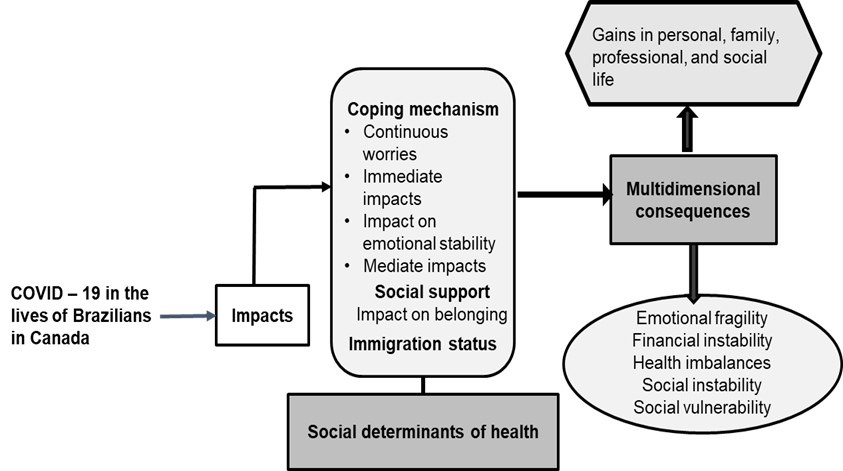
Figure 1 - Conceptual framework
The guiding research question was: What impact did the COVID-19 pandemic have on the lives of Brazilians living in Canada according to the social determinants of their emotional health? The research objective was to describe the experiences of Brazilians living in Canada during the COVID-19 pandemic and highlight its impact on their social determinants of emotional health.
Method
An online survey was implemented as a part of a convergent mixed-methods design,15 including the creation of the questionnaire within an exploratory, non-experimental design.15
The study sites were Canadian urban areas. Criterion sampling, which is a form of purposive sampling was used to recruit and select participants who have experienced the phenomenon of interest.16 The criteria of inclusion were: (a) 18 years and above; (b) born in Brazil or being a Brazilian descent; (c) living in Canada during the COVID-19 pandemic; (d) have internet access; and (e) willingness to provide the implied consent for the online survey.
Recruitment took place through the publication of a video (https://www.youtube.com/watch?v=pio7-UgQNhQ) and announcements in social media as well as live presentations organized by community stakeholders.
The population consisted of Brazilians residing in Canada throughout the COVID-19 pandemic, from May to October 2021.
Data collection began with a sample of 387 respondents to an original questionnaire composed of 27 questions available in Portuguese, English, and French and posted on an online platform. A subset of 113 respondents (29%) also answered the questionnaire’s closing question: “For us to better understand the impact of COVID-19 on your life, you are welcome to share any additional information about your experiences.”
Measures: The questionnaire’s design was based on a modified online survey and was inspired by a qualitative approach towards collecting participants’ opinions, accounts, recommendations, narratives, experiences, and decisions.
The questionnaire explored each respondent’s basic socio demographic (gender, sex, age, province of residence); personal health (self-assessed); travel between Brazil and Canada; the frequency and type of contact with relatives, friends, and acquaintances back in Brazil; any perceived emotional changes due to the pandemic; search for information/help to deal with emotional issues; course of action in response to emotional discomfort or distress; identification of changes in daily life; cases of infection, hospitalization, and death due to the COVID-19, access to support services in Portuguese; and, any incidents or events of major concern involving relatives in Canada and Brazil, course of actions in case of emotional discomfort or distress, and identification of changes in daily life. The material was produced and compiled in three separate reports by the online platform without any sociodemographic identification.
Data analysis was carried out based on a partial analysis refers to evidence collected by an online exploratory survey about the emotional experiences of Brazilians living in Canada and their relatives in Brazil during the pandemic. The analyzed narrative responses were written in Portuguese (n=82), English (n=30), and French (n=1). This raw material was separately submitted to a modified thematic analysis. Thematic analysis is an inductive approach to interpreting data where thinking through themes is understood as a preliminary operation since the goals of such methods go beyond the primary objective of the research.16 Such work includes transposition of a corpus (body of data) towards a certain number of representative sub-themes regarding the analyzed content. This type of analysis consists of a systematic retrieval, grouping, and discursive examination of the themes embedded in a corpus.16
This thematic analysis followed Paillé and Mucchielli’s16 recommendations with some modifications, applying the following procedures: (a) extensive inductive first level of critical reading of respondents’ accounts; (b) creation of a list of predefined themes based on the first, third, and fourth authors’ identification of relevant content and their arrangement according to the areas presented in the conceptual framework as well as distribution of accounts per analytical themes. The predefined themes were: (i) impacts on emotional health; (ii) impacts on emotional stability; (iii) impact on belonging; (iv) impact on immigration status. Throughout this initial stage of analysis, a new theme emerged: Gains in life; (c) confirmation that the predefined themes reflected the scope of the narrative accounts being analyzed, (d) creation of a thematic log, including reflections about the analysts’ discussions; (e) tentative responses to the questionnaire’s closing question about the emotional impact of COVID-19 on the respondents’ life. Confirmation of the data interpretation with member checking by following up with the respondents, to ascertain verisimilitude and accuracy in qualitative research,15 was not conducted due to the nature of the online, anonymous survey.
This report does not used any specific guidelines proposed by the Enhancing the Quality and Transparency of Health Research (Equator) since the results reported in this manuscript concern exclusively to a small, partial set of responses in a questionnaire.
This research has been reviewed and approved by the Toronto Metropolitan University Research Ethics Board (REB#2021-194), Lakehead University: Romeo File No: 1468750 and St. Mary’s University Research Ethics Board: 21-111. All survey respondents provided an online informed consent. Data are not available due to ethical restrictions related to participants’ non-consent.
Results
The results were extracted from a final sample of 387 survey respondents, from which 174 (45%) reported living in Canada for durations of between 2–5 years. A subset of 113 respondents (n=29%) gave narrative responses to the questionnaire’s final open-ended question. Responses reveal no sociodemographic identification (e.g., age, sex, province of residence, etc.), and the quotations are equally unidentified. Description is presented in clusters of evidence as per the conceptual framework within the wide perspective of capturing key areas within the determinants of health of interest for this research: (a) coping mechanisms, (b) social support, and (c) immigration status. Moreover, potentially surprising evidence about (d) gains is also presented. The description is organized by these areas and types of impact caused by the pandemic on the life of the Brazilian respondents in Canada.
Description and analysis are organized according to the following themes, including the number of found evidence: immediate impact (n=11), non-immediate impact (n=6), and continuous concerns (n=14); (ii) impact on emotional stability (n=5); (iii) impact on belonging (n=8); (iv) impact on immigrant status (n=2); (v) gains in life (n=12): personal (n=5), professional (n=2), family (n=3), and social life (n=2). All verbatim are presented in their original form and freely translated into English.
Social determinants of health: Coping mechanisms and the impact on emotional life
Immediate impacts
The hospitalization of a family member proved to be one of the most evident immediate impacts on the respondents’ lives since it was impossible to travel to Brazil during the lockdown period. During this time Canadian borders were closed, preventing foreign travellers from entering or re-entering the country. There was also an absence of direct flights between Brazil and Canada. For example, one respondent wrote that:
My mother is 81 years old and was hospitalized in serious condition […] It was the worst moment of my life. I had a ticket purchased to go to Brazil in the same period, and it was canceled.
According to many respondents, the closed borders exacerbated stress caused by news from Brazil of their relatives getting sick and deaths due to the pandemic. Added to this were concerns over the Brazilian government’s perceived failure to manage the virus’s spread. As a result, such stress provoked the worsening of pre-existing emotional issues (e.g., symptoms of anxiety crises and depression, with strong indications of anxiety (free translation) as documented by the following comments:
Anyway, it’s been difficult in many ways; I’ve had moments of depression and even suicidal thoughts.
Similarly, another respondent said that:
It was very difficult the first year as I felt so isolated that I had suicidal thoughts.
The reported personal impact was high, with another stating:
I was in therapy before the pandemic. However, I had to start taking anxiety medication because the pandemic added to concerns about [my] studies and immigration greatly damaged my mental health.
Many reported concerns for their relatives and feeling incapable to help not just with the burden of infection but over perceived misunderstandings of the pandemic in Brazil:
Covid is much more than a disease […] causing panic and death, it is constantly spoken about every day by the press in Brazil, causing terror in the homes of Brazilians.
To deal with the immediate impacts, many respondents mentioned seeking psychotherapy, but despite its acknowledged need and value, most respondents were unable to secure this health service due to restricted financial situations:
I should seek psychological support and sue the company, because due to the trauma […] [I] have difficulty re-entering the labor market […] expired visa, extension request, waiting and approval of PR [permanent resident card] have contributed greatly to the strain on my mental health.
It was mostly during the initial period of the pandemic when a significant loss in earnings occurred. Financial instability was frequently raised by the participants, explained by the increased cost of living, delays in rent payment, food purchases, etc.:
I lost my job, as well as several friends and family here in Canada and Brazil. I spent almost four months without working and this was the most difficult time for me, psychologically speaking.
Some respondents interrupted their studies (the main purpose of their staying in Canada) because they could not stay in the countries with closed colleges forcing them to pay for internet connection and the use of electronic devices (free translation):
Many schools offer help and to allow installments for the semester for Canadians but not for international students who pay much more than Canadians.
This account corroborated similar experiences by those living in Brazil who experienced many challenges related to the socioeconomic iniquities, social isolation, overburden, and other problems, which increased the uncertainties toward their futures and emotional suffering.17
Mediate impacts
One of the most relevant mediate impacts relates to the impact of the respondents’ separation from their families. The pandemic directly prevented many from being with their loved ones in the final moments of their lives, participating in funeral rituals, or experiencing grief together with their family members:
Because we were so far away, and afraid of travel restrictions, and not even knowing if we needed to isolate ourselves, we couldn’t be there for the funeral. We just had to process the grief on our own.
The importance of rites of passage surrounding death is very important to Brazilians, and their ability to say farewell to their loved ones and family members was severely affected during the pandemic. These rituals facilitate social support as well as individual and collective processes of coping and re-signifying the loss.18 Respondents also reported low self-esteem because of the lockdown, and the fear of falling ill in Canada and not being able to take care of their families also sick in Brazil:
The lockdown here has also contributed to my isolation and participation in Canadian culture, which is affecting my growth here, influencing self-esteem.
Women respondents described deteriorating relationships with their partners and the alteration of family routines causing significant burdens on their lives:
During the first year of the pandemic my marriage of many decades broke down. I moved to now live by myself. It was more difficult in the beginning of the pandemic because of the situation at home.
Pregnant women lived special moments facing both challenges, barriers, and opportunities to redefine their intimate relationships:
I was pregnant when Covid started and I couldn’t count on a support network here in Canada in the most difficult times, which made it a beautiful moment in an emotionally draining period that has weighed heavily on my couple's relationship.
Continuous concerns
Respondents reported feeling constantly concerned about issues that permeated the experience of the pandemic in another country and about infected individuals in Brazil, as well as aspects intrinsically related to being Canada which enforced a persistent lockdown to contain COVID-19’s spread. These concerns related to labour instability, social, mental, and cognitive development of their children, uncertainty about the availability and effectiveness of vaccines, family members infected or at higher risk of infection, the health policy adopted in Brazil during the pandemic, and the “fake news” that multiplied in the day-to-day:
What worries me is the denial of science […] the spread of fake news […] leads to risky behaviors for most of Brazil’s population. Unfortunately, there are many less educated people not knowing how to seek reliable information.
The pandemic clearly intensified concerns related to employability and finances. Children were also a major concern, especially with respect to their education due to school interruptions, limitations to socialization, and impacts on healthy development and mental health. As reflected in the above statement about misinformation and confusion in Brazil, misunderstanding what’s happening because of biased and misleading news was a significant source of stress that ignorance and ideologically biased information accounted for many pandemic-related impacts on Brazilians’ health, daily routines, and relationships. For those in Brazil, other important stressors reported were social vulnerability, concern about contracting the disease or living with someone infected, previous mental disorder issues, physical isolation, and the excess of information and uncertainty and reliability of valid news.
Social determinants of health: coping mechanisms and the impact on emotional stability
In the area of coping mechanisms, an impact on one’s ability to emotionally regulate was reported. Previously available coping resources or patterns that were used to maintain emotional stability may be insufficient in times of severe stress or crisis. Some dysfunctional coping mechanisms were described by respondents, including suicidal thoughts. Some participants noticed a worsening of their pre-existing mental states (e.g., depression) and new medically diagnosed mental conditions (e.g., depression and phobia) and emotional states (e.g., anxiety). Particularly, in those cases which during a “normal” public health context would require frequent visits to health services, such as depression, aversions to and phobias about everyday environments (subway, grocery stores and restaurants), and suicidal ideation:
The fact that...[ it] does not have a real link with the country, makes housing very difficult and to get something […]. Anyway, it’s been difficult […] I’ve had moments of depression and even suicidal thoughts. The stress level is only increasing.
Some respondents disclosed they had begun taking antidepressants, even among those who had previously refused such treatment despite their previous diagnosis and untreated conditions. Like other immigrant/refugee populations, Brazilians’ compromised conditions for emotional well-being and mental health has been influenced by their past in Brazil, which can jeopardize a better overall health status. For years it has been recognized in Canada that these populations, despite experiencing high distress, tend to use mental health services less for many possible causes such as cultural and linguistic barriers, stigma, etc.19 Undeniably, for some Brazilians the contingent need to act upon their unease with aggravating pre-existing mental issues and the emerging emotional discomfort enhances their fragility.
Social determinant of health: social support and the impact on feelings of belonging
The social distancing, isolation, and lockdown were measures to prevent the virus spread and played a significant role in the disruption of daily life during the pandemic. Such measures impacted individuals’ mental health and well-being by causing or exacerbating loneliness and isolation.20 The pre-pandemic social support held by an individual may be considered as an attenuation factor for the psychological impacts of the interruption of one’s social life. Added to that, some ethnocultural minorities in different countries had an additional stress related to pre-existing experiences of discrimination. Brance et al.21 investigated the correlation between immigrants’ perceived discrimination during the early stages of the pandemic and the prediction of psychological conditions, such as depression, anxiety, paranoia, and loneliness. The results demonstrated that perceived discrimination scored low in social connectedness, which has a direct and significant impact on depression. The impact of social connectedness on loneliness was negative and significant. Anxiety and paranoia scored higher when compared with depression and loneliness.21 Our survey indicates similar results due to respondents’ adverse social interactions characterized by multiple difficulties regarding social support and feeling socially connected.
The respondents described how the pandemic had interfered with their social interactions, causing difficulties in establishing face-to-face contacts with individuals within their social circles. At the same time, they expressed difficulties in trusting individuals other than those close to their own family, fearing exposure to infection by COVID-19, which led them to experience loneliness:
Well, since I live alone, everything was very difficult here in Canada. I think Canada is not an ideal country for a person who has no family here. It is difficult to make friends […] and little time for entertainment.
In some situations, respondents reported being the victims of exploitation by property owners, because they lacked knowledge of by-laws and their rights as tenants:
Now with COVID […] being a student many places are asking not only for the first and last month’s rent but now three months even four before entering.
The condition of being a foreign resident of Canada, and the disappointment experienced being an immigrant in North America, provoked an important reflection in many about their decision to remain in the country:
All the monetary planning went down the drain […] COVID caused a lot of anxiety, and compromised my immigration plan in Canada, because my spouse dropped out of college due to the financial situation caused by the unemployment crisis.
Social vulnerability during crises or difficult moments such as the pandemic were reported by respondents, who mentioned the need for social support, proximity, and intimacy of family members as protective elements. Fulfillment of such needs could help individuals to realize that they are not alone when facing such challenges.22
Social determinant of health: Immigrant status and uncertainty related to legal status.
The survey did not ask any sensitive questions about individuals’ immigration status to respect the privacy of such information. However, co-investigators located in Canada were knowledgeable of the many possibilities of legal issues related to immigration, such as the combination of no-repatriation flight and expired tourist or student visa, previous undocumented condition etc. The two key pieces of evidence expressed by a small number of respondents refer to a high uncertainty about one’s future mainly due to financial insecurity and expected deprivation regarding food, accommodation, and medical care. An especially frustrating situation was the pandemic’s interference in the processing of immigration documents already in progress. Respondents reported receiving notice that the government acknowledged changes in the normal processing times without any expectation of returning to the normal timing. Such conditions caused emotional discomfort due to an unprovoked situation of illegality, insecurity, and uncertainty.
Multiple gains in life
While a high majority of our respondents emphasized the pandemic’s negative impact on their lives, 10 respondents (8.8%) described acquiring some form of gain in their lives because of unpredictable situations that emerged for them during the pandemic. The summary of their gains in personal, professional, family, and social dimensions of life follows. Regarding the gains in personal life, it is worth mentioning that despite this low percentage, amid the chaotic reorganization of life during the pandemic, several respondents recognized positive changes in terms of their development of self-knowledge through reflection on life, spirituality, and religion. Even the possibility to exercise at home was appreciated. These aspects were reinforced by the security of being in Canada since the Canadian government had followed the World Health Organization’s guidelines23 from the pandemic’s beginning Gains in professional life referred to reports of higher productivity at homework. Among the gains related to family and interpersonal relationships, the emotional support provided by spouses stood out, strengthening the couple’s relationship. In addition, respondents expressed that the lockdown allowed them to take care of their family members at home. Although the lockdown restricted social activity to only essential services, the respondents realized that there were other individuals in more vulnerable conditions than their own, and therefore this period allowed them to think about volunteering and to strengthen bonds with friends.
Although the pandemic was unquestionably an undesirable and threatening event, it provided an opportunity for individual and collective reflection on priorities, choices, lifestyles, and the strengthening of significant relationships. In addition, after the most critical moments of the pandemic, some Brazilian families realized new-found strengths and abilities to overcome challenges.22 One such strategy was to reconnect with nature during an individual physical activity (e.g., walking, biking, jogging, dog walking, running) to promote emotional well-being. A recent literature review about immigrants and nature identified a vast array of positive outcomes, such as restoration, positive emotions, subjective well-being, as well as healing and therapeutic elements, among others.24
Interpreting the findings: integration of sets of evidence.
Triangulating our findings with quantitative results corroborated our interpretation that stressful situations were evidence of pandemic-related impacts on the emotional lives of our 113 respondents. It is necessary to say that the final survey sample (n=387) chose as responses four major stressful situations and one attenuating life condition during the pandemic.25 These respondents described feeling good while living in Canada acknowledging that they felt more protected in the country (n=202; 52 %). Emotional distress was reported through feelings of sadness at being away from relatives in Brazil in such difficult times (n=178; 46 %). A probable symptom of anxiety was reflected in respondents who described their occasional desire to overeat (n=176; 45%). Regarding worrisome situations, respondents related their situations in Canada to knowledge that their family members in Brazil could not get the vaccine fast enough (n=205; 53%), and about certain relatives who were among at-risk groups (n=198; 51%).25 Moreover, the triangulation with another set of qualitative evidence gathered from individual interviews uncovered that 70 Brazilians living in Canada and 23 of their relatives back in Brazil used a unique and specific problem-solving coping mechanism. The interviewees, individually or jointly with their relatives living in Brazil, counteracted the multidimensional impacts of the pandemic on their lives by aiming for a high balance of emotional health. To attain this, they mastered expanding, seeking, and using opportunities to purposefully learn with the aim of developing their personal and professional skills.26
In sum, the integration of these sets of evidence indicates that emotional health with responses deemed adequate to the unexpected experiences during the pandemic, such as fear and a certain anxiety, were reported. This was possible due to their sense of safety possibly due to other addressed SDH, such as geographical location (living in social isolation in urban and rural areas), access to health services (e.g., screening, testing, vaccination, and psychological services in Portuguese), health literacy, health practices, and the redesign of community supports through engagement in online platforms and social media. Other testimonies addressed feelings of panic, depression, and suicidal thoughts, demonstrating greater emotional impacts. Despite the reported difficulties, challenges, and painful moments (e.g., family separation, travel restrictions, precarious employment, undefined immigration status, as well as financial difficulties and abusive situations at home) faced during the pandemic, Brazilians in Canada demonstrated some management of the deleterious impacts of the pandemic on their emotional health. Discussion
Life stressors and their impact on one’s mental, emotional, and physical health are part of a battery of challenges faced when living abroad. In Canada, evidence of the effects of these challenges among established and new immigrants27 is partially available. Since our evidence refers to a sample of respondents with an average of 5 years residence in Canada, our results contribute to a better understanding the health of this sub-population of immigrants. Studies about the health of immigrants in Canada usually use 10 years of residence as the cut-off point. Reviewing data from the 2017–2018 Canadian Community Health Survey, it was analyzed the associations between length of residence, self-reported poor mental health, perceived high life stress, perceived general health, and sense of community belonging in a sample composed of immigrants with 10 years of residence.28 The results indicate a weak association between a greater sense of community belonging and perceived life stress and self-rated poor mental health.
As reported by the respondents, finance-related stressors brought on by the pandemic have been emphasized due to the significant contraction of the economy, causing a depletion of resources, as well as political, social, and other economic changes.28 Like other countries whose main sources of employment were affected, in response to increased unemployment due to layoffs and reduction in the number of hours worked, Canada immediately implemented an economic plan to sustain individuals and businesses financially impacted.29 On the other hand, those Brazilians who temporarily remained in Canada were not eligible for such federal social benefits, while a similar provision by the Brazilian government was late and restricted. As a result, relatives in Brazil were less likely to support them once they were residing in Canada.
In the major Canadian cities, where Brazilians are mostly settled, the lockdown measures severely jeopardized a sense of belonging due to reduced opportunities for socialization. In addition, it is important to consider linguistic barriers experienced by new immigrants and temporary residents. It should be noted that this population tends to communicate in their mother language with compatriots (in person or through electronic devices), and the interruption of existing social interactions among especially those in informal and on-call employment situations exacerbated the occurrence of emotional, social, and financial impacts. The close connection between mental and physical health and its relation to social participation in the community30 was also reflected in the pandemic’s impact on seniors. Public health measures that forced individuals to stay at home, practice social distancing, and reduced socialization in schools, workplaces, restaurants, etc.31 Social isolation can potentially lead to dramatic consequences, such as suicidal behaviours32 particularly among elderly individuals who experience increased loneliness, immobility, and mental health issues.
Among immigrant families, it was pointed that solidarity and mutual help within the community were the greatest social good offered by society.33 Social mobility and the creation of social spaces, including computer networking technologies, can foster therapeutic communication and continuous contact between members of these families. Financial problems, fear of getting sick and dying and helplessness contribute to the onset of anxiety, while sadness and loneliness prompt a lowering of mood and the onset of depressive symptoms.34 Acknowledging the power of mass communication strategies not only to educate the population about public health measures but equally to reach out to socially vulnerable individuals and families, Canada adopted comprehensive communication strategies to increase communities’ levels of health literacy in support of informed decision-making.
Belonging is a strong feeling for Brazilians since it implies a perception of being part of a community, a family, a group, a nation with links to recognition of one’s dignity, culture and having differences respected. Belonging encompasses having a place and voice of choice in the elaboration of conflicts in favor of the construction of a group or a society. Positive effects of belonging include prevention and better coping with depression, anxiety, suicidal thoughts, feeling of loneliness, and feeling displaced. Through social bonds (configured by time and location), the individuals are inserted in relational, affective, political interactions among others that helped the construction of their life story.34 A special note goes to the Brazilian way of responding to adversity—Brazilian coping mechanisms; Ribeiro3 has explained that Brazilian individuals have a unique mode of interacting with their culture. Brazilians are used to experiencing growth in the face of hardships, grief, loss, and challenges. These ideas are incorporated into Christian beliefs and worldviews. About 81% of the Brazilian population identify as Christian.35 The minority n=81 (21%) of our final sample reported as being male; coping strategies used by Brazilian men to deal with pandemic-related adversity involved a cyclical approach with emotional regulation allowing them to focus on decision-making and action.
By responding to a research question about the COVID-19 pandemic’s impact on the lives of Brazilians living in Canada as framed by the social determinants of their emotional health, this research contributes to the state of knowledge about Canada’s minority ethno-cultural group of Brazilians. This evidence can contribute to the creation of spaces for face-to-face, virtual, or hybrid meetings to listen and bond with others by sharing similar challenges in circumstances where reduced social connections require the active promotion of equitable mental health assets among minority groups. It also contributes to identifying the extent to which a host society’s unpreparedness in establishing social supports to assist minority groups to develop resilience in times of difficulty and adverse situations.
About practical implications, this study brought to the forefront the importance of linguistically appropriate mental health resources for immigrants. Seeking psychological support from Brazilian therapists was an important requirement for participants due to their understanding of Brazilian culture and the participant’s ability to maintain natural openness to communicate in their native language. Due to the paucity of psychological services available in the Portuguese language, many participants endorsed seeking external psychological support from mental health professionals in Brazil. This study also has implications for particularly for nurses’ practice and reinforces how social determinants of health impacts an individual's emotional well-being. Community health nurses have a vital role in advocacy and health promotion to improve the health of the linguistic-minorities community. Further advocacy utilizing a community-based approach is imperative to bring awareness to the urgent need to provide mental health support to a growing immigrant community in Canada. Through the creation of resources, program information and advocacy support groups, these services can help fill current mental health service gaps and improve accessibility for immigrant communities to receive and access mental health services in Canada.
Some methodological limitations regard the impossibility of implementing some qualitative procedures. First, it was impossible to conduct thematic analysis from the perspective of the respondents’ attributes and variables (e.g., sex, gender, age, years of immigration, social support, health status, health practices, work conditions, etc.). A major limitation regards this imprecise characterization of each individual who provided their narrative responses as raw material for the qualitative analysis. Second, it was unfeasible to confirm the interpretation of our findings since the respondents remained anonymous. Moreover, despite the wide publicity in different social media and environments, it was not possible to obtain data about seriously ill individuals, or those without access to computers or the internet due to restrictions caused by the pandemic.
The following refers to specific remediation measures taken to secure the scientific value of the research.15 First, peer debriefing among the four co-investigators who conducted the thematic analysis. Second, clarifying any bias held by three of the Brazilian co-investigators who were living in Canada during the pandemic, thus facing the same phenomenon under investigation. Third, having a data description with a rich and thick description to present the findings. Fourth, implementing data triangulation with the survey’s quantitative data and qualitative interviews to confirm findings’ interpretation. Future research should explore the middle- and long-term effects of COVID-19 on Brazilian residents in Canada regarding their struggles to resume an emotional balance considering their pandemic-related experiences. Furthermore, future research can explore the continuity of the pandemic’s long-term impact on the lives of Brazilians and their relatives and other consequences of these impacts on other aspects of life.
Conclusion
The results showed that stress related to the pandemic had a significant impact on the mental and physical health of Brazilians in Canada. Uncertainties resulting from the pandemic and government response measures resulted in concerns about one’s own health and that of family members, friends, co-workers, and the community in general. Other impacts refer to financial difficulties, loneliness, changes in routine, and changes in physical activities, which contributed to an increase in stress levels among respondents. Respondents were particularly impacted because almost 50% of them had been in Canada for less than 5 years, aggravating their level of isolation and lack of family support.
Authors Contributions
Conceptualization: Margareth Santos Zanchetta, Marcelo Medeiros, Walterlânia Silva Santos, Kênia Lara da Silva, Idevania Geraldina Costa, Rosana Barbosa, Maria Odete Pereira. Data collection: Margareth Santos Zanchetta, Vannessa Fracazzo, Clarissa Moura de Paula. Data analysis and interpretation: Margareth Santos Zanchetta, Marcelo Medeiros, Walterlânia Silva Santos, Kênia Lara da Silva, Idevania Geraldina Costa, Kelly Graziani Giacchero Vedana, Stephanie Pedrotti Lucchese. Manuscript writing: Margareth Santos Zanchetta, Marcelo Medeiros, Walterlânia Silva Santos, Kênia Lara da Silva, Idevania Geraldina Costa, Rosana Barbosa, Maria Odete Pereira, Kelly Graziani Giacchero Vedana, Stephanie Pedrotti Lucchese, Vannessa Fracazzo. Writing - review: Margareth Santos Zanchetta, Marcelo Medeiros, Walterlânia Silva Santos, Kênia Lara da Silva, Idevania Geraldina Costa, Kelly Graziani Giacchero Vedana, Stephanie Pedrotti Lucchese, Maria Odete Pereira, Clarissa Moura de Paula. Final draft approval: Margareth Santos Zanchetta, Marcelo Medeiros, Walterlânia Silva Santos, Vannessa Fracazzo.
Conflict of interest
There are no financial or non-financial interests that are directly or indirectly related to this work.
Funding
This work was supported by Mitacs Globalink Research Award (86248-2021).
Acknowledgments
The authors extend a special thank you to the Brazilian community stakeholders for their support and assistance in recruitment for the study: the General Council of Brazil in Toronto, Councils of Citizenship of Ontario, Montreal, and Winnipeg, Brazil-Canada Chamber of Commerce, Jornal de Toronto, Miss Mara Moura, and the dozens of unnamed volunteer recruiters. The authors also thank Ms. Tamara Dean (Lakehead University) for her assistance in the preliminary literature review. Special “obrigado” goes to the anonymous survey’s respondents for their cooperation and enthusiastic support that made this research possible. The authors thank Patrick Farrell for editing the early draft of the manuscript, as well as Dr. Fabio Biasotto Feitosa and Dr. Maria Regina de Sá Martins (Brazilian psychologists), who reviewed it for refinement and improvement.
References
- Kiester E, Vasquez-Merino J. A virus without papers: understanding COVID-19 and the impact on immigrant communities. J. Migr. Health [Internet]. 2021 [cited 2022 Oct 12];9(2):80–93. DOI: https//doi.org/10.1177/23315024211019705
- Cooke JE, Eirich R, Racine N, Madigan S. Prevalence of posttraumatic and general psychological stress during COVID-19: a rapid review and meta-analysis. Psychiatry Res [Internet]. 2020 [cited 2022 Oct 12];292:113347. DOI: https//doi.org/10.1016/j.psychres.2020.113347
- Ribeiro D. The Brazilian people: the formation and meaning of Brazil. Gainesville: University Press of Florida; 2000.
- Jenkins EK, Slemon A, Richardson C, Pumarino J, McAuliffe C, Thomson KC, et al. Mental health inequities amid the COVID-19 pandemic: findings from three rounds of a cross-sectional monitoring survey of Canadian adults. Int J Public Health [Internet]. 2022 [cited 2023 Nov 10];67:1604685. DOI: https//doi.org/10.3389/ijph.2022.1604685
- Gruber J, Prinstein MJ, Clark LA, Rottenberg J, Abramowitz JS, Albano AM, et al. Mental health and clinical psychological science in the time of COVID-19: Challenges, opportunities, and a call to action. Am Psychol [Internet]. 2021 [cited 2023 Nov 10];76(3):409–426. DOI: https//doi.org/10.1037/amp0000707
- Chen S, Bonanno GA. Psychological adjustment during the global outbreak of COVID-19: A resilience perspective. Psychol Trauma [Internet]. 2020 [cited 2023 Nov 15];12(Suppl 1):S51–S54. DOI: https//doi.org/10.1037/tra0000685
- Valiente C, Vázquez C, Contreras A, Peinado V, Trucharte A. A symptom-based definition of resilience in times of pandemics: patterns of psychological responses over time and their predictors. Eur J Psychotraumatol [Internet]. 2021 [cited 2023 Jul 24];12(1):1871555. DOI: https//doi.org/10.1080/20008198.2020.1871555
- Nitschke JP, Forbes PAG, Ali N, Cutler J, Apps MAJ, Lockwood PL, et al. Resilience during uncertainty? Greater social connectedness during COVID-19 lockdown is associated with reduced distress and fatigue. Br J Health Psychol [Internet]. 2021 [cited 2023 Jul 10];26(2):553–569. DOI: https//doi.org/10.1111/bjhp.12485
- Okan O, Messer M, Levin-Zamir D, Paakkari L, Sørensen K. Health literacy as a social vaccine in the COVID-19 pandemic. Health Promot Int [Internet]. 2021 [cited 2023 Jul 10];38(4):1–9. DOI: https//doi.org/10.1093/heapro/daab197
- Gayatri M, Irawaty DK. Family resilience during COVID-19 pandemic: a literature review. The Family Journal [Internet]. 2022 [cited 2023 Jul 10];30(2):132–138. DOI: https//doi.org/10.1177/10664807211023875
- Zhang N, Yang S, Jia P. Cultivating resilience during the COVID-19 pandemic: A socioecological perspective. Annu Rev Psychol [Internet]. 2022 [cited 2023 Nov 10];73(1):575–598. DOI: https//doi.org/10.1146/annurev-psych-030221-031857
- Lazarus RS, Folkman S. Stress, appraisal, and coping. New York: Springer; 1984.
- Folkman S. Stress, coping, and hope. Psychooncology [Internet]. 2010 [cited 2022 Jul 14];19(9):901–908. DOI: https//doi.org/10.1002/pon.1836
- Paykani T, Zimet GD, Esmaeili R, Khajedaluee AR, Khajedaluee M. Perceived social support and compliance with stay-at-home orders during the Covid-19 outbreak: evidence from Iran. BMC Public Health [Internet]. 2020 [cited 2022 Sep 20];20:1650. DOI: https//doi.org/10.1186/s12889-020-09759-2
- Creswell JW, Creswell JD. Research design: qualitative, quantitative, and mixed methods approaches. 5th ed. Thousand Oaks: SAGE; 2018.
- Paillé P, Mucchielli A. L’analyse qualitative en sciences humaines et sociales. 4e éd. Paris: Armand Colin; 2016.
- Silva IM, Lordello SR, Schmid B, De Melo Mietto GS. Brazilian families facing the COVID-19 outbreak. J Comp Fam Stud [Internet]. 2020 [cited 2023 Mar 24];51(3-4):324–336. DOI: https//doi.org/10.3138/JCFS.51.3-4.008
- Giamattey EMPM, Frutuoso JT, Bellaguarda MLR, Luna IJ. Funeral rites in the COVID-19 pandemic and grief: possible reverberations. Esc Anna Nery [Internet]. 2022 [cited 2023 Mar 24];26(spe):e20210208. DOI: https//doi.org/10.1590/2177-9465-EAN-2021-0208
- Kirmayer LJ, Narasiah L, Munoz M, Rashid M, Ryder AG, Guzder J, et al. Common mental health problems in immigrants and refugees: general approach in primary care. CMAJ [Internet]. 2021 [cited 2023 Mar 15];183(12):E959–E967. DOI: https//doi.org/10.1503/cmaj.090292
- Saltzman LY, Hansel TC, Bordnick PS. Loneliness, isolation, and social support factors in post-COVID-19 mental health. Psychol Trauma [Internet]. 2020 [cited 2023 Mar 15];12(Suppl 1):S55–S57. DOI: https//doi.org/10.1037/tra00007034
- Brance K, Chatzimpyros V, Bentall RP. Perceived discrimination and mental health: the role of immigrant social connectedness during the COVID-19 pandemic. J Immigr Minor Health [Internet]. 2022 [cited 2023 Mar 15];6:100127. DOI: https//doi.org/10.1016/j.jmh.2022.100127
- Silva IM, Schmidt B, Lordello SR, Noal DS, Crepaldi MA, Wagner A. Family relationships in the face of COVID-19: resources, risks, and implications for couple and family therapy practice. Pensando Famílias [Internet]. 2020 [cited 2023 Mar 15];24(1):12–28. Available from: http://pepsic.bvsalud.org/scielo.php?script=sci_arttext&pid=S1679-494X2020000100003&lng=pt&nrm=iso&tlng=pt
- World Health Organization. WHO releases guidelines to help countries maintain essential health services during the COVID-19 pandemic [Internet]. 2020 [cited 2023 Dec 10]. Available from: https://www.who.int/emergencies/diseases/novel-coronavirus-2019/technical-guidance/maintaining-essential-health-services-and-systems
- Rodriguez CU, Venegas de la Torre MDLPV, Hecker V, Laing RA, Larouche R. The relationship between nature and immigrants’ integration, wellbeing and physical activity: a scoping review. J Immigr Minor Health [Internet]. 2023 [cited 2024 Mar 10];25:190–218. DOI: https//doi.org/10.1007/s10903-022-01339-3
- Zanchetta MS, Costa IG, Lucchese SP, Blotta MGMM, Paula CM, Medeiros M, et al. Emotional experiences and coping styles of Brazilians in Canada during the COVID-19 pandemic facing stressful situations with their family and friends in Canada and Brazil. Rev Esc Enferm UFPE [Internet]. In press [cited 2025 Mar 10].
- Zanchetta MS, Lucchese SP, Blotta MGMM, Fracazzo V, Pereira MO, Panta CFR, et al. Brazilian way to transform tribulations to worthwhile lessons during the COVID-19 pandemic. Int J Hum. Ther. Pract. [Internet]. 2023 [cited 2024 Mar 10];3(1):33–43. DOI: https//doi.org/10.32920/ihtp.v3i1.1707
- Chai L. Unpacking the association between length of residence and health among immigrants in Canada: a moderated mediation approach. J Immigr Minor Health [Internet]. 2023 [cited 2024 Mar 25];25:38–49. DOI: https//doi.org/10.1007/s10903-022-01377-x
- Debata B, Patnaik P, Mishra A. COVID-19 pandemic! Its impact on people, economy, and environment. J Public Affairs [Internet]. 2020 [cited 2024 Mar 10];20(4):e2372. DOI: https//doi.org/10.1002/pa.2372
- Government of Canada. Canada’s COVID-19 Economic Response Plan: Support for Canadians and businesses [Internet]. 2020 [cited 2023 Dec 17]. Available from: https://www.canada.ca/en/department-finance/news/2020/03/canadas-covid-19-economic-response-plan-support-for-canadians-and-businesses.html
- Sepúlveda-Loyola W, Rodríguez-Sánchez I, Pérez-Rodríguez P, Ganz F, Torralba R, Oliveira DV, et al. Impact of social isolation due to COVID-19 on health in older people: mental and physical effects and recommendations. J Nutr Health Aging [Internet]. 2020 [cited 2023 Nov 10];24(9):938–947. DOI: https//doi.org/10.1007/s12603-020-1469-2
- Monahan C, Macdonald J, Lytle A, Apriceno M, Levy SR. COVID-19 and ageism: how positive and negative responses impact older adults and society. Am Psychol [Internet]. 2020 [cited 2023 Nov 10];75(7):887–896. DOI: https//doi.org/10.1037/amp0000699
- Kawohl W, Nordt C. COVID-19, unemployment, and suicide. Lancet Psychiatry [Internet]. 2020 [cited 2023 Nov 10];7(5):389–390. DOI: https//doi.org/10.1016/S2215-0366(20)30141-3
- Falicov C, Niño A, D’Urso S. Expanding possibilities: flexibility and solidarity with under-resourced immigrant families during the COVID-19 pandemic. Fam Process [Internet]. 2020 [cited 2023 Mar 15];59(3):865–882. DOI: https://doi.org/10.1111/famp.12578
- Rosa MD. Sociopolitical suffering, silencing, and psychoanalytic clinic. Psicol. Ciênc. Prof. [Internet]. 2022 [cited 2023 Nov 10];42:e242179. DOI: https://doi.org/10.1590/1982-3703003242179
- 50% of Brazilians are Catholics, 31% Evangelicals and 10% have no religion, says Datafolha. [Internet]. 2020 [cited 2023 Dec 27]. Available from: https://g1.globo.com/politica/noticia/2020/01/13/50percent-dos-brasileiros-sao-catolicos-31percent-evangelicos-e-10percent-nao-tem-religiao-diz-datafolha.ghtml
Corresponding Author
Name: Margareth Sanrtos Zanchetta
E-mail: mzanchet@torontomu.ca
© The Author(s) 2025. This work is licensed under Creative Commons Attribution 4.0 International. License text for use: https://creativecommons.org/licenses/by/4.0/
 Português (Brasil)
  English
  Español (España)