Idioma
Nutritional assessment of children in a community daycare center: a time series study
 Isabela Ferreira Gonçalves1, Maurilo de Sousa Franco2, Gabriela Torres Tetéo3, Margareth Cristina de Almeida Gomes4, Patricia Lima Pereira Peres5, Maria Helena do Nascimento Souza6
1,3,4,8Federal University of Rio de Janeiro. Rio de Janeiro (RJ), Brazil.
2University Hospital of Piauí. Teresina (PI), BraZil.
8State University of Rio de Janeiro. Rio de Janeiro (RJ), Brazil.
Introduction
In the field of community health, anthropometry is a useful tool for nutritional assessment in the context of child growth.1-2 Adequate nutrition in childhood is considered to be achieved primarily through exclusive breastfeeding until six months of age and subsequently perpetuated through a balanced and supplemented diet until two years of age or older.3-4 The quality and quantity of food eaten by children, especially in the first two years, a phase marked by rapid growth, have repercussions throughout their lives, while being a fundamental factor in preventing the development of organic, anatomical, and metabolic disorders.3,5-6
Today, the global scenario is characterized by a nutritional transition that growing epidemiological, demographic, and socioeconomic changes can explain. It should be noted that this context directly impacts the eating habits of populations, resulting in increased consumption of ultra-processed foods, which contain high amounts of salt, sugar, and other substances, whose excessive intake over long periods is directly associated with the emergence of noncommunicable diseases and conditions such as dyslipidemia, type 2 Diabetes Mellitus (T2DM), Systemic Arterial Hypertension (SAH), bone and joint disorders, and cancer.6-8
In line with the World Health Organization (WHO),9 excess weight is currently an extremely important public health issue. In Brazil, following the global trend, there has been an increase in the prevalence of excess weight in both the adult and child populations. Therefore, overweight and obesity in childhood are associated with extrinsic factors such as family income, level of education, and massive advertising of processed foods.7-8,10
In contrast, it should be noted that in certain regions of Brazil, the opposite scenario is also present. According to a study conducted in the northern region of the country, specifically among children of the Yanomami ethnic group, a high rate of chronic malnutrition was identified, exceeding 80%. Thus, it is believed that Brazilian dietary irregularity is intrinsically linked to socioeconomic, cultural, health, and behavioral conditions.11-12
With regard to the importance of anthropometry, various evidence indicates that anthropometric deficits can have a significant impact on child growth and development, with malnutrition and its associated factors significantly compromising the physical growth and cognitive development of children, especially those under one year of age. A national study showed that malnutrition is responsible for a significant number of hospital admissions in Brazil, especially among children under one year of age, highlighting consequences such as growth retardation and neurological impairment. With regard to the importance of anthropometry, various evidence indicates that anthropometric deficits can have a significant impact on child growth and development, with malnutrition and its associated factors significantly compromising the physical growth and cognitive development of children, especially those under one year of age. A national study showed that malnutrition is responsible for a significant number of hospital admissions in Brazil, especially among children under one year of age, highlighting consequences such as growth retardation and neurological impairment.1-2,8-10
In addition, another study on the determinants of child malnutrition in Brazil showed that structural factors, such as low parental education levels and inadequate prenatal care, directly contribute to the persistence of child malnutrition, negatively affecting the overall development of the child. These studies support the importance of anthropometric surveillance as a tool for early identification of nutritional deficits and for the formulation of public policies aimed at early childhood. Integrated public policies, especially between the areas of health, education, and social development, are fundamental to promoting healthy and sustainable child development.13
In terms of public policy, it is worth highlighting the importance of Brazilian initiatives that address child growth and development. The Health at School Program (HSP) is an intersectoral strategy between the health and education sectors, aimed at promoting health and preventing diseases among public school students. In this context, child anthropometry is a tool that allows for the early identification of disorders such as malnutrition, overweight, and obesity. The systematic measurement of weight, height, and Body Mass Index (BMI) in the school environment, as recommended by the HSP, facilitates the monitoring of child growth and supports preventive and educational actions. In addition, the anthropometric data obtained can guide more assertive nutritional interventions and contribute to the planning of public policies aimed at improving the health and nutrition of school-age children.9,14
Obtaining reliable, high-quality anthropometric data depends on ongoing training for the professionals who collect it. In this regard, the Ministry of Health's “Food Guide for Brazilian Children Under 2 Years of Age” is particularly noteworthy. It consists of evidence-based guidelines on appropriate and healthy eating practices in the early years of life. The integration between the dietary guidelines and anthropometric monitoring is essential for the early detection of nutritional deviations, such as malnutrition or excess weight, enabling timely interventions and promoting full child development based on adequate nutrition from the early years of life.14
Therefore, this situation reinforces the importance of continuous and systematic monitoring of child growth, equipped with reference materials and the best available evidence, since early interventions in changes seen at this stage are capable of improving conditions of malnutrition or obesity.15 Anthropometric assessment is thus a research method that evaluates the dynamic and continuous human process, which is characterized by changes in body size and appearance.4
This strategy stands out for its wide applicability across different age groups, its low cost, and the fact that it is non-invasive, making it essential, since it promotes and protects children's health.15
Thus, health professionals are responsible for performing anthropometric assessments in schools, and nurses working in Primary Health Care (PHC), due to their broad role in the development of preventive actions, are of fundamental importance in detecting and intervening in nutritional deviations in school-age children and adolescents.16-17
Given the above, it is appropriate to conduct studies that address the long-term monitoring of the nutritional status of children enrolled in daycare centers and, at the same time, can generate data to support interdisciplinary actions between nurses and other professionals focused on child development and growth, contributing to the transformation of local realities through timely interventions in early childhood.
The aim, therefore, is to assess the nutritional status of children who attended a community daycare center between 2013 and 2023.
Method
This is a quantitative, cross-sectional time series study conducted in a community daycare center located in the southern part of the city of Rio de Janeiro. Since 2000, students and faculty from the nursing program at a public university in the municipality of Rio de Janeiro have been developing activities related to a research and extension project at this location. This study was conducted from May to June 2024.
The research was based on the health records of children enrolled in the daycare center participating in the study, considering the time frame from 2013 to 2023. The daycare center, the study setting, offers comprehensive care to children aged six months to four years and can care for 140 children per year. The sample was selected for convenience, considering the average number of children who participated in the first annual anthropometric assessment at the daycare center between February and March during the period from 2013 to 2023, totaling 136 children.
The inclusion criteria were records of children aged six months to four years that contained anthropometric data from at least one assessment conducted between February and March of each year determined for the study. The children's legal guardians signed an informed consent form at the time of enrollment in the daycare center, authorizing the nutritional assessment of the children and the dissemination of the results through reports or scientific publications.
Anthropometric data records subsequent to the first assessment of the same child during the study period were excluded so that no more than one assessment of the same child would be included. The annual records for February and March were checked due to the possibility that the first assessment of some children may have occurred in February and others in March. Children who did not have a record of their first anthropometric assessment during the study period due to absence from daycare due to illness, travel, or other reasons were also considered sample loss.
To obtain data from the institution's archives, a form containing information on sex, weight, length or height, date of birth, and date of the first anthropometric assessment in each year studied was used. To present a characterization of the children attending the community daycare center in the last year studied—2023—variables such as the degree of kinship of the primary caregiver and the children's living conditions (number of rooms and number of people per room) were also collected. The researchers consulted the archives and collected the data with the authorization and consent of the daycare center's management.
The annual anthropometric assessment of the children is carried out, in accordance with institutional protocol, in the daycare center's infirmary by nursing students under faculty supervision, who are linked to the aforementioned Research and Extension Project. At the time of the assessment, parents and guardians were notified, the children were prepared by the team on the procedures, and the daycare educators accompanied their classes during the appointments.
To check the weight and length of children under two years of age, a pediatric scale and anthropometric ruler were used. For other children over two years of age, a digital anthropometric platform scale and measuring tape fixed to a straight wall without a baseboard or a stadiometer attached to the scale were used.
The children's nutritional status was assessed based on anthropometric measurements, considering the z-score values of the weight-for-length indicator (zero to two years) and weight-for-height indicator (two to five years) for boys and girls, according to the classification recommended by the WHO and adopted by the Ministry of Health.18 This classification considers obesity to be a z-score greater than +3; overweight to be a z-score between +2 and +3; risk of overweight to be a z-score between +1 and +2; normal weight to be a z-score between -2 and +1; thinness to be a z-score between -2 and -3; and severe thinness to be a z-score less than -3.18
The Epi-Info program, version 3.51, was used for statistical analysis. With the aid of the Nutrition subprogram, z-scores for weight-for-length or weight-for-height were calculated, and nutritional status was classified based on WHO reference tables for calculating the nutritional status of boys and girls, contained in the program itself. The variables characterizing the children, such as age, sex, degree of kinship of the primary caregiver, number of rooms, and number of people per room, were expressed in relative and absolute values.
The research complied with Resolution No. 466/12, which deals with bioethical standards in work with human beings, and was approved by the Ethics and Research Committee (REC) of the Anna Nery School of Nursing at the Federal University of Rio de Janeiro, under opinion 1403789.
Results
It was evident that the most obvious nutritional disorder among the participating children was overweight, with a peak in 2019 (15.2%). Underweight rates varied significantly, with a notable increase in 2015 (6.3%) and the highest percentage in 2022 (10%). The percentage of eutrophic individuals fluctuated. Initially, in 2013, it was 75.6%, reaching the highest percentage in 2014 (79.4%) and stabilizing in 2023 (74.1%) (Graph 1).
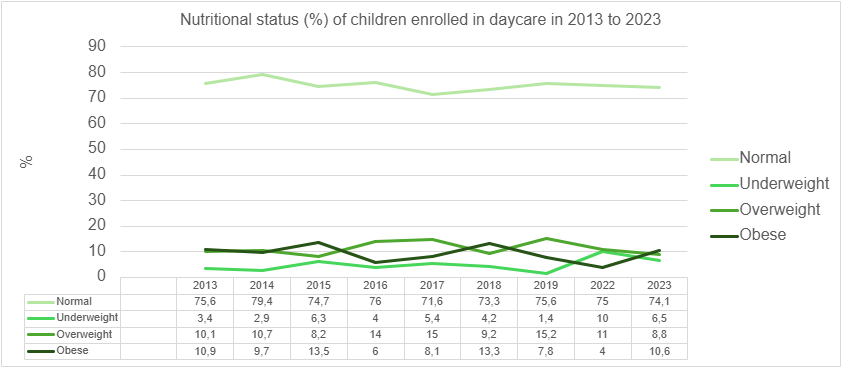
Figure 1 - Nutritional status classification of children aged zero to four years who attended community daycare centers. Rio de Janeiro (RJ), Brazil, 2013 to 2023.
Fluctuations in overweight and obesity rates among children were also observed. The highest combined rate of overweight and obesity occurred between 2017 and 2019, suggesting a high prevalence of these disorders among these children. It was also found that the lowest percentage of this sum occurred in the post-pandemic period in 2022 (15%), when there was an increase in the rate of underweight children (10%).
Regarding the sociodemographic characteristics and family context of the children who attended the community daycare center in 2023, the last year observed, it was found that 53% (72) were female and that in most cases, 91.2% (124), the mother was primarily responsible for the child's care, followed by the father, grandmother, aunts, cousins, godmother, and niece (8.86%). It was found that 67% (91) of the children were under three years of age. Regarding housing conditions, 87.5% (119) of households had more than three rooms, and 57.3% (78) had three or more people living in them.
Discussion
It should be noted that the contemporary global scenario is marked by a nutritional transition involving changes in dietary patterns influenced by economic, cultural, demographic, social, and health changes, which culminate in nutritional and consumption changes. This change has resulted in a decrease in malnutrition and other nutritional deficiencies, while there has been an increase in the incidence and prevalence of Chronic Noncommunicable Diseases (CNCDs), such as obesity, DM2, dyslipidemia, and metabolic syndrome.7,9-10
In line with global trends, Brazil has experienced rapid advances in this phenomenon over the last 30 years. However, this scenario is polarized, with an increase in morbidity and mortality from CNCDs and a decline in malnutrition, mainly in the South and Southeast regions, while mortality from parasitic diseases remains. Thus, it is observed that, currently, more than half of the Brazilian population is overweight.7-8,10
Similarly, the nutritional transition significantly affects the child population, which is even more concerning due to the serious long-term health implications.1,2 In this regard, it is estimated that in Latin America and the Caribbean, 7.5% of children under five years of age were overweight, a rate higher than the global average (5.7%).19
These patterns observed internationally and in Brazil are mainly due to lifestyle changes associated with increased consumption of ultra-processed foods, rich in sodium and sugars and low in nutrients, combined with insufficient physical exercise and a preference for sedentary activities.7-8
The evidence found in the literature corroborates the findings of this study, where, in a global overview in recent years, there has been a decline in malnutrition rates and a gradual increase in overweight and obesity among children, which characterizes the change in the epidemiological profile and the nutritional transition in which the Brazilian population also finds itself.4,7-8,10
Furthermore, a study conducted in Argentina that aimed to evaluate the anthropometric data of schoolchildren aged between six and 12 years obtained similar results to the findings of this study, where the combined rate of overweight and obesity was 20.1%.20
In this context, other national and international studies that investigated the nutritional status of school-aged children and adolescents also showed a positive association between high rates of excess weight and a diet poor in complex nutrients combined with higher consumption of processed foods.10,21-22
It should be emphasized that the pathogenesis of obesity is multifactorial and results from a complex interaction of economic, social, and environmental aspects, according to the biopsychosocial model of health. Consequently, the family plays a fundamental role in creating the eating habits of their offspring, since it is the first environment in which the child is inserted and, in this sense, parents are key players in determining the nutritional status of infants.6,11,23
Other studies have shown that characteristics such as maternal Body Mass Index (BMI) ≥ 25, early cessation of breastfeeding, overweight and obesity in one or both parents, early introduction of ultra-processed foods before the age of two, and subsequently decreased physical activity are associated with a higher prevalence of overweight and obesity in childhood.6,5,7,21-24
A cross-sectional study conducted with 300 preschoolers in a part of Southeast Europe showed that children whose mothers were overweight were 3.34 times more likely to be overweight or obese.23 In this case, the mother's condition can have a strong impact on the children's weight, due to their shared lifestyle and, in general, greater maternal responsibility for meal preparation.6,23-24
The fact that the findings of this study show a high percentage (91.2%) of mothers as the primary caregivers of children reflects the historical and cultural role of mothers as responsible for raising children and caring for the home, and therefore as the main support network for children in their early years.22
The early years of childhood represent a critical period in child development, and many risk factors resulting from overweight and obesity may already be present at this stage and extend throughout life.6,25 It is therefore imperative that health interventions be carried out early to reduce excessive weight gain in the long term.25
Although the results of this study showed a prevalence of overweight and obesity, in 2022, there was a decrease in these rates, accompanied by an increase in the rate of underweight children compared to 2019. This phenomenon may be related to the prolonged impact of the COVID-19 pandemic, which has considerably affected the living and socioeconomic conditions of the world's population.26-28
Regarding the damage to schoolchildren's nutrition, the need for social isolation led to the closure of educational institutions and, as a result, the interruption of free school meal distribution, which exposed millions of children to food insecurity/absence.29 Given this, Food and Nutritional Insecurity (FNI) can be defined as the association between zero or scarce food availability and disregard for the right to quality food in adequate quantities.30
The advent of the pandemic has thus significantly affected the diet and nutritional status of the most vulnerable groups, especially children, who, despite being less affected by the viral infection, face the indirect effects of this global crisis, which has further exacerbated social and health inequalities.
Furthermore, due to this context, consumption habits have also been adversely affected, as families have shifted their food choices toward low-cost products, most of which are high in fat and low in nutrients. This scenario leads to the phenomenon of the double burden of malnutrition, where malnutrition coexists with overweight and obesity,7,29 which corroborates the findings of this study.
Thus, children's health is a key factor in building a healthy society, as this is the stage when habits are formed that can influence individuals' future well-being. Therefore, the role of nurses is fundamental in the health care of children who study full-time in environments such as daycare centers and educational centers, since these professionals play a crucial role in health promotion and early identification of characteristics that may be associated with the long-term onset of NCDs.17,22,24
In Brazil, child health is seen as one of the priority areas for the development of public policies. In this context, PHC is crucial for identifying health problems, as it coordinates and articulates care.21 However, PHC also faces the problem of the double burden of malnutrition resulting from nutritional transition, which is aggravated in times of global catastrophes, such as the COVID-19 pandemic.27-29
In the sphere of Primary Care, the HSP stands out as a tool for addressing the vulnerabilities of schoolchildren and emphasizes the assessment and monitoring of the health of children and adolescents. Among the interventions carried out by nurses in schools are nutritional counseling and ongoing education of students on health issues.14
Therefore, daycare centers and community education centers are spaces that enable various health promotion activities. It is necessary that these activities be multidisciplinary and carried out continuously with children, adolescents, parents/guardians, and institution employees, intending to reduce inequalities, risk factors, and the impact of socioeconomic inequalities on the health of this population group.14,17,30
A limitation of this study is that it was conducted in only one institution, making it impossible to generalize the results. In addition, the absence of data on longitudinal factors is also a limitation. It is therefore recommended that further studies be conducted to investigate the cause and effect of nutritional disorders, as well as associated factors.
Conclusion
In assessing the nutritional status of children aged zero to four enrolled in a community daycare center, a 10-year time series revealed a double concern regarding the disorders found: the coexistence of a prevalence of overweight and obesity and an increase in the rate of underweight, especially in 2022, a period following the COVID-19 pandemic that culminated in food insecurity, social isolation, and increased social vulnerabilities.
It should be noted that the social context surrounding children plays a fundamental role in their eating habits and living conditions, since exposure to unhealthy habits can lead to negative outcomes that will have repercussions in adulthood. It is therefore of utmost importance for health professionals in daycare centers to act through early diagnosis, prevention, and promotion of children's health.
The results of this research can be used as a reference for policies aimed at monitoring the growth and development of children who attend daycare centers or other educational centers, as well as for future intervention studies that take into account epidemiological trends and the impact of the nutritional transition phenomenon of recent decades on the population's quality of life.
Authors Contributions
Study design: Maria Helena do Nascimento Souza, Isabela Ferreira Gonçalves. Data Collection: Maria Helena do Nascimento Souza, Isabela Ferreira Gonçalves. Data analysis and interpretation: Maurilo de Sousa Franco, Gabriela Torres Tetéo, Margareth Cristina de Almeida Gomes, Patricia Lima Pereira Peres, Maria Helena do Nascimento Souza, Isabela Ferreira Gonçalves. Writing the manuscript: Maurilo de Sousa Franco, Gabriela Torres Tetéo, Margareth Cristina de Almeida Gomes, Patricia Lima Pereira Peres, Maria Helena do Nascimento Souza, Isabela Ferreira Gonçalves. Critical review of the manuscript: Maurilo de Sousa Franco, Maria Helena do Nascimento Souza, Isabela Ferreira Gonçalves. Approval of the final version of the text: Maria Helena do Nascimento Souza, Maurilo de Sousa Franco, Isabela Ferreira Gonçalves.
Conflict of interest
The authors stated that there is no conflict of interest.
Funding
Project developed with support from the Institutional Program for the Promotion of Extension Activities (PROFAEX) at UFRJ.
References
- Costa IGM, da Silva MR, Medeiros RGS, Belli MK, Seide MES, Tolló RM, et al. Desnutrição infantil no Brasil em 2024: análise atual da morbidade hospitalar e seus impactos. Braz J Implantol Health Sci [Internet]. 2024 Jul 21 [cited 2025 Apr 29];6(7):2031–4. Available from: https://bjihs.emnuvens.com.br/bjihs/article/view/2636
- Dalabona C, Neumann N, Conde W, Figueiredo K, Assis JL, Ramos T et al. Algoritmo multidimensional para avaliação antropométrica de crianças, em escala populacional, através do aplicativo offline "App Pastoral da Criança + Gestante" [Preprint]. SciELO Preprints [Internet]. 2025 [cited 2025 Apr 29]. DOI: https://doi.org/10.1590/SciELOPreprints.11593
- Lopes WC, Marques FKS, Oliveira CF, Rodrigues JA, Silveira MF, Caldeira AP, et al. Alimentação de crianças nos primeiros dois anos de vida. Rev Paul Pediatr [Internet]. 2018 [cited 2024 Aug 31];36(2):164–70. DOI: https://doi.org/10.1590/1984-0462/;2018;36;2;00004
- Bezerra ES, Correia EML, de Morais CN, da Cruz LCL, de Almeida SS, Silva EAA. Concordância entre medidas antropométricas e perfil lipídico aplicados na avaliação nutricional de crianças e adolescentes com excesso de peso. Nutr Clín Diet Hosp [Internet]. 2022 [cited 2024 Sep 24];42(3). DOI: https://doi.org/10.12873/423andrade
- Giesta JM, Zoche E, Corrêa RS, Bosa VL. Fatores associados à introdução precoce de alimentos ultraprocessados na alimentação de crianças menores de dois anos. Ciênc Saúde Coletiva [Internet]. 2019 [cited 2024 Sep 24];24(7):2387–97. DOI: https://doi.org/10.1590/1413-81232018247.24162017
- Del Castillo KYA, Dennis CL, Wamithi S, Briollais L, McGowan PO, Dol J, et al. Maternal BMI, breastfeeding and perinatal factors that influence early childhood growth trajectories: a scoping review. J Dev Orig Health Dis [Internet]. 2022 [cited 2024 Aug 28];13(5):541–9. DOI: https://doi.org/10.1017/S2040174421000726
- Popkin BM, Ng SW. The nutrition transition to a stage of high obesity and noncommunicable disease prevalence dominated by ultra-processed foods is not inevitable. Obes Rev [Internet]. 2022 [cited 2024 Sep 24];23(1). DOI: https://doi.org/10.1111/obr.13366
- Martins KP, Santos VG, Leandro BB, Oliveira OMA. Transição nutricional no Brasil de 2000 a 2016, com ênfase na desnutrição e obesidade. Ask Inf Saúde [Internet]. 2021 [cited 2024 Sep 26];1(2):113–32. DOI: https://doi.org/10.21728/asklepion.2021v1n2.p113-132
- World Health Organization. Obesity and overweight [Internet]. Geneva: World Health Organization; 2023 [cited 2024 Oct 3]. Available from: https://www.who.int/news-room/fact-sheets/detail/obesity-and-overweight
- Medeiros AJ, Salgado CM, Silva JD, Lima LM, Costa RS, Silva CM, et al. Longitudinal monitoring of nutritional status of schoolchildren at a public school. J Hum Growth Dev [Internet]. 2020 [cited 2024 Oct 3];30(2):209–15. DOI: https://doi.org/10.7322/jhgd.v30.10367
- Sá AAL, Diniz GLS, Tomaz MP, Paixão PEM, Souza TQ, Abu-Allan YTK. Impacto da alimentação no crescimento e desenvolvimento infantil. Braz J Hea Rev [Internet]. 2023 Aug 29 [cited 2024 Aug 28];6(4):18961–9. DOI: https://doi.org/10.34119/bjhrv6n4-387
- Mourao E, Vessoni AT, Jaime PC. Magnitude da desnutrição infantil na região norte brasileira: uma revisão de escopo. Saúde Desenvolv Hum [Internet]. 2020 [cited 2024 Oct 6];8(1):107–29. DOI: https://doi.org/10.18316/sdh.v8i1.5752
- Oliveira EC, França AKTC, Conceição SI, Silveira VNC, Bragança MLBM, Santos AMS. Monitoramento dos determinantes da prevalência da desnutrição infantil no Brasil segundo indicadores da Agenda 2030 no ano de 2022. Rev Bras Epidemiol [Internet]. 2025 [cited 2024 Oct];28:e250001. DOI: https://doi.org/10.1590/1980-549720250001
- Ministério da Saúde. Manual Técnico de Adesão e Desenvolvimento das Ações do Programa Saúde na Escola. Brasília, DF: Ministério da Saúde; 2024 [cited 2025 Apr 29]. Available from: https://sisaps.saude.gov.br/pse/documento
- Lourenço AEP, Monteiro LS, Viganor JT, Sperandio N, Pontes PV, Rodrigues PRM. Utilização da razão cintura-estatura na avaliação nutricional na primeira fase da adolescência. Demetra [Internet]. 2023 Jul 4 [cited 2024 Oct 6];18. DOI: https://doi.org/10.12957/demetra.2023.69325
- Montarroyos ECL, Costa KRL, Fortes RC. Antropometria e sua importância na avaliação do estado nutricional de crianças escolares. Comun Cienc Saude [Internet]. 2013 [cited 2024 Oct 9];24(1):21–6. Available from: https://bvsms.saude.gov.br/bvs/artigos/ccs/antropometria_importancia_avaliacao_estado_nutricional.pdf
- Júnior HMPL, Silva JRF, Dias JK. Importância do enfermeiro escolar na saúde de crianças e adolescentes. REASE [Internet]. 2024 [cited 2024 Oct 9];10(5):4021-33. DOI: https://doi.org/10.51891/rease.v10i5.14070
- World Health Organization. WHO child growth standards: length/height-for-age, weight-for-age, weight-for-length, weight-for-height and body mass index-for-age: methods and development [Internet]. Geneva: World Health Organization; 2006 [cited 2024 Oct 10]. Available from: https://www.who.int/tools/child-growth-standards/standards/weight-for-length-height
- UNICEF, World Health Organization, World Bank Group. Levels and trends in child malnutrition: UNICEF / WHO / World Bank Group Joint Child Malnutrition Estimates. Key findings of the 2021 edition [Internet]. Geneva: World Health Organization; 2021 [cited 2024 Oct 10]. Available from: https://www.who.int/publications/i/item/9789240025257
- De Piero AJ, Rossi MC, Bassett MN, Sammán NC. Food and nutritional assessment in schoolchildren from mountainous areas of Argentinean Northwest [Internet]. 2021 [cited 2024 Oct 11]. DOI: https://doi.org/10.4172/2472-1921.100059
- Lourenço M, Nunes E, Fernandes S, Vaz M, Andrade F. Estado nutricional de crianças em idade pré-escolar. Cadernos de Saúde [Internet]. 2019 [cited 2024 Oct 13];11(1):30-5. DOI: https://doi.org/10.34632/cadernosdesaude.2019.7497
- Rossi CE, Costa LCF, Machado MS, Andrade DF, Vasconcelos FAG. Fatores associados ao consumo alimentar na escola e ao sobrepeso/obesidade de escolares de 7-10 anos de Santa Catarina, Brasil. Ciênc Saúde Coletiva [Internet]. 2019 [cited 2024 Oct 13];24(2):443-54. DOI: https://doi.org/10.1590/1413-81232018242.34942016
- Notara V, Giannakopoulou SP, Sakellari E, Panagiotakos DB. Family-related characteristics and childhood obesity: a systematic literature review. Int J Caring Sci [Internet]. 2020 [cited 2024 Oct 14];13(1):61. Available from: https://www.internationaljournalofcaringsciences.org/docs/8_notara_original_13_1.pdf
- Nogueira-de-Almeida CA, Leite P, Martins AC, Oliveira A, Andrade M, Lopes E, et al. What causes obesity in children and adolescents? J Pediatr [Internet]. 2024 [cited 2024 Oct 14];100(Suppl 1). DOI: https://doi.org/10.1016/j.jped.2023.09.011
- Díaz-Rodríguez M, Pérez-Munhoz C, Carretero-Bravo J, Ruíz-Ruíz C, Serrano-Santamaria S, Ferriz-Mas BC. Early risk factors for obesity in the first 1000 days—relationship with body fat and BMI at 2 years. Int J Environ Res Public Health [Internet]. 2021 [cited 2024 Oct 16];18(15):8179. DOI: https://doi.org/10.3390/ijerph18158179
- Kurspahić-Mujčić A, Mujčić A. Factors associated with overweight and obesity in preschool children. Med Glas (Zenica) [Internet]. 2020 [cited 2024 Oct 16];17(2):538-43. DOI: https://doi.org/10.17392/1175-20
- Ntambara J, Chu M. The risk to child nutrition during and after COVID-19 pandemic: what to expect and how to respond. Public Health Nutr [Internet]. 2021 [cited 2024 Oct 17];24(11):3530-6. DOI: https://doi.org/10.1017/S1368980021001610
- Pérez-Escamilla R, Cunningham K, Moran VH. COVID-19 and maternal and child food and nutrition insecurity: a complex syndemic. Matern Child Nutr [Internet]. 2020 [cited 2024 Oct 20];16(3). DOI: https://doi.org/10.1111/mcn.13036
- Zemrani B, Gehri M, Masserey E, Pellaton R. A hidden side of the COVID-19 pandemic in children: the double burden of undernutrition and overnutrition. Int J Equity Health [Internet]. 2021 [cited 2024 Oct 21];20:44. DOI: https://doi.org/10.1186/s12939-021-01390-w
- Nascimento BBBV, Barbosa LS. Fatores sociodemográficos e nutricionais como determinantes da insegurança alimentar e nutricional em crianças e adolescentes no Brasil: uma revisão de literatura. J Health Sci Inst [Internet]. 2021 [cited 2024 Oct 22];39(3):205-10. Available from: https://repositorio.unip.br/wp-content/uploads/tainacan-items/34088/82765/09V39_n3_2021_p205a210.pdf
Corresponding Author
Name: Maurilo de Sousa Franco
E-mail: maurilofranco@ufpi.edu.br
© The Author(s) 2025. This work is licensed under Creative Commons Attribution 4.0 International. License text for use: https://creativecommons.org/licenses/by/4.0/
 Português (Brasil)
  English
  Español (España)