Idioma
Maternal perception of airway obstruction by foreign bodies in children
 Ellen de Araújo Rodrigues Abdala1, Renata Clemente dos Santos-Rodrigues2,
  Ann Gracielle Moreira Gomes3,
  João Victor Batista Cabral4, Maria Helena Marques de Lima5,
  Emilly Beatriz Alves Azevedo6, Elton Douglas Alves da Silva Inácio7, Keylla Talitha Fernandes Barbosa8
1,2,3,5,6,7,8Universidade Estadual da Paraíba. Campina Grande (PB), Brasil. 4Universidade Federal da Paraíba. João Pessoa (PB), Brasil.
Introduction
Foreign body airway obstruction (FBAO) is a relatively common emergency with a potential risk of adverse outcomes, such as permanent neurological sequelae and death.1 It is characterized by a total or partial limitation of air passage through the respiratory tract, caused by food or inedible objects, resulting in varying degrees of asphyxia and hypoxia. The absence of oxygen in the bloodstream can progress to cardiopulmonary arrest (CPA), a potentially fatal cardiac emergency.2-3
Although all age groups are susceptible to choking, it is more common among children. Foreign body aspiration (FBA) resulted in 2,501 deaths between 2013 and 2023 and is considered the leading cause of death from external causes in children under six years of age in Brazil. When analyzing age distribution data, it is observed that children aged one to four years account for many hospitalizations due to FBAO, primarily because they tend to explore objects with their mouths.4-5
Child vulnerability is associated with inefficient control of chewing and swallowing, the absence of complete dentition, and the immaturity of the autonomic nervous system, as well as smaller airways and the simultaneous performance of other activities during feeding.2-3 The risk of choking is related not only to the type and size of the food but also to the person's age, the amount ingested, and adequate salivation, and is even greater with foods whose size resembles that of the airways, especially when not chewed correctly. Characteristics such as consistency, texture, and shape, including those of tremendous, round, slippery, cylindrical, hard, sticky, fibrous, or compressible foods, increase the risk of choking, requiring constant supervision during feeding.2-4
The choking episode may be witnessed or reported and is characterized by coughing and/or apparent signs of suffocation, such as difficulty breathing associated with persistent coughing, vomiting, noisy breathing, aphonia, agitation, anxiety, and the classic gesture of bringing the hands to the neck. Once identified, it is necessary to assess the severity of the obstruction, which can be classified as mild or severe.3-6
The maintenance of responsiveness, speech, coughing, and breathing characterizes mild obstruction. In severe obstruction, the individual remains conscious but unable to speak and may present with noisy breathing, silent coughing, and eventually loss of consciousness.3-7 In cases of mild obstruction, the recommended course of action is to encourage vigorous coughing, continuous monitoring, and, if necessary, oxygen administration. However, if the obstruction progresses to severe obstruction, immediate performance of the Heimlich maneuver is essential.7
Although it has a high potential for lethality, this type of emergency is preventable and can be reversed with rapid intervention by laypeople who witness the event. Considering that the mother is, in most cases, the primary caregiver in the first years of life, she must be able to perform maneuvers that enable airway clearance. However, knowledge of first aid is still not widespread among the general population, being restricted to small groups, especially among health professionals.8
It is therefore essential to increase the dissemination of information on early identification and proper management of airway obstruction, as well as accident prevention strategies. The ideal time for this guidance is during prenatal care, since prior preparation can reduce the costs of hospitalizations, emergency interventions, and, above all, the number of sequelae and/or deaths. Investing in educational strategies aims to reduce high public health expenditures on hospitalizations and subsequent interventions, as well as decrease the number of sequelae and/or deaths resulting from them.9
In the context of Primary Health Care (PHC), nurses play a central role in health education actions by establishing bonds of trust, clarifying doubts, and maintaining direct contact with pregnant women throughout prenatal care. It is their responsibility to guide on issues related to pregnancy, the postpartum period, and newborn care, including the possibility of FBAO and appropriate first aid. In addition, awareness of preventive behaviors and risky conduct can help reduce the incidence of these episodes.10
FBAO represents a significant challenge to public health worldwide, requiring effective measures for its prevention. As child supervision is commonly assigned to the mother, who is responsible for providing food and supervision, it is essential to train her to intervene promptly in choking situations, whether caused by food ingestion or the introduction of objects into the oral cavity. The objective is to investigate mothers' perceptions of the prevention, identification, and management of airway obstruction by foreign bodies.
Method
This is an exploratory, descriptive study employing a qualitative approach, based on primary data. As qualitative research allows for an understanding of subjective perceptions, social relationships, and lived experiences, this analytical approach was chosen. The study was conducted in accordance with the guidelines recommended by the Consolidated Criteria for Reporting Qualitative Research (COREQ).
The research was developed at a Family Health Strategy (FHS) unit in the municipality of Campina Grande, Paraíba. Located in the hinterland of Paraíba, the municipality is considered the second most populous city in the interior of the Northeast, with approximately 440,939 inhabitants.11 After selecting the health unit for convenience, the researchers contacted the nurse in charge to present the study objectives and schedule the interviews.
Women with children aged up to four years, registered with the selected FHS, participated in the study. Eleven individuals who met the following inclusion criteria were interviewed: they were the mothers of at least one child aged four years or younger. They were registered at the health unit where the research was conducted. Participants with professional experience in the health field, such as nurses, doctors, physical therapists, and doulas, among others, were excluded. Additionally, mothers whose children had clinical conditions that required specific knowledge of first aid for choking situations were excluded.
The selection of participants was done for convenience, with the help of the nurse in charge. The number of participants was determined using the data saturation technique, at which point recurrence in the discourses and the absence of new significant elements were identified.12 After thoroughly reading the reports, the researchers considered that the study objectives had been achieved and that the guiding question had been adequately answered. It is also worth noting that there were no refusals or withdrawals during the research.
The testimonials were collected between August and October 2024 at the health unit in a private setting that ensured participants' privacy. At the time, the researchers, who were nursing students, invited mothers seeking in-person care at the FHS to participate in the study. Initially, the objectives, risks, and benefits of the research were explained. If the woman agreed to participate, the date and time for the interviews were scheduled, taking into account her availability. It is worth noting that, among the mothers who were invited, only two refused to participate in the research.
To facilitate data collection, the researchers developed a semi-structured instrument that included questions related to socioeconomic characteristics, such as gender, age, race, level of education, occupation, and family income. It also included three trigger questions about experiences and knowledge related to first aid in the event of airway obstruction by a foreign body.
The interactions were recorded using a cell phone voice recorder, with the prior consent of the interviewees. The average duration of each interview was approximately twenty minutes. All interviews were transcribed in full, and the transcripts were reviewed by two independent researchers. To ensure confidentiality and preserve the identity of the participants, the statements of the mothers interviewed were identified by pseudonyms selected from the names of flowers.
Data analysis followed the steps recommended for content analysis, as proposed by Bardin13, comprising pre-analysis, exploration of the material, treatment of the results obtained, and inferential interpretation. This methodological process allowed for in-depth immersion in the textual corpus, facilitating the classification, organization, and systematization of the data. The units of meaning were grouped based on the convergences and divergences identified in the participants' reports, which enabled the construction of thematic categories representative of the phenomenon under investigation.
To assist in data processing, IRAMUTEQ (Interface de R pour les Analyses Multidimensionnelles de Textes et de Questionnaires) software was used for textual data analysis in qualitative research. Descending Hierarchical Classification (DHC) was defined as a type of cluster analysis inserted in the body of the text, which enables the formation of classes based on the association of words.
The research was conducted in accordance with the guidelines and regulatory standards outlined in Resolution No. 466/2012 of the National Health Council (CNS, in Portuguese), linked to the Ministry of Health, which establishes the ethical and legal precepts applicable to research involving human subjects in Brazil. Participation was voluntary upon signing the Free and Informed Consent Form (FICF). The study was approved by the Ethics Committee for Research Involving Human Subjects of the State University of Paraíba (CEP-UEPB), under opinion No. 6.897.903.
Results
Eleven mothers participated in the study, with an average age of 29 years and 7 months. Most self-identified as white (n = 6; 54.6%) or brown (n = 5; 45.4%). Regarding education, 54.5% (n = 6) reported having completed or being enrolled in higher education; 18.2% (n = 2) reported having completed high school; 9.1% (n = 1) reported having incomplete high school education; and 18.2% (n = 2) reported having incomplete elementary school education.
Regarding occupation, there was a predominance of women engaged in domestic activities or as students (n = 7; 63.6%). Some participants engaged in formal professional activities, including a teacher (n = 1; 9.1%), an accountant (n = 1; 9.1%), a socio-environmental analyst (n = 1; 9.1%), and a physical education professional (n = 1; 9.1%). The participants' monthly income varied widely, with some receiving social benefits, such as Bolsa Família, and others with incomes ranging from less than one minimum wage (n = 4; 36.3%) to up to three minimum wages per month (n = 1; 9.1%).
In terms of family context, all participants had at least one child, with the number varying between one (54.5%), two (27.2%), three (9.1%), and four children (9.1%). This overview highlights the diversity of profiles present in the study, covering different levels of education, economic conditions, and family contexts.
When analyzing the speeches, 105 text segments emerged, with 85 being retained for the Descending Hierarchical Classification, which corresponds to a retention rate of 80.95%. In addition, 3,508 occurrences were generated, of which 474 corresponded to active forms and 83 to supplementary forms. The lexical content was organized into seven classes, as shown in the dendrogram in Figure 1.

Figure 1 - Dendrogram of the textual corpus referring to the interview responses, Campina Grande (PB), Brazil, 2024.
After analyzing the excerpts, the following categories were defined: 1) The subtlety of choking and the fragility of the moment; 2) Between guidance and convictions; 3) Face to face with a choking child: what now? 4) Choking and feeding: between sustenance and risk; 5) Childhood cycles and the propensity to choke; 6) Maternal concerns; and 7) Descriptive knowledge about the maneuver. Figure 2 shows the diagram representing the classes, with their respective words, frequencies, and chi-square (χ²) values, i.e., the visual representation of the terms indicates the linguistic similarities between them.
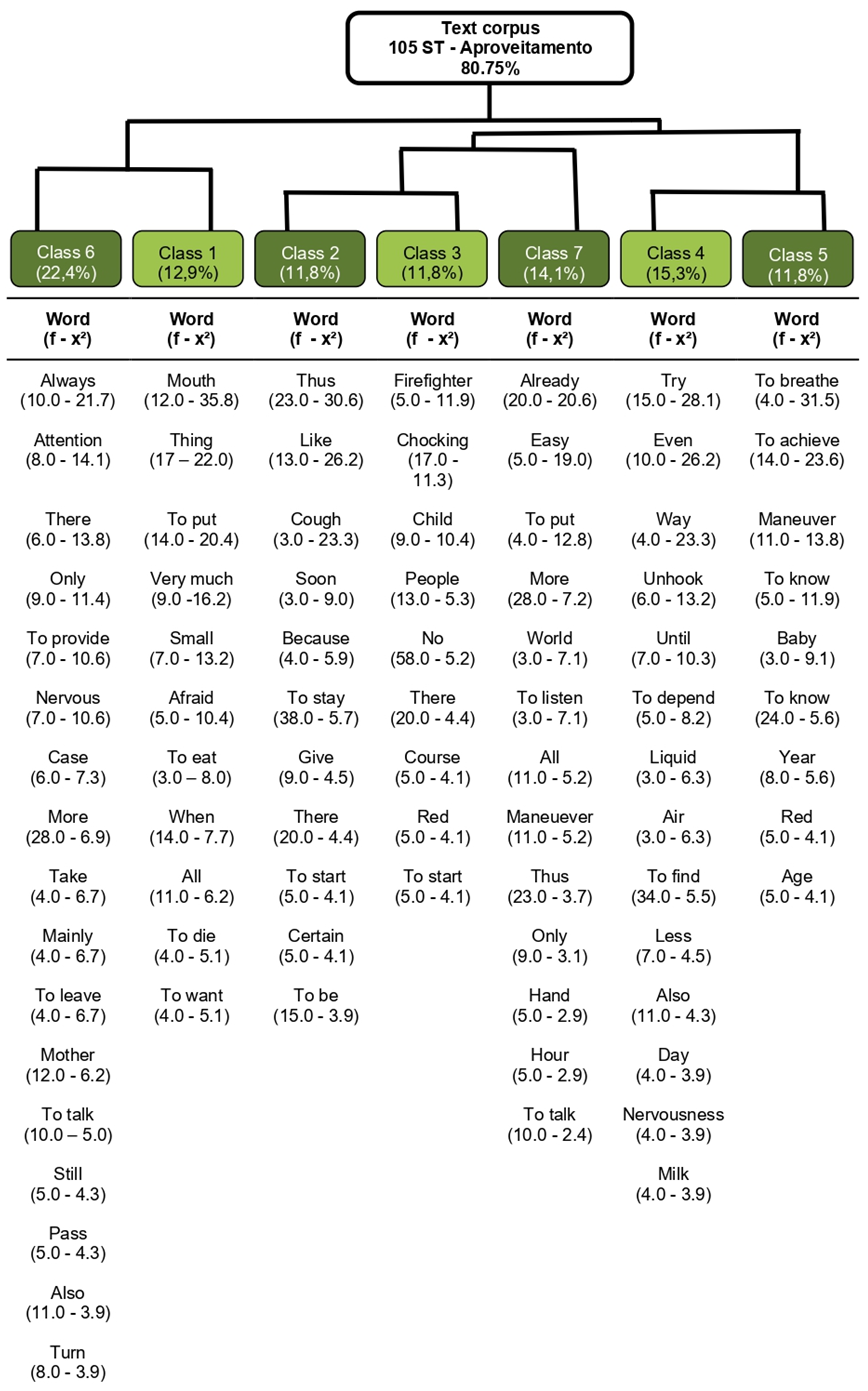
Figure 2 - Diagram of the classes that make up the dendrogram of the textual corpus referring to the interviews, Campina Grande (PB), Brazil, 2024.
Through the organization of the dendrogram and visualization of the diagram, it is possible to observe that classes 6 (maternal concerns) and 1 (the subtlety of choking and the fragility of the moment) are strongly related to the objective of the study, since they address the identification, prevention, and management of airway obstruction by foreign bodies. Thus, three subcorpora emerge: subcorpus A, formed by classes 1 (The subtlety of choking and the fragility of the moment) and 6 (Maternal concerns); subcorpus B, formed by classes 2 (Between guidance and convictions), 3 (Face to face with the choking child: what now?), and 7 (Descriptive knowledge about the maneuver); and subcorpus C, composed of classes 4 (Choking and feeding: between sustenance and risk) and 5 (Cycles of childhood and the propensity for choking).
When considering the thematic content of the respective textual subcorpora, it was possible to list three central thematic categories, namely: Category I (subcorpus A): Prevention in every gesture: mothers' vigilant care against infant choking; Category II (subcorpus B): Between knowledge and instinct: maternal perception of infant choking; and Category III (subcorpus C): Knowledge and insecurity: the maternal dilemma in managing infant choking.
Chart 1 - Correlation between classes, subcorpus, and categories. Campina Grande (PB), Brazil, 2024.
|
Class |
Subcorpus |
Categories |
|
Class 1 - The subtlety of choking and the fragility of the instant. Class 6 - Maternal concerns. |
A |
Category I - Prevention in Every Gesture: Mothers' Vigilant Care Against Infant Choking. |
|
Class 2 - Between guidelines and convictions. Class 3 - Face-to-face with a choking child. What now? Class 7 - Descriptive knowledge about the maneuver. |
B |
Category II - Between knowledge and instinct: Maternal perception of infant choking. |
|
Class 4 - Choking and eating, between sustenance and risk. Class 5 - Childhood cycles and the propensity to choke. |
C |
Category III - Knowledge and Insecurity: The Maternal Dilemma in the Management of Infant Choking. |
Category I (subcorpus A) - Prevention in Every Gesture: Mothers' Vigilant Care Against Infant Choking
This broad category sought to investigate what actions mothers take to prevent their children from choking. According to their statements, mothers say that:
I attended live classes and everything else; it was the fear of my first child. I talk to him a lot, and I show him everything, even things too small to put in his mouth. I am still careful with food. I watch him eat and everything else to make sure he chews well. (Bromélia)
Sweet, anything is risky, everything is risky. You must pay attention to what they have in their mouths when they are eating, drinking, or feeling thirsty. You need to pay attention to all of that; don't leave small toys lying around. I tell them not to put things in their mouths, and I pay special attention to the youngest, who has already put a marble in her mouth. (Dália)
I don’t give him anything too soft; I give him things that are so dry that I’m afraid he’ll choke, and he usually eats liquid things. (Flor de Lótus)
I always give him tiny things; if I can hurt him, I hurt him; if I can cut him, I cut him too, and I give him water to drink by himself, so he doesn’t choke. (Girassol)
Category II (subcorpus 2, 3 and 7) - Between knowledge and instinct: Maternal perception of infant choking
This category encompasses mothers' knowledge related to recognizing the classic signs presented by children when choking. According to reports:
You notice that the person isn't breathing; their mouth may turn purple. (Bromélia)
Choking, trying to breathe and unable to, in agony. (Dália)
Shortness of breath, eyes turning red, I think their hands are shaking. (Flor de Lótus)
Turning red, having difficulty breathing or not breathing... not making any sounds. (Hortênsia)
Category III (subcorpus 4 and 5) - Knowledge and Insecurity: The Maternal Dilemma in the Management of Infant Choking.
From the testimonials, it was possible to identify that most mothers have prior knowledge of the initial measures to be taken. However, the participants also highlighted their insecurity in performing the maneuver, according to the statements below:
My mother always says that we should pick her up and place her face down so that she doesn’t choke to death, as people say. I placed her face down, and then I rubbed her back hard. (Angélica)
It depends on the age because I know that you put her on your arm, give her a light pat, and turn her over and check. I think that from the age of 4, you kneel in front of her and do it like an adult, only more gently. My mother, even if someone is choking, she immediately slaps them on the back, you know, and I'm afraid of that. The older ones end up passing this on to the younger mothers. (Bromélia)
My husband would come home and suck their nose, that was all he could do at the time. (Dália)
I don’t think so. I can stay calm, but I don’t think I could stay with him (my son). It’s a matter of seconds. If anything chokes him, I’m terrified. I think everyone should learn how to do it because it prevents it. Once someone chokes, you have very little time to do anything. There’s no time to call for help. There’s no time for anything. (Rosa)
Discussion
Airway obstruction due to foreign body aspiration is a respiratory emergency that requires immediate intervention. Witnessed accidents in which first aid measures were not taken before specialized medical assistance arrived, an increase in the occurrence of unfavorable neurological outcomes was reported compared to events in which the observer removed the object.14
Although it can occur in any age group, children are particularly vulnerable to this emergency, especially those under two years of age, as they tend to explore their surroundings primarily through sensory stimuli, using their sense of taste and touch. This behavior increases the risk of choking because, although they have sufficient fine motor skills to bring objects to their mouths, they have immature swallowing mechanisms and a tracheobronchial tree with a reduced diameter, which increases the risk of airway obstruction.15
A retrospective study conducted with 163 pediatric patients diagnosed with foreign body aspiration (FBA) showed that food was the most frequently aspirated item (78%), especially nuts, peanuts, and seeds, followed by coins (10%), batteries (3.7%), toy parts (4%), buttons (2.4%), and others (2%). This high incidence may be associated with the limited chewing ability in children, resulting from the incomplete development of molar teeth, as well as motor and behavioral factors specific to this age group.16 These findings reiterate the importance of maternal supervision during infant feeding, highlighting its role in preventing incidents and promoting safe feeding practices.
The adoption of vigilant and protective maternal behavior is significant for the early identification of obstruction. When analyzing the participants' statements in this study, it was observed that mothers reported the main signs of respiratory distress, such as changes in skin color, particularly cyanosis in the face and mouth, as well as manifestations of suffocation, including wide eyes and hand gestures. These reports demonstrate empirical knowledge for caregivers, which contributes to the initial recognition of choking, albeit in a limited way.
Foreign body aspirations present various clinical manifestations, especially in children. The degree of difficulty will be determined by several factors, including the patient's age, the type of foreign body ingested, and the interval between obstruction and removal.17 Clinical manifestations related to the presence of a foreign body in the airways may vary depending on the location of the object, ranging from sudden-onset cough, respiratory distress, and asphyxia to asymptomatic cases.18
A retrospective study conducted at a hospital in Chile found that 100% of patients evaluated with airway obstruction due to a foreign body (FBAO) exhibited some respiratory symptoms. Stridor was the most frequent sign (38%), followed by wheezing (31%) and difficulty breathing (23%). 18 The literature indicates that these symptoms are common in most cases of airway obstruction, corroborating the reports of the mothers interviewed, who demonstrated basic awareness of warning signs such as cyanosis, expressions of suffocation, and agitation.16-18
In addition to having adequate knowledge of first aid, mothers need to have a positive attitude toward foreign body aspiration. Choking emerged in the statements of the interviewed mothers as an event marked by fear and insecurity regarding the immediate actions to be taken, especially when the situation involves their own children.
The characteristics of maternal anxious affective temperament can affect parenting skills, negatively influencing the adoption of first aid measures, which poses risks for foreign body aspiration (FBA).19 The postpartum period is a delicate time, marked by several changes in women's daily lives, such as doubts, emerging concerns, and possible health risks. In addition, feelings such as irritability, fear, and frustration may intensify in the face of the new scenario of motherhood, which can negatively compromise the ability to respond to respiratory emergencies.20
A study conducted with postpartum women in a municipality in São Paulo showed that, of the 50 women interviewed, 22 (44%) reported not knowing how to dislodge an object from a child's airway, 20 (40%) reported knowing how to perform the Heimlich maneuver, and only 8 (16%) reported having little knowledge. Regarding insecurity, the same survey revealed that more than half of the participants (52%) reported not feeling prepared to perform such an act, which is consistent with the findings in the present study. Insecurity and fear prevail in critical situations, leading to a search for external help rather than direct and early interventions.20
The lack of technical preparation for performing choking maneuvers accentuates the feeling of helplessness and vulnerability in emergencies, which reinforces the importance of specific training for handling respiratory emergencies in children. The findings of this study reveal the strategies and reactions adopted by caregivers in the face of choking episodes in children, highlighting the prevalence of intuitive practices and knowledge transmitted through generations by family and friends. Among the most mentioned actions are placing the child face down and hitting them on the back.
When faced with an obstruction, international bodies such as the European Resuscitation Council (ERC)21, the American Heart Association (AHA)22, and the Australian and New Zealand Committee on Resuscitation (ANZCOR)23 recommend the use of back blows.24 The technique consists of applying blows with the heel of the hand between the shoulder blades of children aged zero to two years, while keeping the body leaning forward and facing the ground. It is believed that the blows to the back create a strong air vibration and increase intrathoracic pressure in the airways, which helps to dislodge the obstruction.21-24
Another critical measure is abdominal thrusts, also known as the Heimlich maneuver, which involves applying pressure to the epigastric region, located at the bottom of the diaphragm. The rescuer should position themselves behind the victim, who should be leaning slightly forward, and compress the abdomen inward and upward using one hand.7 In addition, chest compressions can also be performed, with the rescuer hugging the victim from behind and using their fist to press down on the lower half of the sternum. Both techniques aim to increase intrathoracic pressure and facilitate the removal of the foreign body.7,25
Although there is consensus on the importance of airway clearance techniques, there are differences in the specialized literature on how to perform them. In cases of FBAO with a conscious victim, the American Heart Association (AHA) recommends placing the baby's head down and performing a combination of five back blows and five chest compressions. For children, abdominal compressions, known as the Heimlich maneuver, are recommended.22
The Korean Association of Cardiopulmonary Resuscitation26 recommends a combination of five back blows and five chest compressions be applied to infants. However, for children aged eight years or older, abdominal compressions should only be instituted if back blows prove ineffective. In patients with airway obstruction who are unconscious, basic life support measures should be instituted.26
Other techniques are also described, notably encouraging coughing in conscious children who are choking with an effective cough, which suggests partial obstruction. However, in critical situations, this measure may be insufficient due to children's lower respiratory strength and the possibility of delay in adopting more effective interventions, such as back blows.7,24 Children's limited understanding of emergencies may also hinder the application of this strategy. Blind digital scanning of the oropharynx is not recommended due to the risk of trauma, traumatic epiglottitis, worsening of the obstruction, and ineffectiveness in cases of foreign bodies located in the trachea or larynx.7,24-25
In addition to knowledge of first aid techniques, it is imperative to implement preventive measures. Regarding feeding, the survey results indicate that mothers' primary concerns are centered on the suitability of the type and consistency of food for children's age and chewing ability. Supervision of children during meals is a common practice, as well as guidance on chewing and independent water intake. The presence of the mother during food intake can facilitate the early identification of choking episodes and provide greater agility in resolving emergency events, contributing to safer feeding.27
In this context, restricting access to small objects is a strategy widely adopted by participants to prevent accidents. This protective approach includes actions such as removing potentially dangerous items from children's reach and instructing them not to put these objects in their mouths, demonstrating preventive behavior integrated into everyday family life.28
Batteries and coins, as small objects often found in the home environment, represent a potential risk to children's health. Given their easy accessibility and attractiveness to young children, these items must be kept out of reach, especially considering their high potential for harm if swallowed or aspirated. Thus, the adoption of preventive strategies, such as strict control of access to toys that use batteries and constant supervision during the handling of small objects, is an essential measure for preventing avoidable accidents.27-28
The impact of knowledge on safety and autonomy in performing first aid techniques is indisputable. However, guidance on the subject is still in its infancy, especially during pregnancy and the postpartum period, and is often neglected in primary healthcare services, which prioritize the clinical aspects of pregnancy.29 This gap compromises maternal preparation for postnatal care, highlighting the need for more comprehensive prenatal care that considers the reception, bonding, and genuine demands of pregnant women, in addition to strengthening mothers' confidence in emergencies, promoting a safer environment for the newborn.30
The role of nurses stands out as essential in this context, both for their role as health educators and for their ability to develop effective teaching strategies, such as workshops and individualized guidance during consultations. The systematic inclusion of first aid in prenatal care, mediated by these professionals, has the potential to reduce avoidable hospitalizations and deaths.
Although it addresses relevant issues on the topic, this study has some limitations. As this is a qualitative study, the generalizability of the results is limited, as the findings refer to a specific context and a population group selected for convenience, which may restrict the diversity of experiences related to the phenomenon studied. Furthermore, during the research, it was not possible to transcribe the findings promptly for the participants to validate their statements. Thus, the data interpretation process is subject to the subjective influence of the researchers, even though rigorous measures, such as triangulation and validation among researchers, were adopted to minimize possible biases.
Final considerations
The findings of this study reveal that, although they report still incipient technical and scientific knowledge, mothers demonstrate constant care and vigilance in preventing emergency events. Among the actions taken, attentive supervision during feeding, careful food selection, and restricting access to small objects stand out. Most of these practices derive from empirical knowledge acquired through previous experiences and informal guidance, underscoring the importance of health education as a fundamental strategy for preventing childhood accidents.
Additionally, the study showed that, despite recognizing the classic signs of choking, many mothers reported insecurity regarding the performance of airway clearance maneuvers, especially in the face of the urgency and severity of the situation. Given this, it is necessary to expand access to practical and continuous training that can strengthen maternal confidence and autonomy in managing emergencies.
The adoption of educational actions during prenatal and postpartum consultations can significantly contribute to the dissemination of knowledge, promoting greater safety and confidence in adopting recommended behaviors. In this context, the role of health professionals is essential. It is crucial to implement strategies such as discussion groups, practical workshops, the use of educational materials, and approaches in waiting rooms that promote the construction of knowledge and safe practices in childcare.
Authors Contributions
Study design: Ellen de Araujo Rodrigues Abdala. Data collection: Ellen de Araujo Rodrigues Abdala, Maria Helena Marques de Lima, Emilly Beatriz Alves Azevedo e Elton Douglas Alves da Silva Inácio. Data analysis and interpretation: Keylla Talitha Fernandes Barbosa. Manuscript writing: Renata Clemente dos Santos Rodrigues. Critical review of the manuscript: Ellen de Araujo Rodrigues Abdala e Renata Clemente dos Santos Rodrigues. Approval of the final version of the text: Ann Gracielle Moreira Gomes e João Victor Batista Cabral.
Conflict of interest
The authors have declared that there is no conflict of interest.
References
1. Martínez-Isasi S, Carballo-Fazanes A, Jorge-Soto C, Sánchez-López M, González-Doniz L, Rodríguez-Núñez A. School children brief training to save foreign body airway obstruction. Eur J Pediatr. 2023;182:5483–5491. DOI: https://doi.org/10.1007/s00431-023-05202-x
2. Saccomanno S, Saran S, Coceani Paskay L, De Luca M, Tricerri A, Mafucci Orlandini S, Greco F, Messina G. Risk factors and prevention of choking. Eur J Transl Myol [Internet]. 2023 out 27 [cited 2025 jul 26];33(4). Available from: https://www.pagepressjournals.org/bam/article/view/11471
3. Amaral MS, Drummond RF, Cuzzullin JP, Jurgilas MDP. Inspire: primeiros socorros diante de situações de obstrução de vias aéreas por corpo estranho (OVACE) em crianças - relato de experiência e análise da efetividade da intervenção. Rev Conexão UEPG on-line [Internet]. 2023 [cited 2025 jul 25];19:e2321799. DOI: https://doi.org/10.5212/Rev.Conexao.v.19.21799.024
4. Langwinski A, Almeida AM, Zilly A, Mayer PCM, Wysocki AD, Cicchelero LM, Ferreira H, Silva-Sobrinho RA. Intervenção educativa sobre obstrução das vias respiratórias para professores de educação infantil: estudo quase-experimental. Rev Gaúcha Enferm [Internet]. 2023 [cited 2025 jul 25];;44:e20220335. DOI: https://doi.org/10.1590/1983-1447.2023.20220335.pt
5. Ferreira C, Martins DA, Gomes GM, Santos JC, Oliveira JCB, Eloy LA, Lemos BA, Barros RRF, Nascimento LCM, Barreto PF. Prevenção e primeiros socorros de obstrução de vias aéreas por corpos estranhos para crianças. Interação [Internet]. 2022; [cited 2025 jul 25];4(2):44-53. Available from: revistas.unisagrado.edu.br/index.php/interacao/article/view/315/250
6. Ministério da Saúde (BR). Protocolo de Suporte Básico de Vida [Internet]. [cited 2025 jul 26]. Available from: www.gov.br/saude/pt-br/composicao/saes/samu-192/publicacoes/protocolo-de-suporte-basico-de-vida-1-2.pdf/view
7. Ngamsanga S, Vathanophas V, Ungkanont K, Tanphaichitr A, Wannarong T. Pediatric respiratory tract foreign bodies in children: a systematic review. Auris Nasus Larynx [Internet]. 2023 [cited 2025 jul 25];50:607–613. DOI: https://doi.org/10.1016/j.anl.2022.10.003
8. Correia LFR, Feitosa AF, Apolinário MVF, Sampaio EF, Braga ST, Pinheiro WR. A importância do ensino e aprendizagem de técnicas de primeiros socorros para leigos: revisão integrativa. R Pesq Cuid Fundam on-line [Internet]. 2023 [cited 2024 mar 31];16:e11605. DOI: https://doi.org/10.9789/2175-5361.rpcfo.v16.11605
9. Camilo BHN, Freitas LB, Okido ACC. Contribuições da telessimulação no conhecimento de mães diante obstrução de vias aéreas por corpo estranho. Rev Gaúcha Enferm on-line [Internet]. 2023 [cited 2024 mar 09];44:e20220241. DOI: https://doi.org/10.1590/1983-1447.2023.20220241.pt
10. Severino LA, Machado RET, Martins TCF, Coelho FA, Machado DR. Percepção de gestantes quanto à atuação do enfermeiro no pré-natal. Rev Pesqui. (Univ Fed Estado Rio J. On-line) [Internet]. 2024 [cited 2024 mar 15];16:e12384. DOI: https://doi.org/10.9789/2175-5361.rpcfo.v16.12384
11. Instituto Brasileiro de Geografia e Estatística (IBGE). População Censo 2022 [Internet]. 2023 jun 28 ]. [cited 2025 jul 26]. Available from: https://www.ibge.gov.br
12. Fontanella BJB, Magdaleno Júnior R. Saturação teórica em pesquisas qualitativas: contribuições psicanalíticas. Psicol Estud [Internet]. 2012 [cited 2025 jul 26].;17(1):63–71. Available from: https://www.scielo.br/j/pe/a/JXwNwW649DsNBpFb5kZqGyH
13. Bardin L. Análise de conteúdo. Igarashi Y, Suzuki K, Norii T, Motomura T, Yoshino Y, Kitagoya Y, Ogawa S, Yokobori S. Edições: São Paulo; 7. 2016.
14. Yokota H. Do video calls improve dispatcher-assisted first aid for infants with foreign body airway obstruction? A randomized controlled trial/simulation study. J Nippon Med Sch [Internet]. 2022 [cited 2025 jul 26].;89(5):526–532. DOI: https://doi.org/10.1272/jnms.JNMS.2022_89-513
15. Xu G, Chen YC, Chen J, Jia DS, Wu ZB, Li L. Management of esophageal foreign bodies in children: a 10-year retrospective analysis from a tertiary care center. BMC Emerg Med [Internet]. 2022 [cited 2024 out 27];22:166. Available from: https://bmcemergmed.biomedcentral.com/articles/10.1186/s12873-022-00723-4. DOI: https://doi.org/10.1186/s12873-022-00723-4
16. Ekim A, Altun A. Foreign body aspirations in childhood: a retrospective review. J Pediatr Nurs [Internet]. 2023 [cited 2024 out 27];72:174–178. Available from: https://doi.org/10.1016/j.pedn.2023.06.025
17. Belete KG, Tamire T, Sisay A, Asmare M, Dessie B, Muluadam B, Adamu A, Dessalegn K, Yalew GA, Oumer KE. Knowledge attitude and practice towards foreign body aspiration management among kindergarten teachers in south-west Amhara, rural Ethiopia. Ann Med Surg [Internet]. 2024 [cited 2025 jul 26].;86(11):6482–6487. DOI: https://doi.org/10.1097/MS9.0000000000002585
18. Abarzúa VJ, Vargas CC, Martín PJS, Slater RF, Rojas BJ. Experiencia de cuerpos extraños en vía aérea en el Hospital Clínico UC. Rev Otorrinolaringol Cir Cabeza Cuello [Internet]. 2023 [cited 2025 jul 26];83(4):e377–382. DOI: http://dx.doi.org/10.4067/s0718-48162023000400377
19. Çetin M, Arslan B, Yildiz S, Tuncer Y, Ozturk Z, Celik S. Maternal temperament and anxiety sensitivity in children with foreign body aspiration. Rev Assoc Med Bras [Internet]. 2023 [cited 2024 out 25];69(9):e20230475. DOI: https://doi.org/10.1590/1806-9282.20230475
20. Lopes AFL, Lima ML, Cabral LPA, Krum EA, Fadel CB. Conducts of immediate puerperals in front of a suspended gagging in babies. Res Soc Dev [Internet]. 2021 [cited 2024 out 27];10(10):e590101019133. Available from: https://rsdjournal.org/index.php/rsd/article/view/19133. DOI: https://doi.org/10.33448/rsd-v10i10.19133
21. Van de Voorde P, Turner NM, Djakow J, de Lucas N, Martinez-Mejias A, Biarent D, Bingham R, Brissaud O, Hoffmann F, Johannesdottir GB, et al. European Resuscitation Council Guidelines 2021: Paediatric Life Support. Resuscitation. 2021;61:327–387. Available from: https://www.resuscitationjournal.com/article/S0300-9572(21)00068-X/fulltext
22. Topjian AA, Raymond TT, Atkins D, Chan M, Duff JP, Joyner BL Jr, Lasa JJ, Lavonas EJ, Levy A, Mahgoub M, et al. Pediatric Basic and Advanced Life Support Collaborators. Part 4: Pediatric Basic and Advanced Life Support: 2020 American Heart Association Guidelines. Circulation [Internet]. 2020 [cited 2025 jul 26];20:469–523. DOI: https://doi.org/10.1161/CIR.0000000000000901
23. Australia and New Zealand Resuscitation Council. ANZCOR Guideline 4—Airway [Internet]. 2021 [cited 2025 jul 28]. Available from:www.anzcor.org/home/basic-life-support/guideline-4-airway
24. Bieliński JR, Huntley R, Dunne CL, Timler D, Nadolny K, Jaskiewicz F. Do we actually help choking children? The quality of evidence on the effectiveness and safety of first aid rescue manoeuvres: a narrative review. Medicina [Internet] 2024 [cited 2025 jul 28];60:1827. DOI: https://doi.org/10.3390/medicina60111827
25. Ong GY, Kurosawa H, Ikeyama T, Park JD, Katanyuwong P, Reyes OCF, Wu ET, Hon KLE, Maconochie IK, Shepard LN, Nadkarni VM, Ng KC. Comparison of paediatric basic life support guidelines endorsed by member councils of Resuscitation Council of Asia. Resusc Plus [Internet]. 2023 [cited 2025 jul 28];16:100506. DOI: https://doi.org/10.1016/j.resplu.2023.100506
26. Lee J, Kim DK, Kang EK, Jeong WJ, Park CH, Kim YJ, Lee SH, Park YS, Song H, Choi KJ. 2020 Korean Guidelines for Cardiopulmonary Resuscitation. Part 6. Pediatric basic life support. Clin Exp Emerg Med [Internet]. 2021[cited 2025 jul 28];8:S65–S80. DOI: https://doi.org/10.15441/ceem.21.026
27. Paiva CSS, Nunes LM, Bernardi JR, Moreira PR, Mariath AAS, Gomes E. Choking, gagging and complementary feeding methods in the first year of life: a randomized clinical trial. J Pediatr [Internet]. 2023 [cited 2024 out 29];99(6):574–581. Available from: https://www.sciencedirect.com/science/article/pii/S0021755723000797. DOI: https://doi.org/10.1016/j.jped.2023.05.011
28. Romero BM, Bravo SV, Arriaga GH, Pineda LB, Franchi T, Palone MRT, Mejia CR. Factors associated with complications of foreign body ingestion and/or aspiration in children from a Peruvian hospital. Heliyon [Internet]. 2023 [cited 2024 out 25];9(2):e13450. Available from: https://pubmed.ncbi.nlm.nih.gov/36846670/. DOI: https://doi.org/10.1016/j.heliyon.2023.e13450
29. Sousa MHS, Santos ELF, Vieira JB, Martins FA, Almeida RL, Costa IF, Lima BSS. A importância da orientação de primeiros socorros para mães durante o acompanhamento do pré-natal. Rev Ft [Internet]. 2025 [cited 2025 jul 28];29:146. DOI: https://doi.org/10.69849/revistaft/ch10202505131859
30. Asmar Imad, Almahmoud O, Dreidi Mu’taz, Jebara Fatima, Jaber Nora, Kahala Ahmad, Ramadan Jenna, Hamdan Noor. Knowledge and practices of choking first aid skills among Palestinian mothers of children under five. Journal of Neonatal Nursing [Internet]. 2023 [cited 2025 jul 28];29:05. DOI: https://doi.org/10.1016/j.jnn.2023.01.004
Corresponding Author
Ellen de Araujo Rodrigues
E-mail: ellenabdala@gmail.com
The Author(s) 2026. This work is licensed under Creative Commons Attribution 4.0 International. License text for use: https://creativecommons.org/licenses/by/4.0/deed.pt_BR
 Português (Brasil)
  English
  Español (España)