Idioma
Experiences in the academic training of nursing students during clinical internships
 Ellen Maria Hagopian1,
  Thaís Araújo da Silva2, Maria do Socorro Cardoso dos Santos3
1,3Faculdade Santa Marcelina. São Paulo (SP), Brasil. 2Universidade de Brasília. Brasília (DF), Brasil
Introduction
According to the World Health Organization (WHO), the Health Workforce (HW) comprises professionals whose primary purpose is to promote health.1 This Workforce (WF) includes diverse fields of training, professions, and occupations that provide services to health systems through public or private employment relationships, consuming all or part of each worker’s time.
The concept of human resources for health was reframed through the International Year of Health and Care Workers campaign, which draws on the Brazilian agenda, especially in strengthening the articulation between education and work and in diversifying the settings in which training occurs.1
The International Year of Health and Care Workers was designated by the WHO in 2021 in recognition and gratitude for the uninterrupted commitment of health workers in the fight against the COVID-19 pandemic. The vital role of human resources in this segment in caring for its citizens was thus highlighted.1
The campaign was guided by the motto “protect, invest, together”. Recognition of health professionals must go beyond applause, ensuring protective actions through adequate and dignified working environments and fair investments in education and employment.
In Nursing, the WF training faces challenges that directly affect the quality of health care. Although there has been significant expansion of technical and undergraduate programs, weaknesses persist in pedagogical structures, shortages of qualified faculty, and insufficient availability of supervised clinical placement settings, which compromise the practical and critical training of future professionals.2
Added to this is the disconnect between education and the real demands of the health system, which hinders the preparation of professionals capable of acting with competence, ethics, and sensitivity across the diverse realities of the country.
Although the number of nurses is considerable, their distribution of these professionals across regions is unequal, and technical training policies remain more robust than those directed at Higher Education. Overcoming these challenges requires rethinking educational models, strengthening teaching–service–community integration, and investing in public policies that ensure quality, equity, and professional recognition in Nursing education.2-3
Within this context, it is important to reflect on how Nursing training is structured, considering that training professionals to work in the healthcare system is a constant challenge for the sustainability of the public system, since technical training is strongly evidenced by the work process, centered on the therapeutic care of individuals or groups who are sick, healthy, or at risk, requiring measures aimed at preserving health, preventing disease, or curing illness.4
Conversely, beyond the acquisition of skills related to operational theoretical knowledge, relational, ethical, and political skills are required, as well as the development of new management approaches that are more consistent with the contemporary demands of human care.5
High demand driven by the expansion of the labor market has fueled the growth of undergraduate health programs in Brazil, with a significant growth in the private sector across all areas.
Regarding Nursing education institutions, their historical trajectory shows that in 1964, there were 39 undergraduate courses, a number that rose to 106 in 1991, representing an increase of 171%. This expansion intensified between 1995 and 2009, when the number of courses rose from 108 to 760, corresponding to an increase of approximately 700% in supply.6
Data from the census of undergraduate Nursing programs, both in-person and distance learning, recorded 1,668 programs in 2021, approximately 12 times more than in 1991. Between 2009 and 2018, the expansion of undergraduate Nursing programs (38.4%) exceeded the overall growth of higher education programs in Brazil (25.0%).6
With the establishment of the National Curriculum Guidelines (DCNs) in 2001, there was an increased need to reorganize undergraduate health programs in terms of content, workload, and responsibilities to meet new requirements set by the Ministry of Education, which indicated the urgent of incorporating into educational projects assumptions related to ethics, citizenship, epidemiology, and the health–disease process from a care perspective, bringing students closer to the theoretical foundations of the Brazilian Unified Health System (Sistema Único de Saúde - SUS).7
Sustaining contemporary training aligned with national and international frameworks, to qualify health care delivery while incorporating SUS principles, helps minimize gaps in care and enables education whose knowledge base and commitments are consistent with the country’s health reality.
Considering the complexity of challenges in educating health professionals, certain elements should be prioritized during training, such as the ability to reflect on one’s social context; a critical stance toward work practices and acquired knowledge; integration of different forms of knowledge in planning health actions; encouragement of teamwork; and ethical conduct in professional practice.8
Within this framework, supervised clinical placements play an essential role that extends beyond the classroom, as it allows students to develop a deeper understanding of their professional role and to value humanized patient care.9
In addition to integrating theory and practice, clinical placements contribute to the development of attitudes, competencies, and professional postures required for practice. In these settings, students experience real care situations, often differing from those anticipated in theory, such as complications, ethical dilemmas, and clinical decision-making. It also provides the opportunity to understand how their actions can generate a positive impact on patients’ lives and on the community. Clinical placements also represent a crucial moment for students to identify areas of greater affinity, supporting future specialization choices.10
As a formative activity, supervised placements should contribute to consolidating teaching and learning through planned, executed, monitored, and evaluated actions carried out by nurses, in alignment with the course’s pedagogical project. Their central purpose is to ensure the development of general and specific competencies and skills required for professional practice.11
Although necessary and important for Nursing education, supervised clinical placements present several distinct challenges that impact the formative experience and must be overcome throughout the training process. These include students’ difficulty in articulating theory and practice in complex settings, limitations in the human and material resources required for work development, relational challenges with healthcare teams, as well as with patients and family members, who at times show resistance to being cared for by students. Another relevant challenge is the variability in the quality of supervision, which depends both on the availability and on the pedagogical preparation of nurse preceptors.12
These factors directly influence students’ autonomy, sense of safety, and confidence during practice, requiring educational institutions to ensure careful organization of clinical placements and the adoption of continuous follow-up strategies, with the aim of guaranteeing meaningful learning.
It is emphasized that such experiences can be understood through theoretical frameworks that value experiential, reflective, and dialogical learning.
Learning occurs in a continuous cycle that involves concrete experience, reflective observation, abstract conceptualization, and active experimentation. In the context of clinical placement, this movement materializes when students experience real care situations, critically reflect on them, with the support of the supervising faculty member, and re-signify their professional practices.13
Education as a practice of freedom is grounded in dialogue and the problematization of reality, which aligns directly with the role of the supervising faculty member as a critical mediator of the educational process, who welcomes students’ questions, encourages autonomy, and fosters the development of an ethical and humanized professional stance.14
These frameworks directly align with the DCNs for Nursing, which advocate for the training of critical, reflective, generalist professionals capable of continuous learning throughout their careers.15
The DCNs further emphasize that supervised placements should enable students to integrate theory and practice, develop clinical reasoning, act ethically and interprofessionally, and build autonomy and social responsibility.
Similarly, the National Policy for Permanent Health Education (Política Nacional de Educação Permanente em Saúde - PNEPS) establishes that health training should occur within the work process itself, valuing problematization, meaningful learning, and critical reflection on professional practice. This perspective strengthens the role of faculty as an essential pedagogical component, acting as facilitators of the learning process and supporting students in transforming concrete experiences into knowledge, through critical analysis of everyday service contexts.16
Accordingly, this study aims to understand undergraduate Nursing students’ experiences during the clinical placements included in the curriculum of a Nursing program at a Higher Education institution in the State of São Paulo.
Method
This is a qualitative study with an exploratory design. The research was conducted at a private university located in the city of São Paulo, with more than 60 years of experience in Nursing education. The inclusion criteria were: being regularly enrolled in the seventh semester of the undergraduate Nursing program and having completed the clinical placements provided for in the curriculum for that semester.
Participant recruitment took place in August 2024 with 7º semester undergraduate Nursing students during a closing meeting for the clinical placement, in which students presented projects developed throughout the experience. Data collection was carried out through the electronic distribution, via Google Forms, of a questionnaire containing the items proposed by the instrument, preceded by the signing of the Free and Informed Consent Term (FICT).
The data collection instrument addressed issues related to career choice, the opportunities and challenges experienced in the clinical placement setting, as well as expectations regarding future training.
Data analysis was conducted in light of Paulo Freire’s emancipatory education framework, which assumes an educational practice permeated by dialogue among historical and social actors. For transformation to be effectively liberating, faculty members must foster students’ active participation in the construction of their own knowledge.17
The study was approved by the Research Ethics Committee (REC) of the Universidade Santo Amaro under opinion no. 6.895.630. Participant anonymity was ensured, with respondents identified as “Student 1” (S1), “Student 2” (S2), and so forth.
Results
Of the 58 eligible students, 26 participated in the study, resulting in a response rate of 44.8%. Regarding sample characteristics, the mean age of participants was 32 years; 84.6% identified as female, and 57.7% reported being single. Concerning race/skin color, 50% self-identified as White, 42.3% as mixed-race (pardo), and 7.7% as Black. Concerning employment status, 73.1% of the students reported having paid work, and during the study period, 84.6% attended the program during the daytime.
Regarding experience by practice setting, Table 1 presents the overall results and those specific to placements in Adult Health, Child Health, Women’s Health, and Basic Health Units (BHU).
Table 1 - Experience by practice setting. São Paulo (SP), Brazil, 2024.
|
Experiences |
Excelent |
Good |
Average |
Indifferent |
Poor |
Very poor |
|
Overall |
15.4% |
50.0% |
26.9% |
- |
7.7% |
15.5% |
|
Adult Health |
23.1% |
26.9% |
42.3% |
3.8% |
3.8% |
23.1% |
|
Adult Health |
23.1% |
50.0% |
11.5% |
3.8% |
7.7% |
23.1% |
|
Women’s Health |
42.3% |
42.3% |
11.5% |
3.8% |
- |
- |
|
BHU |
30.8% |
42.3% |
15.4% |
3.8% |
3.8% |
3.8% |
The factors supporting the evaluations carried out in the clinical placement settings yielded the following responses: 42.3% referred to faculty guidance and support; 30.8% were related to the placement setting itself, considering ease of access and organizational structure; 23.1% pointed to the reception by the local team; and 3.8% highlighted contact with patients and family members.
Considering the role of Nursing faculty, the priority levels assigned to professors’ attitudes and behaviors yielded the results presented in Figure 1.
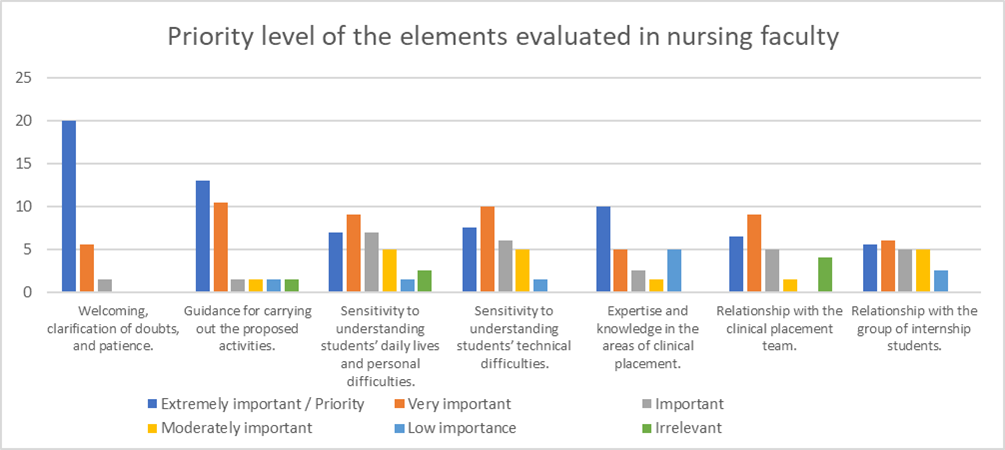
Figure 1 - Priority level related to professors’ attitudes and behaviors. São Paulo (SP), Brazil, 2024.
Regarding vocational doubts that arose during the clinical placement period in relation to career choice, 57.7% of the students reported having no questions, while 42.3% stated that they had doubts about their future professional practice.
The justifications provided by the students were analyzed and grouped into three main categories: “Preceptorship and welcoming”, “Inspiration versus discouragement”, and “Faculty attitudes”. The statements illustrating these categories are presented below.
Preceptorship and welcoming
Some clinical placement settings made us question whether we really wanted to keep going or not. (E18)
Yes, sometimes due to the lack of welcoming by the teams. (E22)
Inspiration versus discouragement
Very exhausting, doubts about whether it is worth it, whether I made the right choice. (E6)
Nursing has to struggle a lot, many documents, many steps, few professionals, many patients, heavy demand. In theory, it is one thing, but in practice, it is completely different. (E9)
I really like the field, but the placements fell short, I feel that I was not prepared to work after graduation. (E13)
After being treated in a hostile way by professionals who once went through the same process I am going through, limiting us and preventing us from performing procedures, I not only had doubts, but also felt ashamed to be part of this profession. What always motivated me, however, was knowing that, regardless of how others act, I will not allow their behavior to influence my professionalism. The lack of empathy from professionals, and even from faculty members, is indescribable, disappointing, in short, an abuse of power to feed an inflated ego. Unnecessary! (E15)
Teaching attitudes
Regarding the positive influence of faculty members on the decision to remain in the field, 80.8% of participants answered “yes” and 19.2% answered “no”. When justifying their responses, the following statements stood out:
Faculty members have one of the fundamental roles, to convey confidence and help refine the student, shaping them in the best possible way, their guidance is essential, and for this and other reasons, they are always keeping themselves up to date. (E1)
The best way to teach is through example, and some faculty members teach us how we should not be in terms of interpersonal relationships and teamwork, while others inspire us as role models of who we want to become one day. (E2)
They can spark the desire to continue, or they can also destroy a dream. (E5)
And the first contact, the attitude of the professional who teaches us, can be crucial in shaping the professional we will become. (E7)
I believe that all the professors I have had are intelligent, they seek to stay up to date, they always defend the SUS, and they always talk about our professional council. Many truly are like that, but perhaps because of the profession, some are arrogant. (E9)
Professors’ attitudes when facing complications or teaching-related problems reflect how nurses act when dealing with similar issues in the professional environment. (E12)
Some do not, because they are arrogant, and I do not know how they work in such a field. (E13)
Often, attitudes say more than any speech, hence the need to express them through correct and coherent behavior, based on the assumption that respect, justice, and morality are essential elements inherent to ethical conduct in everyday health care practice. In this way, the clinical instructor becomes a mirror for the student. (E14)
Some are great examples in terms of attitude, knowledge, patience, and empathy, especially empathy. But others forget how difficult it is to be where we are, and feel entitled to humiliate us, judge us, and condemn us out of mere whim. And do not tell me these are rules, rules exist to be improved, and there is often flexibility. However, some faculty abuse their power and harm students just to feel better and superior. There is no clarifying conversation to better understand the student’s difficulties and the moment they are experiencing. The institution should better evaluate its faculty and give more credibility to students’ voices. After all, this is about how we feel in these situations and how much this can negatively influence the development of knowledge. There is so much talk about EMPATHY and HUMANIZATION, but it seems this only applies to being provided, not received. (E15)
When students are in their learning process, they become vulnerable to external influences, and this is when the faculty member’s example can be reflected in their development. By reflecting on that professor’s professional profile, the student may seek to become a good professional like them, or take that professor as an example of what not to be, however, for this, the student needs to be able to identify whether that professor is a good professional or not, and this depends on many factors, such as the student’s own personal perspective. (E16)
Yes, I believe that at the beginning of our professional lives we will mirror the faculty members who inspired us, which is why having qualified faculty is so important. (E24)
Poor faculty members are a very negative influence, even students’ attendance changes depending on the faculty member’s attitude. (E25)
Discussion
The study’s sociodemographic characterization highlights the predominance of female participants, a feature historically associated with the Nursing profession. Nursing constitutes the largest health workforce both nationally and internationally, accounting for approximately 59% of the global health workforce and about 70% in Brazil. In the Brazilian context, 84.6% of this workforce is composed of women.18
An essential aspect for Nursing faculty guidance is the presence of a significant number of students who engage in paid work during periods opposite to their studies. Working students face daily challenges, such as commuting to the educational institution, traffic, which causes delays that result in missed classes, physical fatigue, and emotional burden. These students seek higher education as a means of achieving social recognition, professional qualification, and a degree, with a view to better opportunities in the labor market.19
A substantial proportion of Higher Education students in Brazil consists of individuals who work due to economic necessity and/or the pursuit of professional development. Simultaneously fulfilling the roles of worker and student represents a considerable challenge, making it essential to promote the quality of education and the learning process throughout undergraduate training.12
The supervised curricular placement in undergraduate Nursing programs is a mandatory component of the curriculum, aligned with the generalist, humanistic, and reflective training proposed by the DCNs20, and its primary objective is the development of technical, ethical, and attitudinal competencies required for the education of future nurses. The placement setting enables students to engage with faculty members, healthcare professionals, patients, and families, experiencing the diversity of situations involved in the health–disease process of populations under their care.
Freire’s emancipatory education represents a theoretical orientation, constituting a tool for social and political transformation and for critiquing models aligned with traditional education. This perspective highlights the relevance of establishing dialogue and reflection, allowing the transformations necessary for knowledge construction to transcend the traditional institutionalized models of health service practices.21
Relating theory to practice is essential during the development of practical placements, enabling learners to improve their skills, critical reasoning, decision-making, and teamwork.
Freirean thought, expressed through the action–reflection–action process, proposes a continuous search for understanding realities as historical products and thus requires dialogue with social actors to interpret demands arising from territorial disparities.22
Obstetrics was the area that achieved the highest percentage of “excellent” ratings in the overall evaluation, followed by Pediatrics as “good” and Adult Health as “average.” For the development of students’ critical-reflective perspective, the greater the opportunities to diversify practice areas, the better their ability to relate theory to practice and to act in the different situations faced by nurses in their daily professional work.23
Limited availability of supervising faculty, as well as patient resistance to care provided by interns, are factors that negatively affect the placement experience, given that practical training is indispensable and mandatory for professional education.24 Through the challenges encountered in placement settings, future professionals can validate the knowledge acquired during the program, relying on faculty support to clarify doubts, guide conduct, set priorities, and foster the development of critical reasoning.25
Participants’ statements indicate that faculty influence, particularly through role modeling, is essential for adequate and satisfactory student training. Each instructor’s contribution within their area of expertise is unique and should support and guide the learning process, encouraging students to reflect on their practices from both technical and ethical perspectives.
The interaction between faculty and practice settings emerges as a central mechanism for knowledge consolidation, as instructors act not only as transmitters of knowledge but also as mediators of practical experiences. Through direct supervision and continuous, active, and reflective guidance, faculty members facilitate the development of students’ critical reasoning by promoting the analysis of real-life situations in light of theoretical foundations. Furthermore, observing professional conduct, participating in clinical decisions, and monitoring patient responses enable students to understand the nuances of healthcare practice, recognizing both challenges and possibilities within Nursing.
This relationship not only reinforces the practical application of knowledge but also strengthens confidence, autonomy, and ethical decision-making in future professionals, creating a continuous cycle of learning and reflection.
This study has limitations that should be considered when interpreting the findings, as the sample was small and drawn from a single institution, which restricts the generalizability of the results to other educational contexts.
Concluding Remarks
This study’s conduct highlights the importance of a transformative education that enables students to actively build their competencies, which unfold into knowledge, skills, and attitudes.
Nursing, as an essential professional group for population health care, in view of the diverse care settings and the challenges faced by health services, such as the phenomenon of care precarization, needs to continuously seek improvements in the education of future nurses through positive influences from their educators.
In turn, faculty members who accompany and supervise activities proposed during clinical placements must, in their educational actions, go beyond what is traditionally practiced and encourage reflections that sensitize students to think critically about the practices they experience. Educators must understand how their attitudes influence, both positively and negatively, students’ professional choices.
This study’s findings reinforce the relevance of experiential and reflective learning in Nursing education, highlighting how the interaction between faculty and the practice setting contributes to the construction of professional identity and to the development of technical, ethical, and relational competencies.
Effective supervision, combined with inspiring teaching attitudes, enables students to transform concrete experiences into meaningful knowledge, strengthening critical reasoning, autonomy, and ethical decision-making capacity.
From an organizational perspective, the findings indicate the need to review and improve the structure of supervised placements, considering the continuous training of faculty, the diversification of practice settings, and the adoption of strategies that promote student support and integration. Such measures may foster more meaningful experiences, reduce vocational doubts, and inspire students’ retention and engagement in the profession, contributing to the education of professionals better prepared to work within the complex contexts of the Brazilian health system.
Authors Contributions
Study design: Ellen Maria Hagopian. Data collection: Ellen Maria Hagopian. Data analysis and interpretation: Ellen Maria Hagopian, Thaís Araújo da Silva, Maria do Socorro Cardoso dos Santos. Manuscript writing: Ellen Maria Hagopian, Thaís Araújo da Silva, Maria do Socorro Cardoso dos Santos. Manuscript critical review: Ellen Maria Hagopian, Thaís Araújo da Silva, Maria do Socorro Cardoso dos Santos. Approval of the final version of the manuscript: Ellen Maria Hagopian, Thaís Araújo da Silva, Maria do Socorro Cardoso dos Santos.
Conflict of interest
The authors declared that there is no conflict of interest.
References
1. World Health Organization (WHO). State of the world's nursing 2020: investing in education, jobs and leadership [Internet]. Geneva: World Health Organization; 2020 [cited 2025 Aug 13]. Available from: https://www.who.int/publications/i/item/9789240003279
2. Oliveira APCD, Mion ABZ, Galante ML, Donato GD, Ventura CAA. Estoque, composição e distribuição da força de trabalho de enfermagem no Brasil: uma fotografia. Rev Latino-Am Enfermagem. 2024;32:e4287.DOI: https://doi.org/10.1590/1518-8345.6937.4288
3. Cebin F, Castro MCBF, Custódio AMC, Alves MF, Oliveira ÍP, Silva T, Andreão MRD. Desafios atuais da enfermagem no Brasil: uma visão do mercado profissional. Rev Ensino Educ Cienc Exatas. 2024;5(Esp):Anais da V Jornada Científica do Grupo Educacional FAVENI. Available from: https://revista.grupofaveni.com.br/index.php/ensinoeducacaoeciencias/article/view/2037
4. Lima ACBD, Santos DCMD, Adamy EK, Gomes BDMR. Percepções de graduandos de enfermagem acerca dos desafios enfrentados para formação na pandemia da Covid-19. Texto Contexto Enferm [Internet]. 2023 [cited 2025 Mar 9]. DOI:https://doi.org/10.1590/1980-265X-TCE-2022-0314pt
5. Adamy EK, Fernandes JD, Santos DCMD, Sordi MRLD, Ramos FRS, Silva KLD, et al. Diretrizes curriculares nacionais do curso de graduação em enfermagem: a luta da ABEn contra retrocessos. Rev Bras Enferm [Internet]. 2021 [cited 2025 Feb 19]. DOI: https://doi.org/10.1590/0034-7167.2021740601
6. Pinto AC, Barros S, Floriano LS, França TE, Camarini AI, Silva LM. Censo dos cursos de graduação em enfermagem brasileiros presenciais e à distância. Enferm Foco [Internet]. 2021 [cited 2025 Feb 7];12(6):1063–9. Available from: https://pesquisa.bvsalud.org/portal/resource/pt/biblio-1368635
7. Santos IH, Marum VL, Lanza LB. Innovative curriculum and labor market in the view of nursing graduates. Braz J Dev [Internet]. 2021 [cited 2025 Jan 30];7(6):63725–44. DOI: https://doi.org/10.34117/bjdv7n6-652
8. Moreira DP, Pontes AKOR, Veras Filho RN, Pereira ÁWS, Silva IM, Santos Silva V. O impacto das tecnologias educacionais no ensino em saúde: desafios e oportunidades. Rev Interagir [Internet]. 2024 [cited 2025 Mar 20];(126):97–102. DOI: https://doi.org/10.12662/1809-5771ri.126.5601.p97-102.2024
9. Gehlen FS, Adorno HMS, de Jesus CS, Dias AK, Rezende MFM, Pereira RA, Markus GWS. The perception of academics in the health area about supervised internships. Research, Society and Development. 2022;11(9):e12411931562. DOI: https://doi.org/10.33448/rsd-v11i9.31562
10. Pascoal MM, Souza V. A importância do estágio supervisionado na formação do profissional de enfermagem. REASE [Internet]. 2021 Jun 30; 7(6):536‑53. Available from: https://periodicorease.pro.br/rease/article/view/1408
11. Conselho Federal de Enfermagem (COFEN). Resolução nº 299, de 10 de março de 2005. Dispõe sobre indicativos para a realização de estágio curricular supervisionado de estudantes de Enfermagem de graduação e do nível técnico da educação profissional. Brasília, DF: COFEN; 2005. Revogada pela Resolução COFEN nº 371/2010.
12. Negm LMMA, Mersal FA, Fawzy MS, Rajennal AT, Alanazi RS, Alanazi LO. Challenges of nursing students during clinical training: A nursing perspective. AIMS Public Health. 2024 Mar 19;11(2):379‑98. PMID:39027388; PMCID: PMC11252586; DOI:10.3934/publichealth.2024019
13. Ramos SF, Amadigi FR, Gonçalves N, Souza TH, Backes VMS, Tourinho FSV, Meirelles BHS, Lino MM. Aprendizagem experiencial na formação interprofissional em saúde sobre condições crônicas não transmissíveis: uma avaliação ex‑post‑facto. Revista da Escola de Enfermagem da USP. 2025;59:e20240300. DOI:10.1590/1980-220x-reeusp-2024-0300pt
14. Freire P. Pedagogia da autonomia: saberes necessários à prática educativa. São Paulo: Paz e Terra; 2019.
15. Brasil. Ministério da Educação; Conselho Nacional de Educação. Resolução CNE/CES nº 3, de 22 de junho de 2021. Atualiza as Diretrizes Curriculares Nacionais dos Cursos de Graduação da Área da Saúde. Brasília: MEC/CNE; 2021.
16. Brasil. Ministério da Saúde. Secretaria de Gestão do Trabalho e da Educação na Saúde. Política Nacional de Educação Permanente em Saúde: aproximações conceituais e operacionais. Brasília: Ministério da Saúde; 2018.
17. Santos ANS dos, Moura DL de O, Kehler G dos S, Pinheiro MO, Dezem LT, Mendes GB, Cândido L de FS, Feitosa MO, Silva MB, Ferreira SB, Gonçalves FPF, Santos MDS dos, Santana EC, Vieira AP, Souza HC de. Educação, arte e literatura: entrelaçando saberes para uma Educação Emancipatória com Jacotot, Libertária com Freire e Revolucionária com Boal. Cad. Pedagógico [Internet]. 2024;21(10):e9021. Available from: https://ojs.studiespublicacoes.com.br/ojs/index.php/cadped/article/view/9021
18. Mendes M, Martins MS, Acordi I, Ramos FRS, Brehmer LCF, Pires DEP. Força de trabalho de enfermagem: cenário e tendências. Rev Enferm UFSM. 2022;12:e11. DOI: https://doi.org/10.5902/2179769267928
19. Prebill GM, Corrêa AK. O trabalhador estudante em um curso de bacharelado e licenciatura em enfermagem: trajetórias e desafios. Rev Diálogo Educ. 2021;21(68):435–60. DOI: https://doi.org/10.7213/1981-416X.21.068.AO07
20. Souza JM, Sousa RS, Marques EDMI. Avaliação da qualidade de vida do estudante trabalhador. Mal-Estar Soc. 2021;11(1):95–105. Available from: https://revista.uemg.br/index.php/gtic-malestar/article/view/5798
21. Siqueira ÉMS, Ferreira BJ. Análise sobre métodos de avaliação pedagógica: perspectiva de docentes e discentes em estágio curricular supervisionado de enfermagem. Rev Foco. 2025;18(4):e8184. DOI: https://doi.org/10.54751/revistafoco.v18n4-025
22. Sousa ACB, Pereira ASM. Paulo Freire, o andarilho da utopia: reflexões para a transformação social através da educação. RevPEMO Prat Educ Mem Oral [Internet]. 2020 [cited 2024 Jun 30];2(2):1–18. Available from: https://www.semanticscholar.org/paper/Paulo-Freire%2C-o-andarilho-da-utopia%3A-reflex%C3%B5es-para-Sousa-Pereira/f964fa0584efce9f2a4cb814caa0e8967c98ebab
23. Castro NJC, Santos Cunha MG. Educação transformadora a enfermeiros e a enfermeiras para enfrentar as mudanças climáticas: perspectivas freireanas. REME Rev Min Enferm. 2025;29. Available from: https://periodicos.ufmg.br/index.php/reme/article/view/53310
24. Pascoal MM, Souza V. A importância do estágio supervisionado na formação do profissional de enfermagem. Rev Iberoam Humanid Cienc Educ. 2021;7(6):536–53. DOI: https://doi.org/10.51891/rease.v7i6.1408
25. Negreiros RV, Lima VCB. Importância do estágio supervisionado para o acadêmico de enfermagem no hospital: compartilhando experiências vivenciadas com a equipe de trabalho. Rev Univ Vale Rio Verde. 2018;16(2). DOI: http://dx.doi.org/10.5892/ruvrd.v16i2.4359
Corresponding Author
Ellen Maria Hagopian
E-mail: ellen_hagopian@yahoo.com.br
Direitos autorais dos autores, 2026. Esta obra está licenciada sob Creative Commons Atribuição 4.0 Internacional. Texto da licença: https://creativecommons.org/licenses/by/4.0/deed.pt_BR
 Português (Brasil)
  English
  Español (España)