
The stones live
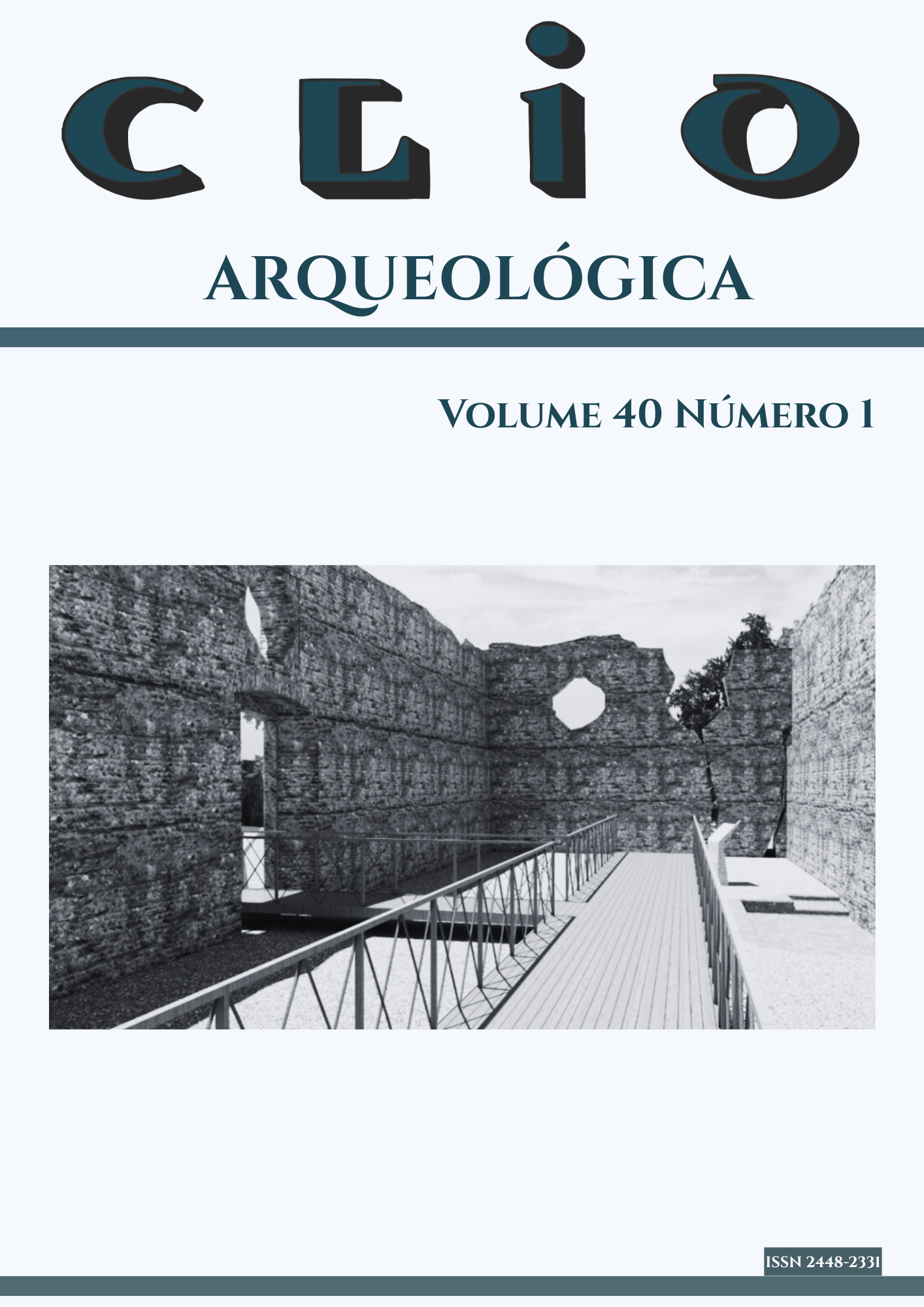
the gunpowder storehouse at the Estrela factory, Magé, RJ
DOI:
https://doi.org/10.51359/2448-2331.2025.266141Keywords:
Historical, Archaeology, Gunpowder, Store, Architectural, InterventionAbstract
This article presents the results of the Archaeological Diagnosis and Architectural Intervention Projects of the former Gunpowder Magazine of the Estrela Factory, located in Morro do Calundú, on the banks of the Estrela River, in the municipality of Magé, in Rio de Janeiro. The execution was entrusted to the company ANX Engenharia e Arqueologia LTDA. by TRANSPETRO-PETROBRAS. A multidisciplinary team was appointed to carry out data collection, in addition to Heritage Education activities, with lectures for the local community, disseminating the importance of preserving the Gunpowder Magazine, respecting its materiality as a historical heritage of the municipality and of Brazil. Keywords: Historical Archaeology. Gunpowder Magazine. Architectural Intervention.References
ALBERNAZ, M. P.; LIMA, C. M. 2003. Dicionário Ilustrado de Arquitetura. 3ª. ed. São Paulo: Proeditores.
BINFORD, L. 1973. Archaeology as Anthropology. In: LEONE, M. P. (Ed.). Contemporary Archaeology. Carbondale: Southern Illinois Press. pp. 93-101.
BRENDA, I. 2024. Conheça a extinta Vila de Estrela- uma cidade fantasma em Magé. Disponível em: https://bravabaixada.com.br/2024/02/22/conheca-a-extinta-vila-de-estrela-uma-cidade-fantasma-em-mage/ Acesso em: 18 mar. 2024.
CAMPELLO. C. B. C. 2021. A Conservação do Patrimônio Arqueológico Através das Intervenções Arquitetônicas no Bairro do Recife no Século XXI. Tese de Doutorado (Arqueologia e Conservação do Patrimônio). Recife: UFPE.
CARBONARA, G. 2006. Brandi e a restauração arquitetônica hoje. Desígnio, Nº. 6, p.p. 35-47.
CARSADALE, F. L. 2014. A Pedra e o Tempo. Belo Horizonte: Ed. UFMG.
Carta de Atenas, 1931. Atenas: Escritório Internacional de Museus, Sociedade das Nações.
CARTA DO RESTAURO. Ministério de Instrução Pública. Governo da Itália. 1972. Disponível em: www.portal.iphan.gov.br/cartadorestauro1972 Acesso em: 15/11/2017.
CASCAIS, J. B. 2016. A gestão e conservação de artefatos arqueológicos metálicos: o caso da intervenção arqueológica realizada na Residência Conselheiro Francisco Antunes Maciel – Pelotas, RS. 2016. Dissertação de Mestrado (Antropologia com área de concentração em Arqueologia), Pelotas: UFP.
CÓIAS, V. (2006). Inspecções e Ensaios na Reabilitação de Edifícios. Lisboa: IST PRESS.
DE LA MORA, L. 2014. Os desafios a superar para desenvolver programas de conservação urbana integrada. Gestão do Patrimônio Cultural Integrado. Recife/Olinda: CECI/MDU, pp. 233-237.
FERREIRA, J. A. A. 2010. Técnicas de Diagnóstico e Patologias em Edifícios. Dissertação de Mestrado (Engenharia Civil – Especialização em Construções). Porto: Faculdade de Engenharia do Porto.
FRANCO, C. M.; MONTEIRO, R. s/d. 210 Modelos e Detalhes de Patrimônio Material- Magé. Rio da Estrela. Rio de Janeiro: Secretaria do Estado de Cultura.
GASPAR, M. D.; BIANCHINI, G. F.; BERREDO, A. L.; LOPES, M. S. 2019. A ocupação sambaquieira no entorno da Baía de Guanabara. Revista de Arqueologia [S. l.], v. 32, Nº. 2, p.p. 36–60.
GOMIDE, J. H.; SILVA, P. R.; BRAGA, S. M. N. 2005. Manual de Elaboração de Projetos de Preservação do Patrimônio – Programa Monumenta. Caderno Técnico 1. Brasília: IPHAN.
HOFFBAUER, D. 2017. Luís Alves de Lima e Silva, Duque de Caxias. Brasília: Arquivo Nacional, Ministério da Gestão e Inovação em Serviços Públicos.
IPHAN, s/d. História das Ferrovias no Brasil. Disponível em: http://portal.iphan.gov.br/pagina/detalhes/609#: Acesso em: 11 jul. 2022.
JOKILEHTO, J. 2006. Considerations on authenticity and integrity in the world heritage context. Edinburgh: Architecture Research.
KÜHL. B. M. 2007. A restauração de monumentos históricos na França após a Revolução Francesa e durante o século XIX: um período crucial para o amadurecimento teórico. 2007. Revista CPC, Nº 3, p.p. 110-144. São Paulo: USP.
LE CORBUSIER. 2004. Precisões. São Paulo: Cosac & Naify. Coleção Face Norte, Nº. 6.
Lei Nº. 3.924, 26 de julho de 1961. Lei de Proteção ao Patrimônio Arqueológico.
LOBO, R. 2014. Real Fábrica de Pólvora (1808-1821). In: Dicionário Online da Administração Pública Brasileira do Período Colonial (1500-1822). Disponível em: https://mapa.an.gov.br/index.php/assuntos/15-dicionario/57-dicionario-da-administracao-publica-brasileira-do-periodo-colonial Acesso em: 19 fev. 2022.
NAIJAR, R.; DUARTE, M. C. C. 2002. Manual de Arqueologia Histórica em Projetos de Restauração. Brasília: IPHAN.
UNESCO, 2008. Operational Guidelines for the Implementation of the World Heritage Convention. Paris: World Heritage Centre.
VASCONCELLOS, S. 1979. Arquitetura no Brasil: Sistemas Construtivos. 5ª. ed. Belo Horizonte: UFMG.
VIEIRA, N. M. 2008. Integridade e Autenticidade: Conceitos Chave para Intervenções Contemporâneas em Áreas Históricas. Salvador: Anais do Arquimemória 3.
Downloads
Published
Issue
Section
License
Copyright (c) 2025 Almir Bezerra, Cecília Barthel Carneiro Campello, Rosângela Alves, Stela Gláucia Alves Barthel

This work is licensed under a Creative Commons Attribution 4.0 International License.
Since 2020, authors retain the copyright to their works and grant CLIO Arqueológica the right of first publication, with the work simultaneously licensed under the Creative Commons Attribution 4.0 International (CC BY 4.0). CLIO Arqueológica retains the copyright of texts published in issues from 1984 to 2019 and grants Creative Commons Attribution 4.0 International (CC BY 4.0) to this content in order to ensure Open Access.
You are free to:
Share — copy and redistribute the material in any medium or format for any purpose, even commercially.
Adapt — remix, transform, and build upon the material for any purpose, even commercially.
The licensor cannot revoke these freedoms as long as you follow the license terms.
Under the following terms:
Attribution — You must give appropriate credit, provide a link to the license, and indicate if changes were made. You may do so in any reasonable manner, but not in any way that suggests the licensor endorses you or your use.
No additional restrictions — You may not apply legal terms or technological measures that legally restrict others from doing anything the license permits.


 The contents of this journal are licensed under