Day of the Dead, Oaxaca – Mexico: educating for tradition
Keywords:
Day of the Dead, Ritual, Young people, Mexico, Education.Abstract
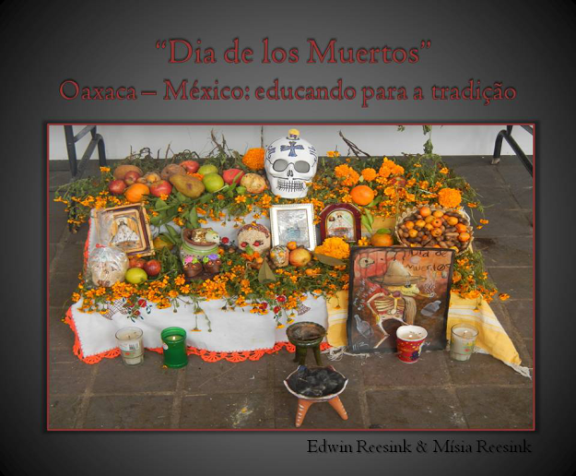
The Day of the Dead is one of the major cultural, religious and identity references of Mexico. The secular tradition to celebrate the dead on the 2d of November (known in Brazil as the Day of the Deceased), has as one of its high points the altars that pay homage to the dead, whether family or other important people. In celebrating the dead they mix catholic and autochthonous elements. The city of Oaxaca, located in the south of Mexico, strongly joins in and altars and symbols of the dead can be seen throughout the city: streets, houses, public buildings, shops, restaurants, all build their altars to revere the dead and death.
This photographic essay concentrates on a part of the activities and rituals of the inhabitants of Oaxaca, showing a narrative of the building of altars by students of, let’s say, a more advanced school level in the city. These students participate in a Festival of competing groups in order to vie for the ‘Award of the Best Altar’ and occurs at an important square in the city. The aim of the organizers is to maintain the Mexican tradition of building altars to pay homage to the dead at the Day of the Dead alive among the younger generations. In 2013 the Festival happened at the 30th of October.
The preparation of the altars begins in the morning when the different groups occupy their previously allocated spaces. All sorts of materials are used to build the altars: photographs or paintings of dead people (many times done with sand); fruits and diverse foods; bottles of different drinks; candles and, especially, images and sculptures of craniums and skeletons that represent death. The ritual consists of three moments: the building of the altars, their exposition, and the festive destruction of the altars.
The major part of the day is occupied with the first phase of the building and adorning of the altars. At the same time, the students transform their own bodies – especially painting the faces with skulls but also using all sorts of appropriated clothing – which add to the final composition of the whole scene. The second phase is the time at which the public and the judges circulate among the exposed altars. Finally, the judges announce the winning group and the last, iconoclastic, phase starts (or has already started), when the students “destroy” the whole scenes and, slightly chaotically, consume and distribute the exposed foodstuffs and drinks between themselves and the onlookers. An iconoclastic moment, but in particular a moment of sharing.
The ‘Festival of the Altars for the Dead’ built by the adolescents is an event that, by its practice, purports to educate these young people in the creative reproduction of the tradition.
Credits:
Authors: Edwin Reesink (UFPE) and Mísia Lins Reesink (UFPE)
Photographs: Edwin Reesink (UFPE)
Direction, image editing and text: Mísia Lins Reesink (UFPE)
Downloads
Published
Issue
Section
License

This work is licensed under a Creative Commons Attribution-NonCommercial 4.0 International License.
Direitos Autorais para trabalhos audiovisuais publicados na AntHropológicas Visual sã licenciados para uma licenca Creative Commons 4.0 BY-NC.
